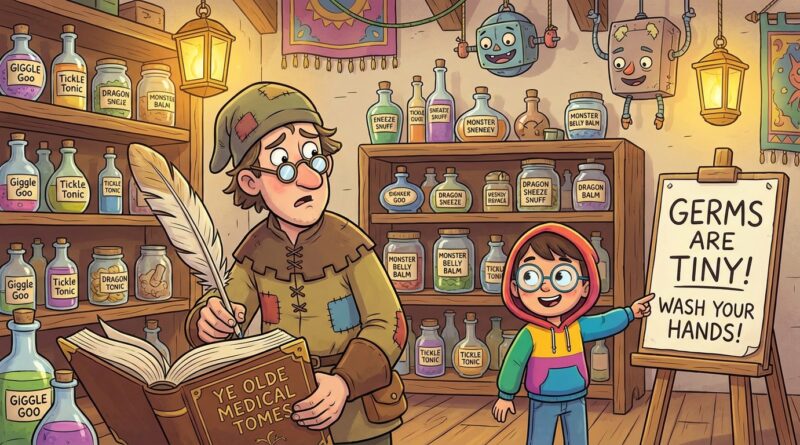
History’s Grossest Experiments: Weird Medical Cures Kids Can’t Believe Are Real
It is surprisingly hard to find history stories that are both true and kid-safe. One minute you want a fun “you will not believe this” fact for the dinner table. The next minute you are knee-deep in nightmare fuel or fake internet junk. If you are looking for weird historical medical facts for kids, the sweet spot is real history that feels shocking, a little gross, and still safe enough to talk about without regretting it at bedtime. The good news is that history is full of strange cures people honestly believed would help. They were not silly on purpose. They were doing their best with the knowledge they had at the time. That is what makes these stories so useful. Kids get the fun shock factor, and parents get a built-in lesson about how science changes, why evidence matters, and why “old-timey” does not always mean “smart.”
⚡ In a Hurry? Key Takeaways
- Many weird old medical cures were real, but they make good family history topics only when explained with context and without graphic detail.
- Use each gross fact to ask one simple question, “Why did people think this would work?” That turns shock into learning.
- The value is not the gross-out. It is teaching kids how medicine improved through trial, error, and better evidence.
Why kids love this stuff, and why parents should not feel bad about it
Kids are natural skeptics. Tell them people once used leeches to treat illness, and they instantly ask the right question. “Wait. Why?” That is not morbid curiosity. That is the start of critical thinking.
The trick is to keep the tone light, factual, and calm. No dramatic gore. No clickbait. Just the strange truth, plus a plain-English explanation of what people knew back then and what we know now.
If your child loves odd facts, this can also pair nicely with hands-on history projects like Build Your Own Mini Museum Of Weird History: How Cabinets Of Curiosities Turn Kids Into Curious Grown‑Ups. A weird cure card next to a drawing of a leech or an old medicine bottle replica can turn one fun fact into a whole afternoon of curiosity.
6 weird historical medical facts for kids that are real
1. Doctors used leeches on purpose
This one is famous because it sounds made up, but it is true. For a very long time, doctors thought many illnesses came from having the wrong balance of body fluids, sometimes called the “humors.” One way to fix that, they believed, was to remove blood. Leeches were handy little blood-removers.
Was it a good idea for every problem? No. Not even close. But it made sense inside the medical beliefs of the time. Funny twist, though. Leeches are still used in some modern medicine today, but in very specific situations, like helping blood flow after certain surgeries. That is a great lesson for kids. An old idea can be wrong in one way and still useful in another.
2. People once used mummy powder as medicine
Yes. Real mummies. For a period in Europe, ground-up mummy material was sold as a treatment for various health problems. People thought it had healing power.
This sounds extra wild to modern ears, and it should. But it also shows how often people mixed rumor, trade, and wishful thinking into medicine. Kids usually react with a giant “EW,” followed by “Who thought of that?” Exactly the right response.
3. Mercury was used as a cure, even though it is poisonous
Mercury showed up in old medicines for different diseases. The problem, of course, is that mercury is toxic. People did not fully understand the dangers the way we do now.
This is one of the clearest examples of why medical history matters. A treatment could be common, respected, and still harmful. That is a powerful idea for kids, especially now, when so many “health facts” online are shared with total confidence and very little proof.
4. Toothworms were once blamed for toothaches
Before people understood cavities and bacteria, some believed tiny worms lived inside teeth and caused pain. It sounds absurd now, but if you had no microscopes and no modern dental science, you might make up an explanation too.
This one is especially good for younger kids because it is weird without being too intense. It also helps them see that humans are very good at inventing stories to explain things we do not understand yet.
5. Urine was sometimes used in medicine
Not pleasant. Also true. In different places and times, urine was used for treatments, cleaning, and even diagnosis. To be fair, the diagnosis part was not entirely random. People did notice that urine could reveal clues about health, such as color changes.
Modern medicine does still test urine, of course. The big difference is that now it happens in a lab with science behind it, not as a folk remedy pulled from guesswork and tradition. That contrast is useful for kids. Sometimes old practices were not completely wrong. They were just missing the science part.
6. People thought bad smells caused disease
For a long time, many believed “miasma,” or foul air, caused sickness. So people carried flowers, herbs, or scented items to protect themselves. During outbreaks, some focused on smell because they could not yet see germs or understand how infection really spread.
This is a good one to discuss because it is easy to understand. If something smelled awful, it felt logical to think it was dangerous. In some cases, foul smells did point to unhealthy conditions, just not for the reason people thought. Again, close observation. Wrong explanation.
How to talk about gross cures without making them too scary
Keep the details plain and short
You do not need dramatic descriptions. “People used leeches to remove blood because they thought it would rebalance the body” is enough. The point is the belief, not the gore.
Always add the “why”
The magic phrase is simple. “They did not know what we know now.” That keeps kids from laughing at people in the past as if they were foolish. It builds empathy and perspective.
End with what changed
After each strange cure, explain what improved. Better tools. Better testing. Better understanding of the body. That turns the story from gross trivia into a mini science lesson.
What these stories really teach
The best weird historical medical facts for kids are not just gross. They show how knowledge grows. People observed symptoms. They guessed. They tested. They got things wrong. Then, slowly, medicine improved.
That is a healthy lesson for kids in any era. It teaches them not to trust every claim just because it sounds confident. It teaches them to ask for evidence. And it helps them understand that history is not just dates and wars. It is real people trying to solve real problems, sometimes in very strange ways.
At a Glance: Comparison
| Feature/Aspect | Details | Verdict |
|---|---|---|
| Best “gross but safe” examples | Leeches, toothworms, bad-smell theories, and odd old test methods are weird without being too graphic. | Great for family reading |
| Best teaching value | Mercury cures and miasma theory clearly show how confident ideas can still be wrong. | Excellent for critical thinking |
| Best way to present it | Share one fact at a time, explain why people believed it, then compare it with modern medicine. | Keeps it fun and age-appropriate |
Conclusion
If you have been hunting for weird history that is actually true, actually interesting, and not way too much for kids, medical history is a gold mine when it is carefully chosen. Today’s feeds are full of dark or made up “facts,” and parents are tired of sorting out what is age appropriate and what is just gross for clicks. A tightly curated, genuinely true set of bizarre cures and medical mix ups, explained in plain language, helps families scratch that curiosity itch safely while giving kids a first taste of real critical thinking about how science and medicine change over time. And honestly, if your child walks away saying, “People really believed toothworms were real?” that is a pretty great start.