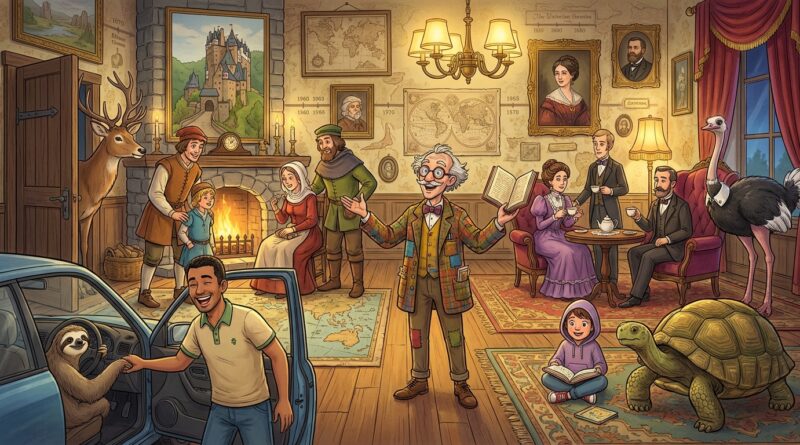
History’s Strangest Family Pets: The Wildly True Animals People Actually Lived With
If you are tired of history for kids sounding like a dusty list of kings, wars and dates, you are not alone. A lot of parents want real stories that feel alive, but not grim. And kids? They want the kind of fact that makes them stop mid-snack and say, “Wait. Someone really had that as a pet?” Good news. History is full of wildly true animal stories that are odd, funny and perfect for family reading. Some rich households kept monkeys in fancy homes. A poet had a pet bear. A U.S. president kept alligators at the White House, at least for a while. And yes, a famous explorer really brought a sloth into polite society. These weird historical animal facts for kids are more than silly trivia. They open the door to bigger questions about travel, weather, money, class and how people once lived. That means less doomscrolling, more laughing, and maybe even a few excellent dinner-table questions.
⚡ In a Hurry? Key Takeaways
- History really is full of strange family and household animals, including bears, monkeys, alligators and even a famous sloth.
- Use one odd animal story at a time to start easy conversations with kids about how people lived in different places and times.
- These stories are a safe, funny way to make history memorable without drifting into scary or upsetting topics.
Why animal stories make history click
Kids do not usually fall in love with a timeline first. They fall in love with details.
A bear on a leash. A monkey in a palace. A giant cat in a castle. That is the sort of thing that makes the past feel real.
The nice part for parents is that animal stories are a gentle entry point. You can start with the laugh, then move to the learning. Why did someone have access to such an animal? Where did it come from? What does that say about trade, travel or wealth?
That is what makes weird historical animal facts for kids so useful. They stick.
History’s strangest family pets that were actually real
Lord Byron’s pet bear at college
The poet Lord Byron wanted to bring his dog with him to Trinity College, Cambridge. The rules said no dogs. So he found a loophole, or at least tried to. He got a pet bear instead.
Yes, a bear.
Reports from the time say Byron kept the bear while he was a student. Part of the joke was clearly that the rules banned dogs, not bears. It was funny, arrogant and very Byron.
For kids, this one is gold because it sounds made up. For parents, it opens up easy follow-up questions. What were schools like then? Who could afford something this ridiculous? How different were rules and daily life?
President John Quincy Adams and the White House alligator
One of the strangest stories from American history is that John Quincy Adams kept an alligator at the White House. The alligator was reportedly a gift from the Marquis de Lafayette and was kept in a bathroom for a period of time.
That sentence does a lot of work.
Was the alligator there forever? No. Was it still a very real example of how unusual gifts and exotic animals could show up in elite households? Absolutely.
This is a fun one to use when kids think the White House has always been serious and polished in the modern sense. It also starts a conversation about how people once treated wild animals very differently than we do now.
Mozart’s starling
Not every strange pet was big and dramatic. Sometimes the odd part is how close the bond was.
Composer Wolfgang Amadeus Mozart had a pet starling, a bird known for being clever and good at copying sounds. He was fond of it. Really fond of it. When the bird died, Mozart marked the moment seriously and wrote about it.
This is a lovely reminder that people in the past were not cardboard cutouts from textbooks. They got attached to animals too.
It also gives kids a nice surprise. History is not just about rulers and battles. Sometimes it is about a musician and his chatty bird.
Exotic monkeys in royal and noble homes
Across Europe, especially in royal courts and wealthy households, monkeys were kept as pets or status symbols. Paintings from the Middle Ages and Renaissance show them popping up in homes, on shoulders and beside richly dressed owners.
That may sound cute at first. Then the bigger questions arrive. How did the monkey get there? Who captured it? How far did it travel? What did owning one say about money and power?
That is the pattern with these stories. The silly fact gets everyone interested. The deeper history shows up right after.
The sloth that stunned London
If your kids are especially into sloths, here is a weird gem. In the 1800s, naturalist Charles Waterton brought unusual animals back from South America, and his stories helped feed a big public appetite for rare creatures. Sloths fascinated people because they seemed so unlike the animals most Europeans knew.
Accounts from the period show just how startling it was for people to see such creatures up close or hear firsthand reports about them. To modern kids, a sloth is adorable and familiar from books and zoos. To many people then, it was almost unbelievable.
This is a great place to talk about travel. Today, a child can see a sloth on a nature show in ten seconds. In the past, seeing one at all could feel astonishing.
Big cats in private collections
Not all “pets” were cuddly. Some wealthy people kept lions, leopards or other dangerous animals in private menageries. These were not family pets in the way we think of a dog sleeping on the couch. Still, they often lived on private estates and were treated as household possessions or displays of power.
That sounds bizarre now because it is bizarre now.
But it helps kids understand a simple truth. People in the past did not always draw the same line between wild animals and domestic ones. What we call a pet, a collection or a symbol of status could blur together.
What these stories actually teach kids
The best weird facts do more than get a laugh. They help kids build connections.
Class and money
A person did not just wander out and casually bring home a monkey from another continent. Exotic animals usually meant wealth, servants, shipping networks and social status.
Travel and trade
If a rare animal turned up in a castle or mansion, that means ships, routes, markets and empires were involved somewhere in the background.
Climate and habitat
Why would a sloth or alligator seem especially strange in a cold or urban place? Because animals are tied to environments. That can lead to good talks about geography and ecosystems without turning it into a lecture.
Changing ideas about animal care
Many of these stories are funny, but they are also useful for showing how attitudes have changed. Today, most families understand that wild animals belong in habitats suited to them, not in drawing rooms and bathrooms.
How to use these facts with kids without making it feel like school
Keep it light. One story is enough.
Try this formula:
- Start with the wild fact.
- Ask, “Why do you think that happened?”
- Follow with one extra detail about place, time or culture.
For example: “A poet had a pet bear at college. Why do you think he did that?”
That question works better than a mini lecture. Kids like solving the puzzle.
If your child loves this kind of thing, a fun next step is to make a little collection of odd history finds at home. This piece, Build Your Own Mini Museum Of Weird History: How Cabinets Of Curiosities Turn Kids Into Curious Grown‑Ups, is full of ideas for turning surprising facts into hands-on curiosity.
A quick note on “pet” versus “animal kept by people”
It helps to be a little careful with the word “pet.” Some of these animals were true companions. Others were more like status symbols, gifts or creatures kept in private collections.
For kids, the easiest way to explain it is this. Some people loved these animals. Some people showed them off. Sometimes it was both.
That small distinction matters because it keeps the story honest without draining the fun out of it.
At a Glance: Comparison
| Feature/Aspect | Details | Verdict |
|---|---|---|
| Best for instant kid interest | Bear at college, White House alligator, monkeys in palaces | Big laughs, very memorable |
| Best for sneaky learning | Stories naturally lead to trade, class, geography and animal care | Excellent for follow-up questions |
| Best for screen-light family time | Short, true stories that work at dinner, bedtime or on a car ride | Easy win for curious families |
Conclusion
Sometimes the fastest way into real history is through the weird side door. A bear in college rooms. An alligator in the White House. A sloth that seemed almost impossible to people seeing the wider world open up. These stories work because they are true, surprising and safe for family reading. For parents looking for screen-light ways to wow kids without drifting into horror, true crime or endless scrolling, odd animal stories are a gift. They bring laughter first, then curiosity, then the bigger questions about class, climate, travel and culture. And that is a pretty good trade for one very strange pet story at a time.