History’s Weirdest Everyday Inventions: Real Gadgets That Solved Problems In The Strangest Ways
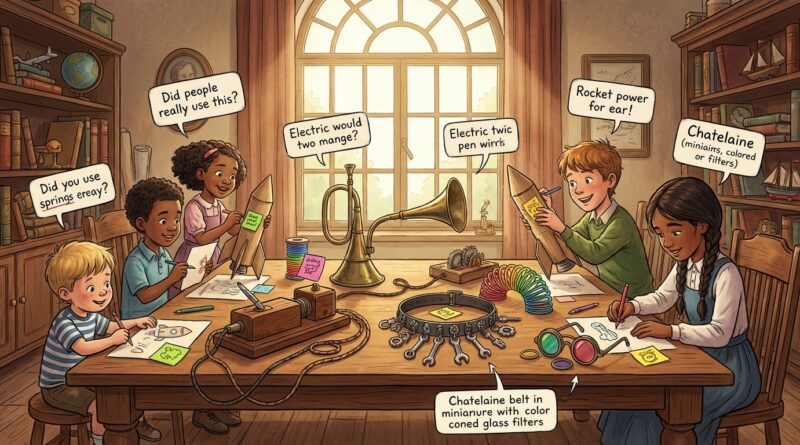
If your kid’s eyes glaze over the second history starts sounding like a list of dates, you are not alone. A lot of parents want something smarter than random scrolling, but they also do not want to turn dinner into school. That is where weird inventions from history for kids can be a gift. Strange old gadgets feel fresh. They make children laugh first, then ask questions. Why did someone carry a giant hearing horn? What problem was that buzzing electric pen trying to fix? Why would a person wear tools on a belt like a medieval utility kit? Suddenly history is not about memorizing names. It is about real people solving annoying everyday problems with whatever ideas they had at the time. And some of those ideas were wonderfully odd. Better yet, each invention can become a tiny story, a one-minute lesson, and a quick design challenge your family can do anywhere, from the car to the couch.
⚡ In a Hurry? Key Takeaways
- History gets much more interesting for kids when you focus on odd everyday gadgets instead of only wars and rulers.
- Use each invention as a one-minute story, then ask one simple design question like, “How would you improve it today?”
- Stick to pictures, replicas, or drawings for hands-on fun. Many original antique gadgets are fragile, sharp, or not safe for play.
Why weird inventions work so well with kids
Children are naturally drawn to things that look funny, oversized, overly complicated, or surprisingly clever. That is exactly what many old inventions are.
Adults often teach history from the top down. Kings. Battles. Big laws. Famous speeches. Kids, though, usually connect faster with the bottom-up version. How did people hear better? Copy notes? Carry stuff? Stay warm? Eat on the go?
That is why weird inventions from history for kids work so well. They shrink history down to one human problem at a time.
One object. One need. One strange solution.
Five bizarre real gadgets that make history stick
1. Victorian ear trumpets
Before tiny hearing aids, people used ear trumpets. These were cone-shaped devices that helped collect sound and direct it into the ear. Some were plain. Some were fancy. Some were designed to blend into home decor or clothing so they would attract less attention.
To a child, they can look like a cross between a musical instrument and a tiny megaphone. That is part of the fun.
One-minute backstory: People have always needed help hearing, but older technology was big and awkward. Ear trumpets were one of the best available tools for a long time, especially in the 1700s and 1800s.
Kid-friendly design challenge: Ask, “If you had to make a hearing helper without batteries, what shape would you try?” Then let kids sketch one.
2. Thomas Edison’s electric pen
This one sounds fake, but it was real. In the 1870s, Edison helped develop an electric pen that used a small motor to punch tiny holes in paper. That stencil could then be used to make copies of documents.
So yes, people once used a buzzing pen as part of an early copy system.
One-minute backstory: Before photocopiers and printers, making lots of copies was a hassle. The electric pen was an attempt to speed things up. It was clever, noisy, and not exactly simple.
Kid-friendly design challenge: Ask, “What school tool do you wish worked faster?” Then have kids invent a silly but useful version.
3. Chatelaines, the wearable toolkits
Long before big handbags and handy pockets, many people carried useful items clipped to a belt hook called a chatelaine. These could hold scissors, keys, watches, sewing tools, notebooks, and other daily basics.
Think of it as part keyring, part tool belt, part portable life organizer.
One-minute backstory: Clothing did not always come with practical storage. So people wore their essentials. It was a smart answer to a very normal problem.
Kid-friendly design challenge: Ask, “If your clothes had no pockets, what five things would you wear on a belt every day?”
4. Bed warmers
Before central heating, cold nights were a real problem. One old solution was the bed warmer, usually a metal pan on a long handle filled with hot coals and passed between the sheets before bedtime.
It sounds cozy until you remember there were actual hot coals involved.
One-minute backstory: Homes used to be much colder, and warming a bed could make a huge difference. This was practical, but it also came with obvious risks.
Kid-friendly design challenge: Ask, “How would you warm a bed safely if electricity did not exist?”
5. Snuffers and candle tools
Candles were once essential technology. People did not just light them. They also needed tools to trim wicks, put flames out cleanly, and manage smoke.
That alone can surprise kids. Even lighting a room used to require a little toolkit.
One-minute backstory: Everyday life involved more maintenance than most children realize. Light did not come from flipping a switch. It had to be managed.
Kid-friendly design challenge: Ask, “What modern thing feels easy now, but would have needed three tools 200 years ago?”
What these inventions really teach
The fun part is the weirdness. The useful part is the thinking behind it.
Each old gadget shows kids that invention starts with a problem. People were not trying to be weird. They were trying to get through the day. Sometimes the result looks funny now because technology changed, not because the need was silly.
That opens the door to STEM thinking without making it feel heavy. Kids start noticing trade-offs. Was it portable? Safe? Fast? Embarrassing? Expensive? Easy to fix?
Those are the same questions designers still ask now.
How to turn this into a no-prep family activity
You do not need a lesson plan. You really just need one picture and one question.
The easy 3-step method
Step 1: Show the object.
Step 2: Give the one-minute backstory.
Step 3: Ask the child to improve it.
That is it.
You can do this at dinner, in the car, or while waiting in line. If a child says history is boring, this method often sneaks past that defense because it starts with curiosity, not a quiz.
If your family likes this style of learning, you might also enjoy The Day Parks Saved The Planet: Weird But True Stories Of How Green Spaces Changed History. It uses the same trick. Start with a surprising idea, then build the story around how people solved a real problem.
How teachers and homeschoolers can use it fast
This topic drops neatly into busy days because every object stands on its own. You do not have to build a giant unit around it.
Try one invention as:
- a warm-up question
- a short writing prompt
- a sketching activity
- a compare-and-contrast lesson with modern gadgets
- a mini engineering challenge
For example, show an ear trumpet and a modern hearing aid. Ask students what changed in size, comfort, privacy, and power source. That is history, design, empathy, and science in one small lesson.
At a Glance: Comparison
| Feature/Aspect | Details | Verdict |
|---|---|---|
| Kid appeal | Odd shapes, funny names, and real-life uses make these gadgets instantly memorable. | Excellent for reluctant history learners. |
| Learning value | Each object teaches problem solving, design limits, and how daily life used to work. | High value with very little prep. |
| Best way to use it | Pair one picture with one short story and one invention challenge. | Best for dinner chats, car rides, and mini-lessons. |
Conclusion
Families do not always need a long lesson to make history come alive. Sometimes one strange little gadget does the job better than a whole chapter. Weird inventions from history for kids work because they feel playful, surprising, and easy to picture. An ear trumpet, an electric pen, or a belt full of tools turns the past into something human and relatable. That makes these stories perfect for dinner-table conversations, car rides, bedtime chats, and quick classroom mini-lessons. Pair each odd invention with a short backstory and a simple design challenge, and you turn passing curiosity into face-to-face creativity. That is a win for parents, teachers, homeschoolers, and especially kids who think they hate history. Often they do not hate history at all. They just have not met the weird parts yet.