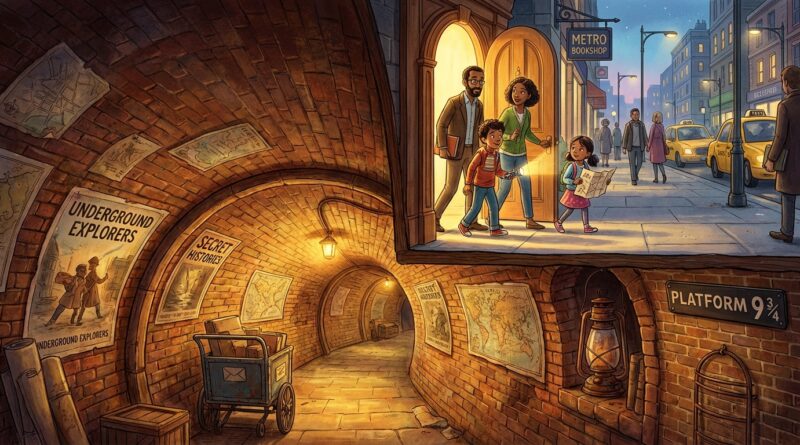
Real-Life Invisible Cities: Secret Tunnels, Hidden Rooms And Underground Worlds Kids Can Actually Visit
Parents know the feeling. You want a family outing that teaches something real, but the minute it starts sounding like a worksheet, the room goes flat. Kids want mystery, movement and stories they can picture. Not another recycled chat about pyramids, presidents or “important dates to remember for later.” The good news is that hidden underground cities and secret tunnels for kids are not just movie stuff. They are real places, in real cities, and many of them are surprisingly family-friendly. Think old mail trains under London, sealed-up streets beneath Seattle, tunnels under ancient towns, and hidden rooms behind ordinary doors. This kind of history works because it feels like a mission. You are not just learning facts. You are following clues, spotting odd details and walking through spaces that most people never notice. For families who want screen-free adventure without stepping into anything too grim, these underground worlds hit a sweet spot.
⚡ In a Hurry? Key Takeaways
- Yes, there are real hidden underground cities and secret tunnels for kids that families can visit safely, from postal railways to buried streets and cave towns.
- Start with guided tours, transport museums and historic districts. They usually strike the best balance between “wow” and age-appropriate.
- Check age limits, lighting, stairs and tone before you book. “Underground” can mean fun and curious, not scary.
Why this kind of history works so well for families
Kids do not usually object to history. They object to dull delivery.
Tell a child, “We are going to learn about urban development,” and you may get a groan. Tell that same child, “We are going to see the city hidden under the city,” and suddenly shoes are on and questions are flying.
That is the magic here. Underground places turn history into a puzzle. Why was this room bricked up? Who used this tunnel? Why is there a tiny railway under the street? Those are real questions with real answers, and they stick better than a list of dates ever will.
What counts as a family-friendly hidden underground world?
Not every secret place is a good pick for children. Some sites lean heavily into war, crime or ghost-tour drama. Useful for older teens, maybe. Not great for a seven-year-old who still side-eyes the hallway at bedtime.
The best options for families usually fit one of these categories:
Underground transport
Old subway platforms, postal railways, funicular tunnels and service passages are often fascinating without being upsetting.
Buried streets and basements
Some cities literally built upward after fires, floods or rebuilding booms, leaving older storefronts and sidewalks below the modern level.
Cave homes and underground towns
These often show how people stored food, stayed cool, hid from bad weather or made use of soft rock. Strange, yes. Nightmare fuel, usually no.
Hidden rooms and disguised doors
Speakeasy entrances, priest holes, concealed staircases and trapdoor-style museum spaces feel secret-agent cool without needing a horror soundtrack.
Real places families can actually visit
London: The Postal Museum and Mail Rail
If you want a near-perfect example of hidden underground cities and secret tunnels for kids, start here. Beneath London sits a small railway once used to move mail across the city. It sounds made up. It is not.
The Postal Museum lets visitors ride Mail Rail, an underground train system built for post, not passengers. For kids, this lands beautifully. It is a train ride, a tunnel adventure and a lesson in how cities worked before email all rolled together.
Why it works for families: It is organized, guided and interactive. You get the underground thrill without the stress of wondering whether you have wandered into the wrong sort of “dark history.”
Seattle: Underground Tour
Seattle’s famous underground is one of those stories children remember because it sounds impossible at first. After the city rebuilt in the late 1800s, some old streets and ground-floor spaces ended up below the new street level. So today, there is a hidden layer of the city under the city.
Some tours are more comedy-heavy and better for older kids, so parents should read the description first. But the core idea is excellent for curious families. You walk through old passageways and storefronts and see how a city can quite literally bury part of itself.
Edinburgh: Hidden closes, vaults and underground spaces
Edinburgh is packed with this stuff, but you need to choose carefully. Some vault tours are pitched as ghost experiences. Others focus more on daily life, old trade and how people used the underground spaces.
The family-friendly versions can be terrific. Narrow closes, tucked-away courtyards and old vaults make kids feel like they have unlocked a level most tourists miss.
Parent tip: Look for tours described as historical rather than haunted.
Naples: Napoli Sotterranea
Under Naples lies a whole different world of tunnels, cisterns and ancient spaces. Older children especially tend to love this because it feels huge and layered. Greek, Roman and later history all stack up under one busy modern city.
Some sections are tight, so this is best for kids comfortable with enclosed spaces. But for many families, it is the ultimate “how is this real?” outing.
Cappadocia, Türkiye: Underground cities
This is the big one. Places like Derinkuyu and Kaymakli are genuine underground cities where people once lived, stored supplies and sheltered. They are dramatic, yes, but also deeply educational if your child likes maps, mazes and old engineering.
These are best for families with children who can handle stairs, low ceilings and the idea of enclosed historic spaces. It is less “cute tunnel” and more “whole hidden settlement.”
New York City: Transit Museum and hidden station stories
The New York Transit Museum is set in a decommissioned subway station, which already gives it extra appeal. You are not just reading signs about trains. You are standing where the trains once mattered.
You will not be free-roaming through secret passageways, of course, but for younger kids this can be the smarter choice. It gives the underground-city feeling in a controlled setting, with far fewer surprises.
Smaller secrets can be just as exciting
Not every adventure has to involve a famous tunnel network. In fact, one of the best ways to get children interested is to point out the hidden spaces in ordinary places.
Speakeasy-style entrances
Some restaurants, museums or shops use disguised doors, bookcase entries or “wrong door, right place” design. Even when the history is lighter than a true underground site, the experience teaches kids to notice architecture and ask why buildings are laid out the way they are.
Historic fort tunnels
Many old forts and military sites have passageways that feel adventurous without leaning too hard into scary storytelling.
Basement museums and excavated ruins
Quite a few cities have visitor centers where glass floors or lower-level exhibits show older foundations, wells or former streets. These are easy wins for younger children who want the thrill of “secret” without too much darkness or too many stairs.
How to tell if a tour is right for your child
This is the part many booking pages do badly. “Family-friendly” can mean anything. So use this quick filter.
Check the mood, not just the age range
If the website talks about ghosts, executions or “chilling tales,” skip it unless your child truly enjoys that kind of thing.
Look for practical details
Read for mention of steep steps, low ceilings, damp air, narrow passages and flashing lights. These matter more underground than they do in a standard museum.
Use photos as your cheat sheet
Pictures often tell you more than the description. Bright lighting and display panels usually mean educational. Foggy lantern shots usually mean theatrical.
Start mild, then go deeper
If your child is new to this, begin with a transit museum, buried-street tour or cave house. Save the tighter, more complex underground city visits for later.
Turn the visit into a treasure hunt
You do not need to overplan this. A tiny bit of structure goes a long way.
Give kids a mission
Try simple prompts like:
- Find the oldest thing you can spot.
- Count how many hidden doors or staircases you see.
- Guess what this tunnel was used for before the guide explains it.
- Pick one object or room you would save if the whole place had to close.
Let them be the guide on the way home
Ask your child to explain the place back to another family member. When kids get to be the expert, the visit stops feeling like assigned learning.
Safety and comfort matter more underground
This is where the friendly reality check comes in. Hidden places are exciting because they are unusual. That also means they come with quirks.
Bring a light layer. Underground sites are often cooler. Wear proper shoes. Expect stairs. Keep a small snack and water for after, since many sites do not allow eating inside. And if your child has sensory sensitivities, claustrophobia or mobility needs, call ahead. A two-minute phone chat can save an expensive mistake.
Also, stick to legal, guided and clearly open-to-the-public places. Social media is full of “urban exploration” videos, but abandoned tunnels and sealed basements are not family adventures. They are safety hazards.
How to find hidden underground cities and secret tunnels for kids near you
You do not need to live next to a world-famous underground city to pull this off.
Search smarter
Try terms like “underground tour family,” “historic basement museum,” “old tunnel tour,” “decommissioned station museum,” or “buried city tour” plus your city or the nearest major city.
Check these places first
- Local history museums
- Transit museums
- Historic preservation groups
- Visitor bureaus
- Old forts, mills and industrial heritage sites
Think beyond big cities
Mining towns, cave regions and old river cities often have excellent underground stories. They just do not always market them with flashy “secret world” language.
Why this beats another “we looked at weird stuff” outing
There is nothing wrong with oddities museums or novelty stops. They can be fun. But they often end at surprise. “Huh, that is weird.” Then you move on.
Underground history gives families something richer. It adds place, problem-solving and context. Kids see that cities are layered. Buildings change. Streets move. Systems people depended on can disappear in plain sight. That is a much better kind of wonder because it teaches children to look at their own town differently too.
At a Glance: Comparison
| Feature/Aspect | Details | Verdict |
|---|---|---|
| Best starter experience | Transit museums, postal railways and buried-street tours with clear guides and lighting | Best for most families |
| Biggest wow factor | Large underground cities like Cappadocia or sprawling tunnel networks under major cities | Great for older kids who handle stairs and tight spaces well |
| Main thing to check before booking | Tour tone, lighting, stairs, enclosed areas and whether the focus is history or horror | Important for keeping the trip fun, not stressful |
Conclusion
If your family is tired of history that feels flat, this is a smart reset. Hidden underground cities and secret tunnels for kids turn facts into discovery. They give parents an easy adventure plan, give children the thrill of a real-life mystery and offer a much better payoff than another outing built around “look at this weird thing.” From underground postal trains to buried basements and concealed doors in everyday neighborhoods, these places prove that the most exciting stories are often right under our feet. Better still, they fit beautifully with what many families want right now. Less screen time, more curiosity, and a reason to see your own town as a puzzle worth solving.