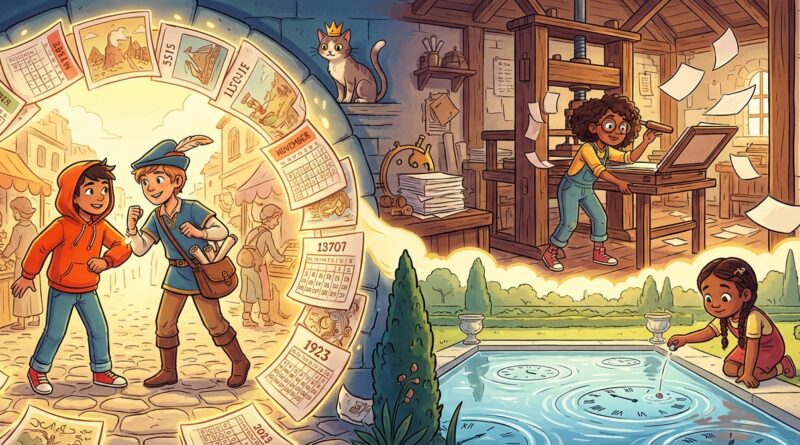
Real-Life Time Travelers: Kids Who Accidentally Changed History (And The Strange Rules That Followed)
If you have ever opened a history book for your child and watched their eyes glaze over by page three, you are not alone. A lot of parents want surprising history facts for kids, but what they get is the same old parade of rulers, wars, and dates. It feels flat. Kids tune out. Adults do too. The fix is simpler than it sounds. Stop starting with “important adults” and start with the children who accidentally nudged history in a new direction. That is where things get fun. A boy finds a frozen body in the Alps and helps launch one of the most famous archaeology stories in modern times. A girl writes a letter that helps save millions of lives. A teenager records a diary and changes how the world remembers cruelty. These are not side notes. These are real kids whose actions kept echoing long after snack time. Think of them as secret time travelers, except the time machine was one ordinary choice.
⚡ In a Hurry? Key Takeaways
- Some of the best surprising history facts for kids come from real children whose small actions had huge effects later.
- Use one simple question with any history story: “What changed because this kid did that?”
- These stories are screen-free, memorable, and a great way to help kids see history as something people make, not just memorize.
Why “kid changed history” stories work so well
Children instantly listen differently when the main character is their age. The distance disappears.
Instead of hearing, “A treaty was signed in 1648,” they hear, “A 13-year-old noticed something strange, and grown-ups later realized it mattered.” That lands.
It also solves the biggest family history problem. Facts on their own are hard to keep in your head. Stories stick. Stakes stick. Weird details really stick.
And when the child in the story is not a prince or a genius, but an ordinary kid who happened to notice, write, speak, dig, hide, survive, or ask a bold question, history feels less like a museum and more like a relay race.
The “real-life time traveler” idea
No, these kids did not actually jump through time. But their actions traveled forward.
That is the trick to making history feel alive. Show kids the chain reaction.
The strange rule that follows every great history story
Here it is: history gets interesting the moment you ask what happened next.
Not just next week. Years later. Sometimes centuries later.
A child does one thing. Then that thing changes what people know, what they build, what they fear, what they save, or how they remember.
That is why these stories feel like time travel. Cause goes in at one end. Consequences come out much later.
Five true stories that make kids sit up straight
1. Anne Frank, the teenager whose diary outlived a war
Anne Frank was a Jewish girl hiding with her family during the Holocaust. While in hiding, she wrote in her diary about fear, boredom, hope, arguments, and the daily weirdness of being trapped inside.
At the time, she was just a girl writing down her life. Later, that diary became one of the most powerful firsthand accounts of World War II ever published.
Why this works for kids: she was not writing “for history.” She was writing because she was human.
The strange rule: private words can become public memory. One child’s notebook can teach millions.
2. Greta Thunberg, the schoolgirl whose protest changed global conversations
Greta Thunberg started by sitting outside the Swedish parliament with a sign for a school climate strike. One student. One sign. Very easy for adults to ignore.
Except they did not. Or rather, they could not for long.
Her action helped spark youth climate protests around the world and pushed climate talk into homes, classrooms, and governments in a new way.
Why this works for kids: it shows that “too young” is often just something adults say before history proves them wrong.
The strange rule: one visible act can give thousands of other kids permission to act too.
3. Anne Carroll Moore and the children who changed libraries
This one is less famous, which is part of why it is useful. In the late 1800s and early 1900s, many libraries were not designed with children in mind at all. Kids were often treated as noisy problems, not readers worth serving.
As children started using libraries in greater numbers, and as advocates paid attention to what they needed, children’s rooms, better books for young readers, and youth services began to grow. Young readers were not just passive visitors. Their presence helped push institutions to change.
Why this works for kids: it reminds them that even showing up can change what adults build.
The strange rule: when enough children need something, the world sometimes has to redesign itself.
4. The boy who found Ötzi the Iceman, by accident
In popular retellings, kids often hear this story as a wild mountain discovery. The details in real life involve adult hikers discovering the body in the Alps in 1991, but it has become a perfect example of how ordinary people can stumble into ancient history.
What mattered was not treasure hunting. It was noticing. Preserving. Studying.
Ötzi turned out to be a naturally mummified man who had lived more than 5,000 years ago. That discovery changed what scientists could learn about early Europeans, clothing, tools, diet, and disease.
Why this works for kids: it proves history is not always in a textbook first. Sometimes it is under your boots.
The strange rule: tiny moments of attention can open giant windows into the past.
5. Claudette Colvin, the teenager many kids have never heard about
Before Rosa Parks became the best-known face of bus desegregation, 15-year-old Claudette Colvin refused to give up her seat on a segregated bus in Montgomery, Alabama.
She was arrested. Her courage mattered. Her case later became part of the legal fight that helped end bus segregation.
Why this works for kids: it breaks the “history is one hero” idea. Big change is often a group project.
The strange rule: the child history forgets at first may still help shape the ending.
How to turn any history topic into a story kids actually remember
You do not need a degree in history for this. You need one repeatable conversation trick.
Ask these three questions
1. Who was the youngest person in the story?
Find the child, teen, apprentice, messenger, helper, witness, or student.
2. What ordinary thing did they do?
Write. Notice. Refuse. Carry. Ask. Draw. Hide. Speak.
3. What changed later because of it?
This is where the “time traveler” part clicks.
Once you start using this pattern, random facts become a chain reaction. Kids can follow it. Better yet, they start making their own connections.
The strange rules that follow kid-made history
After you read enough of these stories, a few patterns show up again and again.
Rule 1. Kids are often dismissed right before they matter most
Adults are very good at underestimating children. History keeps punishing that habit.
Rule 2. Small actions age into big consequences
A letter, a diary, a refusal, a walkout, a question. Tiny in the moment. Huge later.
Rule 3. The first version of the story is rarely the whole story
This matters a lot. The famous name is not always the only important one. Kids should learn to ask, “Who else was there?”
Rule 4. Memory shapes history almost as much as the event itself
What gets saved, published, taught, or retold decides what future kids think mattered.
Rule 5. Real life is usually weirder than fiction
This is why surprising history facts for kids work so well. You do not need to make the story exciting. You just need to stop sanding off the strange parts.
How parents and teachers can use this tonight
Try a five-minute dinner table game.
Say, “Tell me one thing a kid did in history that changed something later.” Then let everyone guess. It does not need to be perfect. Half the fun is the guessing.
Or pick a normal topic like parks, schools, transport, books, or food, and ask, “Where were the kids in this story?” You will be surprised how often they were right in the middle of it.
If your family likes unusual stories that make everyday places feel bigger, The Day Parks Saved The Planet: Weird But True Stories Of How Green Spaces Changed History is a good next read. It uses the same magic ingredient. Ordinary-seeming things that quietly changed the future.
What to avoid when sharing these stories
Do not turn them into lectures.
Do not pile on ten dates when one clear turning point will do.
And do not make every child in history sound saintly. Kids can spot fake inspiration from across the room.
The best stories keep the rough edges. Fear, luck, mistakes, unfairness, coincidence. That is what makes them feel real.
At a Glance: Comparison
| Feature/Aspect | Details | Verdict |
|---|---|---|
| Best hook for kids | Stories where a real child did one ordinary thing that had a surprising ripple effect later | Most memorable |
| Easy conversation trick | Ask, “What changed because this kid did that?” | Simple and reusable |
| Screen-free value | Turns history into family storytelling instead of fact memorizing | Excellent for home or class |
Conclusion
Right now, parents and teachers want screen-free stories that still hit with the speed and surprise kids are used to. That is why this approach works. When you focus on real children as secret time travelers, history stops feeling like a dusty shelf of names and starts feeling like a row of lit fuses. One action. Then another. Then a future nobody saw coming. Better still, you can reuse this trick with almost any topic. Find the young person. Spot the small action. Trace the ripple. Suddenly, surprising history facts for kids stop being random trivia and turn into family lore. And that may be the best part of all. Kids start to see that the future is not something that just happens to them. It is something people, including people their age, can help shape.