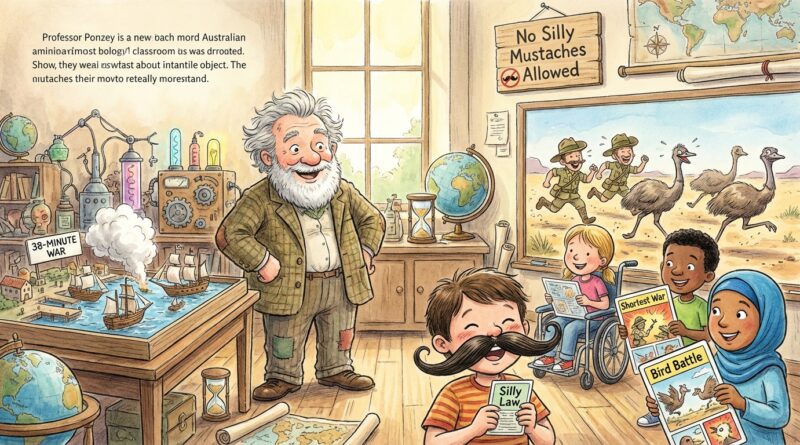
The 38‑Minute War, The Battle With Birds, And Other Real History That Sounds Totally Made Up
You know the feeling. Your kid asks for a fun history fact, you do a quick search, and suddenly you are sorting through made-up nonsense, creepy details, or “facts” that fall apart the second you check them. That gets old fast. The good news is that real history is already weird enough. You do not need to dress it up. Some of the best stories are short, true, and perfect for kids who love saying, “Wait. That actually happened?” Below is a family-friendly roundup of weird historical facts for kids that are actually true, with just enough context to make them stick. Think of these as ready-made dinner table stories, road trip backups, or classroom gems. Better yet, they also help kids learn a quiet but useful lesson. The wildest story is not always fake, but the best weird facts usually come with names, dates, and a little proof.
⚡ In a Hurry? Key Takeaways
- Some of the best weird historical facts for kids that are actually true include a 38-minute war, a military fight against emus, and a sticky molasses flood in Boston.
- When you share odd history with kids, add one simple detail like a year, place, or person so the story feels real instead of random.
- Family-friendly history can still be exciting. You do not need gross or scary details to spark curiosity.
Why true history often sounds made up
History is full of moments that seem like they belong in a cartoon. That is part of the fun. Real people make strange choices, accidents happen, and sometimes governments do things that look very silly in hindsight.
For kids, that mix is gold. A fact that sounds impossible is often the one they remember. The trick is making sure it is really true.
A good “no way” fact usually has three things. It happened in a real place. It involved real people. And there is enough record of it that historians can back it up.
The 38-Minute War that was over before lunch
What happened
In 1896, Britain and Zanzibar fought a war that lasted somewhere between 38 and 45 minutes, depending on which records you read. It is usually called the shortest war in recorded history.
Here is the simple version. After the ruler of Zanzibar died, a new leader took power without British approval. Britain told him to step down. He refused. British ships fired on the palace. Very quickly, the palace was badly damaged, and the conflict was over.
Why kids love it
Because it sounds like a joke. A war shorter than a school lesson? That sticks in a child’s brain instantly.
What to tell kids
You can say, “The shortest recorded war in history may have lasted less than 40 minutes.” That is true, surprising, and easy to picture.
The Battle with Birds that Australia really fought
Yes, the military took on emus
In 1932, Australia had a huge problem with emus. These large, flightless birds were damaging crops in Western Australia. Farmers were desperate. So the government sent soldiers with machine guns to help reduce the emu population.
If you are already laughing, you are not alone.
The plan did not go smoothly. Emus were fast, spread out, and oddly hard to hit in large numbers. The whole thing became famous as the “Emu War,” even though it was really a culling operation, not a war in the usual sense.
Why this one matters
It is funny, but it is also a nice chance to show kids how headlines can simplify history. Australia did not literally declare war on birds. But soldiers really were sent out, and the effort really became an embarrassing story.
That makes it one of the best weird historical facts for kids that are actually true. It is wild, but it also teaches careful wording.
Boston was once hit by a flood of molasses
The sticky disaster of 1919
This sounds like something from a children’s book, but it really happened. In Boston, a giant tank holding molasses burst in 1919. A wave of thick syrup rushed through the streets.
Molasses is the dark, sticky sweetener used in baking. Imagine a whole neighborhood suddenly covered in it. That image alone is enough to keep kids listening.
Why people still talk about it
It was unusual, memorable, and so strange that it became part of local history. Adults still bring it up more than 100 years later because it feels impossible, yet it is well documented.
If your kids like odd stories about everyday things, this is also a nice bridge to Weird History of Everyday Toys: Surprising Origins of the Games Kids Love, which has that same “ordinary object, surprising backstory” energy.
A pope once put a dead pope on trial
It was called the Cadaver Synod
This one is real, and yes, it sounds completely invented. In 897, Pope Stephen VI had the body of a former pope, Pope Formosus, dug up and put on trial.
That was part of a political fight, not a normal legal process. It was dramatic, strange, and deeply bizarre even by the standards of the time.
How to make it kid-friendly
You do not need to dig into the grimmest details. Just say, “A pope once held a trial for a pope who had already died, because politics in medieval Europe could get very weird.” That gets the point across just fine.
One woman survived the Titanic, Britannic, and Olympic incidents
The incredible Violet Jessop
Violet Jessop worked as a stewardess and nurse on ocean liners. She was on the Olympic when it collided with another ship. She later survived the sinking of the Titanic in 1912. Then she also survived the sinking of the Britannic during World War I.
At some point, if you are a kid hearing this story, you start to think she must have had superhero luck.
Why this story works so well
It gives kids a person to remember, not just an event. Names help history feel real. “A woman named Violet Jessop survived three major ship disasters” is much easier to hold onto than a pile of dates.
Napoleon was once attacked by rabbits
Not a battle he expected
This story has been told for years, and historians generally agree that some version of it happened. After a rabbit hunt was arranged for Napoleon, the rabbits did not scatter the way people expected. Instead, they reportedly rushed toward him and his party.
Why? One likely explanation is that they were tame or recently caged rabbits that associated people with food.
What makes it a good teaching fact
It is silly, short, and useful for showing kids that real history includes mistakes in planning. Even famous leaders can end up in ridiculous situations.
Ancient Romans used graffiti a lot
People have always written on walls
Kids sometimes imagine ancient people as very formal and serious. Then you learn that Romans wrote jokes, messages, and doodles on walls, especially in places like Pompeii.
Some of it was rude, some funny, some ordinary. In other words, very human.
Why this lands with ages 7 to 12
Because it shrinks the distance between then and now. Kids suddenly realize that people long ago were not that different. They joked. They showed off. They left notes.
A town once had a dancing plague
People really danced for days
In 1518, in Strasbourg, a woman began dancing in the street and kept going. Soon more people joined in. Reports say some danced for days or even weeks.
Historians still debate exactly what caused it. Stress, illness, and social pressure are all part of the conversation. The facts around the event are real, even if the full explanation is still argued over.
Why that is a useful lesson
Not every true event comes with a perfect answer. Kids should know that “this happened” and “we know exactly why” are two different things.
How to tell kids a weird fact without passing along nonsense
Use the “three-check” rule
If you want to build a stash of weird historical facts for kids that are actually true, use a simple filter.
First, check whether the fact names a person, place, or year. Second, see if more than one trustworthy source tells the same basic story. Third, notice whether the wording is honest. “Often called” and “widely reported” are better than pretending every detail is certain.
Keep the story, trim the nightmare fuel
You do not owe your family a full documentary every time. It is completely fine to leave out upsetting details and keep the part that sparks curiosity.
The goal is not to make history boring. It is to make it usable.
Ask one follow-up question
After each fact, ask something simple. “Why do you think that happened?” or “What part sounds the strangest?” That turns trivia into conversation.
Quick roundup: true history facts kids usually love
Here are a few fast favorites you can keep in your pocket:
- The shortest recorded war lasted less than an hour.
- Australia once sent soldiers to deal with crop-destroying emus.
- Boston had a real molasses flood.
- A pope once put another pope on trial after he had died.
- Violet Jessop survived disasters involving the Olympic, Titanic, and Britannic.
- Ancient Romans left graffiti on walls.
That is the sweet spot. Strange, true, memorable, and not likely to ruin bedtime.
At a Glance: Comparison
| Feature/Aspect | Details | Verdict |
|---|---|---|
| Best for instant laughs | The Emu War and Napoleon’s rabbit trouble are easy to picture and fun to retell. | Great for car rides and dinner table conversation. |
| Best for classroom-style learning | The 38-minute war, Roman graffiti, and the dancing plague all open the door to bigger history topics. | Best if you want a fun fact that can lead to real discussion. |
| Best for family-friendly storytelling | Violet Jessop’s survival story and the molasses flood are dramatic without needing extra gross details. | Strong picks for ages 7 to 12. |
Conclusion
Kids do not need fake trivia to get excited about history. Real life already did the hard work. When you keep a few solid, family-friendly oddities ready to go, you get more than a laugh. You get questions, connections, and the chance to show kids how to spot the difference between legend and researched fact. That is what makes this kind of roundup so useful. Today’s feeds are packed with shocking claims, but very little is built for parents who want curiosity without nightmare fuel. A short list of weird, true stories gives you an easy toolkit for road trips, dinner chats, and school projects, while quietly teaching kids that the best facts are the ones you can actually back up.