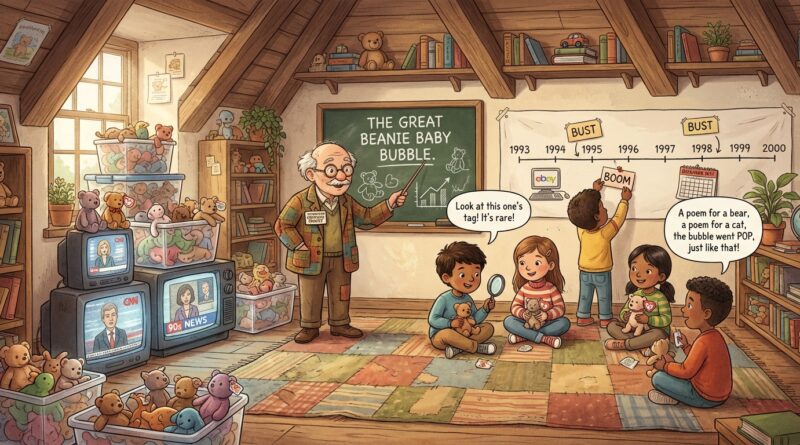
The Beanie Baby Bubble: How A Cute Toy Took Over History (And Your Attic)
If you have a plastic tub full of Beanie Babies in the basement, you are not alone. A lot of parents still have them. A lot of kids still ask the same question, usually while holding a slightly dusty plush crab or bear. “Wait. These were worth thousands of dollars?” Sometimes yes, for a moment. Mostly no, not in the way people remember. That is what makes the Beanie Baby story so fascinating. It was part toy craze, part collector frenzy, part lesson in how humans can talk themselves into almost anything if enough other humans are doing it too. The good news is you do not need a business degree or a stock market chart to understand it. You just need to know how a small stuffed toy became a giant cultural moment, why prices went wild, and why so many families still have a soft, bean-filled souvenir from one of the strangest bubbles in recent history.
⚡ In a Hurry? Key Takeaways
- Beanie Babies became huge because they felt rare, cute, collectible, and easy to buy, which made people think prices would keep going up forever.
- If you find old Beanie Babies at home, check completed sale prices, not wishful online listings, before assuming they are valuable.
- Most Beanie Babies are worth a little, not a fortune, so treat them as fun history first and a possible bonus second.
What was the Beanie Baby bubble?
The short version is this. In the 1990s, Beanie Babies went from cute toys to “investments” in the minds of many buyers. People were not just buying them for kids to hug. They were buying them because they believed the toys would become rare and rise in value.
That belief spread fast. Stores sold out. Collectors lined up. Newspapers covered the craze. Price guides appeared. Early internet sales made the whole thing feel even bigger. For a while, some Beanie Babies really did sell for shocking amounts.
That is the bubble part. Prices and excitement rose far beyond what the toys were realistically worth as objects. Then the hype cooled, demand dropped, and most of those sky-high values collapsed.
Why did Beanie Babies become so popular?
They were cute and small
This part matters more than people think. Beanie Babies were soft, palm-sized, and full of personality. Each one had a name, a birthday, and a little poem on the tag. That made them feel special, almost like tiny characters instead of just stuffed animals.
They were cheap enough to feel collectible
Unlike fine art or rare coins, Beanie Babies looked like something normal families could collect. You did not need to be rich. A child could save up for one. A parent could grab one at the gift shop. That low starting price made the hobby feel friendly and possible.
Ty was very smart about scarcity
The company behind Beanie Babies, Ty, did something clever. It kept certain designs limited and “retired” some toys, meaning they would no longer be made. That gave buyers a strong nudge to act fast. If you did not buy now, maybe it would be gone forever.
That feeling, the “better get one before it disappears” feeling, is rocket fuel for a craze.
The 1990s internet helped spread the madness
This was early web culture. Online auction sites and collector message boards made rare sales visible to everyone. Suddenly a family in one town could hear that a particular bear sold for huge money somewhere else. Stories traveled quickly. Rumors traveled even faster.
And once people started hearing that a toy bought for a few dollars might someday pay for college, things got weird.
How did a toy turn into an “investment”?
This is where the beanie baby bubble history for kids gets really interesting, because it is not really about fabric and beans. It is about people.
Humans are social. We copy each other. We get excited when we think we have found a secret. We also really love the idea of getting in early on something big.
Here is the basic chain reaction:
- A few Beanie Babies became hard to find.
- Some sold for high prices in resale markets.
- News spread that collectors were making money.
- More people bought them, hoping to make money too.
- That extra buying pushed prices and hype even higher.
That is a bubble in plain English. People are not just paying for what something is. They are paying for what they hope someone else will pay later.
Did any Beanie Babies really sell for thousands?
Yes. Some did. But this is the part that trips people up.
A high sale is not the same as a normal value. During a frenzy, a few buyers can pay silly amounts. That does not mean every similar toy is suddenly worth that number. It just means that on that day, in that moment, two people agreed on a price.
Also, many famous Beanie Baby value stories got stretched, repeated badly, or mixed up with fake rumors. Some listings online were fantasy prices, not real sales. That still happens now. You may see a common Beanie Baby listed for $10,000. That does not mean anyone is buying it.
The number that matters is the completed sale price. In other words, what somebody actually paid.
What made the bubble pop?
Too many people were saving them
Real rarity is rare. Beanie Babies had the opposite problem. Once people believed they might become valuable, many stopped treating them like toys and started preserving them like treasure. Tags stayed on. Cases were bought. Closets filled up.
That meant huge numbers survived in good condition.
So years later, instead of a few scarce items, there were mountains of them.
Hype cannot grow forever
Bubbles depend on excitement. As soon as people start doubting that prices will keep rising, momentum slows. Fewer buyers rush in. Sellers outnumber serious collectors. Prices soften. Then they drop.
The market got crowded and confusing
There were many Beanie Babies, many versions, many rumors, many “experts,” and lots of confusion about what was truly rare. That made it easier for wishful thinking to take over.
Once a market runs on rumors more than reality, it gets shaky fast.
What are most Beanie Babies worth now?
Usually, not a fortune.
Most common Beanie Babies sell for a small amount. Some are worth only a few dollars. A handful of genuinely unusual examples, especially those with documented production oddities or very limited runs, can still interest serious collectors. But that is the exception, not the rule.
So if your family opens a bin and finds twenty bears, a lobster, two dogs, and a suspiciously cheerful platypus, do not assume you have hit the jackpot. You probably have a fun time capsule.
How to check if yours is actually valuable
1. Look at sold listings, not asking prices
This is the biggest tip. Anyone can list a toy online for a wild amount. That means nothing. Search for completed or sold listings on a reputable resale site and compare the exact toy, tag generation, and condition.
2. Check the condition honestly
Collectors care about wear, stains, fading, and tag damage. A bent or missing tag can make a big difference. So can smoke smell, pet damage, or storage problems.
3. Confirm the exact version
Many toys look similar but are not the same version. Small differences in tags, fabric, pellets, or production details can matter. If a toy seems promising, compare it carefully with trusted collector resources.
4. Be skeptical of miracle stories
If a viral post says “this one Beanie Baby is worth $50,000,” take a breath. Rare one-off sales, charity auctions, mistakes, and internet myths get mashed together all the time.
Why this story is great for kids
Because it turns economic history into something you can hold.
Kids do not need a lecture about markets to understand the Beanie Baby bubble. They can understand wanting the cool toy everyone else wants. They can understand fear of missing out. They can understand why “rare” sounds exciting. And they can understand that just because many people believe something does not make it true forever.
It is also a nice reminder that history is not only about presidents, wars, and ancient empires. Sometimes history is about adults stampeding through gift shops for a stuffed iguana.
The real lesson hiding in the toy bin
The Beanie Baby craze is really a lesson in hype, hope, and human behavior.
People wanted a fun collectible. Then they wanted a valuable collectible. Then many wanted proof that they were smart for buying in. That emotional mix can make prices do silly things.
It happens with toys. It happens with houses. It happens with trading cards, tulips, meme stocks, and all kinds of collectibles. The object changes. Human nature does not change much.
That is why this odd little story has lasted. It is funny, but it is also useful.
At a Glance: Comparison
| Feature/Aspect | Details | Verdict |
|---|---|---|
| Why they exploded | Cute designs, low prices, retired models, and growing resale hype made people rush to collect. | A perfect recipe for a fad. |
| Why prices fell | Too many were saved, hype cooled off, and real demand could not keep up with the giant supply. | Classic bubble behavior. |
| What families should do now | Check sold prices, inspect condition, and enjoy the nostalgia before expecting big money. | Treat them as history first, treasure second. |
Conclusion
The funny thing about Beanie Babies is that they look small and harmless, yet they tell a big story. Right now, with documentaries, TikTok attic clean-outs, and viral nostalgia posts sending families back to old storage bins, people are once again asking what on earth happened. The answer is not just “people liked a toy.” It is that people got swept up in excitement, rarity, rumor, and the dream of easy money. That makes this a perfect family history lesson. Kids get to see that history can live in a closet bin, not just a museum. Parents get a simple way to talk about money, hype, and critical thinking without making it feel like homework. And if your old Beanie Babies turn out to be worth only a little, that is okay. They still earned their spot as one of the strangest, softest, and most memorable crazes of modern life.