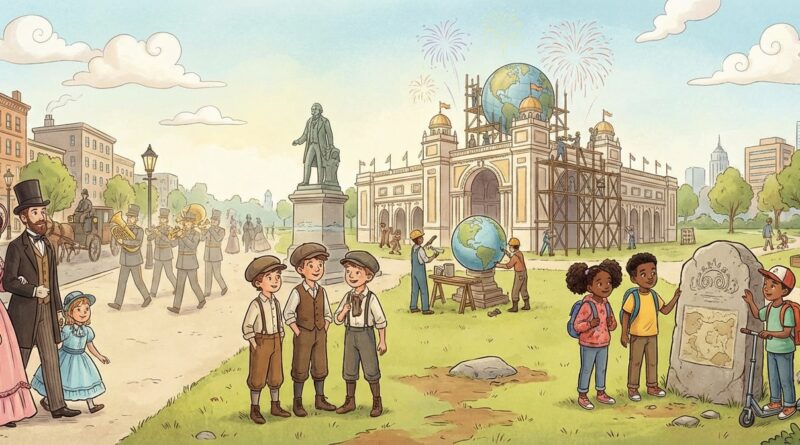
The Day Parks Saved The Planet: Weird But True Stories Of How Green Spaces Changed History
By Saturday afternoon, a lot of parents hit the same wall. The kids are bored, everyone needs a break from screens, and nobody wants to spend a pile of money just to get out of the house for an hour. That is why parks matter more than we give them credit for. They are not just places for slides, soccer balls, and tired grown-ups sitting on benches with coffee. Some of them quietly helped shape whole cities and even changed history. The surprising history of city parks for kids is full of odd twists that sound made up, but are absolutely real. A park can stop a flood. It can cool a city. It can sit on top of the remains of a world fair. It can even preserve clues about how people lived long ago. Once kids hear that, a normal walk starts to feel less like “ugh, a park again” and more like a treasure hunt.
⚡ In a Hurry? Key Takeaways
- City parks are not just for play. Many helped protect cities, hosted major events, and saved pieces of history.
- Turn your next park trip into a mini field trip by asking kids what the land was used for before it became a park.
- Stick to marked paths, posted rules, and public signs, especially in older parks with ponds, hills, ruins, or busy roads nearby.
Why parks ended up changing history
When most kids look at a park, they see swings, grass, ducks, and maybe a snack break. Adults usually see a place to burn off energy for free. Fair enough.
But parks often got built for bigger reasons. Cities needed a way to handle flooding. Crowded neighborhoods needed cleaner air. Leaders wanted open land where people could gather safely. Sometimes old fairgrounds, estates, or industrial sites were turned into green space instead of being paved over.
That means the park near you may be doing two jobs at once. It is fun on the surface. Underneath that, it may be solving a problem that once worried an entire city.
Weird but true stories of parks that made a real difference
1. Some parks were built to stop floods
This is one of the easiest stories for kids to understand because they can picture it. A river rises. Streets fill up. Homes and shops are at risk.
Now imagine a city leaving open green space near that water on purpose. Instead of covering every bit of land with buildings, roads, and parking lots, the city keeps a park there. During heavy rain, that open land can soak up water or give floodwater somewhere to spread out with less damage.
In other words, the park is not “empty land.” It is part playground, part giant sponge.
That is a great lesson for families. The pond, marshy patch, or wide field that looks a little plain may actually be one of the smartest pieces of land in town.
2. Some parks cooled down dangerously hot cities
Before air conditioning was common, cities in summer could be brutal. Brick, stone, and pavement held heat. Crowded neighborhoods had less shade and less fresh air. Public green spaces helped cool things down.
Trees cast shade. Grass absorbs less heat than pavement. Breezes move differently through open areas. That may sound simple, but it changed daily life for people in packed cities.
For kids, this is a fun real-world experiment. Stand on a hot sidewalk, then step under a line of trees in the park. They can feel the difference in seconds.
It is history you can literally walk into.
3. Some parks are old world fairgrounds in disguise
Here is one of the strangest park facts. A family can toss a frisbee across land that once held giant exhibitions, futuristic buildings, crowded promenades, and inventions people had never seen before.
After a world fair or big public event ended, some of that land was turned into parkland. The temporary buildings might be gone, but the shape of paths, lakes, bridges, or plazas can still hint at what used to be there.
That makes for a great game with kids. Ask, “What do you think stood here 100 years ago?” A fountain? A grand hall? A train stop? A giant sculpture?
Sometimes the answer is much bigger than they expect.
4. Some parks preserved history by accident
Not every important site looks dramatic. A city may decide not to develop a certain piece of land, and years later people realize that the ground kept valuable clues safe. Old walls, foundations, burial sites, trails, or signs of early settlement may remain because a park was left open instead of bulldozed.
That is one reason local park signs can be surprisingly interesting. The sign that adults usually speed past may explain that the hill used to be a fort lookout, the meadow was once farmland, or the stream powered mills long ago.
Kids love this once they realize the park is basically an outdoor mystery book.
5. Some parks gave cities a safe public gathering place
This part matters too. Big public parks gave people room to meet, celebrate, protest, picnic, play music, and simply be around one another. That helped shape civic life.
History is not only wars, inventions, and famous leaders. It is also where everyday people gathered and what they did there. Parks became the backdrop for that story.
So yes, the duck pond counts. The bandstand counts. The giant lawn counts. Public life happened there.
How to turn a normal park trip into a history hunt
You do not need a worksheet, a museum ticket, or a perfectly planned day. You just need a few questions.
Start with these simple prompts
Ask your kids:
- Why do you think this park was built here and not somewhere else?
- What problem might this land help solve?
- Do the paths, bridges, ponds, or hills look natural or designed?
- What do you think this place looked like 50 or 100 years ago?
- If this park could talk, what story would it tell?
Those questions work for little kids and older ones. Younger children can guess. Older kids can look for clues on signs, statues, memorials, maps, and visitor boards.
Use your phone for one quick check, then put it away
If you want to keep the outing mostly screen-free, do one fast search before you go or while sitting on a bench. Search the park name plus terms like “history,” “flood control,” “world fair,” “historic site,” or “memorial.”
That gives you just enough background to sound prepared without turning the trip into homework.
Make it feel like a game, not a lesson
Try one of these:
- History bingo, with things like statue, old tree, bridge, plaque, pond, and unusual building shape.
- Before-and-after guessing, where kids imagine what used to be on the land.
- Design challenge, where they decide what kind of park they would build if they had to stop floods or cool a city.
That is often enough to turn resistance into curiosity.
What families should notice on their next visit
If you want to explore the surprising history of city parks for kids, pay attention to features that seem ordinary at first.
Ponds and wetlands
These may help with stormwater, wildlife, and flood control. They are not always there just to look pretty.
Wide open lawns
They may have been planned for crowds, events, fairs, sports, or emergency overflow from water.
Old stone walls, steps, or odd foundations
These can be leftovers from earlier uses of the land.
Trees that seem much older than everything else
Sometimes they are living witnesses to local history. That sounds dramatic, but it is true.
Plaques and memorials
Yes, kids may groan. Read them anyway. They often contain the one fact that makes the whole place click.
Why this works so well for kids
Kids do better with history when it is tied to a place they can see, touch, and run through. A park gives them that. It turns big ideas into concrete ones.
Flood control becomes a field by a river. Public health becomes a shady path on a hot day. A vanished world fair becomes a weirdly grand staircase in the middle of a neighborhood park.
That is what makes this kind of outing stick. It does not feel like being lectured. It feels like discovering a secret hidden in plain sight.
At a Glance: Comparison
| Feature/Aspect | Details | Verdict |
|---|---|---|
| Educational value | Kids can learn about floods, city design, public events, and local history while walking around. | Excellent for casual learning |
| Cost and effort | Most city parks are free and need very little planning beyond water, snacks, and a quick history search. | Hard to beat for a low-cost outing |
| Kid appeal | Works best when framed as a mystery, scavenger hunt, or “secret history” adventure. | Very strong, especially for ages who like stories and exploring |
Conclusion
City parks can rescue a Saturday, but they can also do something better. They can make a child look at familiar ground and realize it has a past. Right now families are hunting for quick, screen-free adventures they can do close to home, and city parks are one of the only places everyone can access for free. A surprising-history tour of parks gives parents a fresh way to make an ordinary Saturday feel like a field trip, helps kids see their neighborhood as part of a much bigger story, and gives teachers and homeschoolers a ready-to-go mini lesson they can use without printing a thing. So next time you head to the swings, look around a little longer. The grass under your feet may have already changed history once.