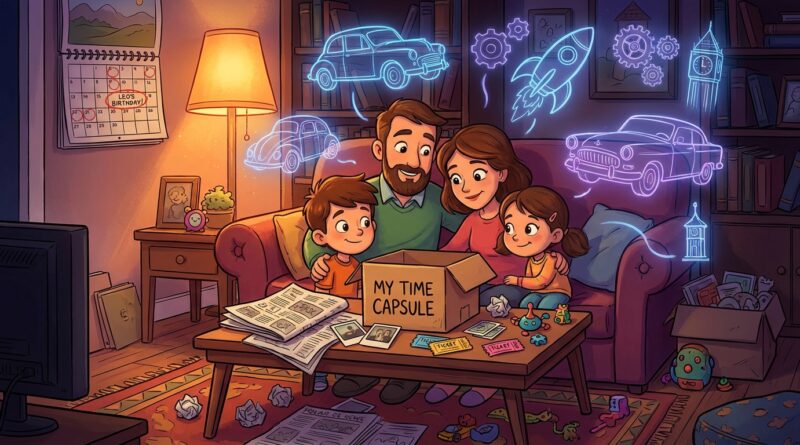
The Day-You-Were-Born Time Capsule: Weird History Waiting Under Your Birthday
Parents know the drill. You want history to feel exciting, but too often it turns into a list of odd facts that gets one laugh and then vanishes from memory by snack time. Kids do not need more random trivia. They need a reason to care. That is where a birthday time capsule comes in. Instead of asking, “What happened sometime in the past?” you ask, “What was happening on the exact day you arrived?” Suddenly history gets personal. The newspaper headline matters. The strange toy craze matters. The weather, the local fair, the song on the radio, even the weird ad in a grocery flyer all start to feel like clues from another world. This kind of time capsule history activity for kids works because it connects big history to one small, very loved day. It feels less like homework and more like building a treasure chest for future-them.
⚡ In a Hurry? Key Takeaways
- A birthday-based time capsule turns history into a personal scavenger hunt kids actually remember.
- Start with the child’s birth date and collect 5 to 10 items, headlines, photos, or notes from that exact day, week, or month.
- Keep it simple and safe. Use copies instead of irreplaceable originals, and avoid storing private details you would not want shared later.
Why this idea works so well
Kids usually connect with history when they can see themselves inside it. A battle from 300 years ago can feel distant. A headline from the day they were born feels different. It says, “The world was already busy when you got here.”
That shift matters. It helps children understand that history is not only kings, maps, and giant events. It is also school lunch menus, movie posters, weather reports, sports scores, toy ads, and photos of a main street before a new shop moved in. Ordinary life becomes part of the story.
That is the real magic of a good time capsule history activity for kids. It teaches that regular days become artifacts later.
What counts as “history” for a birthday time capsule?
More than most families expect.
Big history
This is the stuff adults usually think of first. Major news stories. Election results. A famous sports win. A space launch. A huge storm. A scientific discovery.
Small history
This is often the part kids love more. What was the top song that week? What cartoons were on? What snacks were new at the store? Was there a funny local headline? Did the town paper run a photo of a dog contest, a parade, or a giant pumpkin?
Personal history
Add the child’s own details too. Birth weight. First nickname. A note from parents. A photo of the home they came home to. A map showing where they were born. That mix of world events and family memories is what makes the capsule feel rich.
How to build the capsule without making it feel like school
Keep it light. This should feel like detective work, not a lecture.
Step 1: Pick the time window
Start with the exact birthday. If that feels too narrow, use the week or month around it. Some families do “the day you were born.” Others do “your birth month in history.” Both work.
Step 2: Hunt for 5 to 10 pieces
You do not need a museum collection. A handful of good finds is enough. Try to gather a mix like this:
- One big news headline
- One local event or newspaper clipping
- One pop culture item, like a song, movie, or toy
- One everyday object or photo, like a store receipt, flyer, or menu copy
- One family note written to future-them
Step 3: Ask fun questions
This is where the learning sneaks in.
- What would have surprised you if you lived that day?
- What looks old-fashioned already?
- What things are still around?
- What disappeared?
- Which headline sounds important now, and which one turned out to be forgettable?
Step 4: “Lock” it up
Use a shoebox, a plastic bin, a decorated envelope file, or a digital folder printed as a mini booklet. It does not need to be fancy. The ritual matters more than the container.
Best things to put inside
Think variety, not value.
- Printed newspaper front page from the birth date
- Screenshot or printout of weather for that day
- Photo of the hospital or neighborhood
- Copy of a movie ticket, magazine cover, or toy catalog page
- Map of the town or city
- List of top songs and TV shows
- Local school lunch menu or newsletter if you can find one
- Picture of the car the family drove then
- A note from a parent, grandparent, or sibling
- A short “Dear Future Me” note added by the child later
If you find something original and fragile, make a copy and store the copy. That way you keep the fun without risking damage.
Where families can find the good stuff
You do not have to be an archivist to do this well.
Easy places to start
- Local library newspaper archives
- Town historical society websites
- National newspaper archives
- Family photo albums and old phones
- School newsletters and church bulletins
- Weather history sites
- Music and movie chart archives
Grandparents are especially useful here. They often remember the strange local stuff no search engine will hand you right away.
How to keep it fun for different ages
Ages 5 to 7
Use pictures first. Ask simple questions like, “What looks silly?” or “What do you think people were excited about?” Let them decorate the box.
Ages 8 to 11
This is prime time. Kids this age love comparisons. Show them prices, gadgets, hairstyles, and headlines. Let them sort finds into “cool,” “weird,” and “important.”
Tweens and teens
Give them more control. Ask them to build the capsule theme themselves. Maybe they focus on sports, music, science, local news, or world events. They can also record a short voice memo to include.
A smart way to make it a yearly tradition
The first capsule can cover the birth date. After that, add one small item every birthday. A new note. A current photo. A headline from that year. A prediction for next year.
Over time, the capsule becomes more than a history project. It becomes a record of identity. Kids can actually watch their world getting bigger.
Common mistakes to avoid
Making it too big
If you try to include everything, nobody will want to finish. Keep it small and memorable.
Only choosing famous events
The odd little details are often what make the capsule stick in a child’s mind.
Forgetting context
Do not just drop in a clipping. Add a one-line note saying why it mattered or why it is funny now.
Storing private information carelessly
Avoid sensitive medical records, full account numbers, or anything that could create privacy issues later. Sentimental does not need to mean risky.
Why this teaches more than dates ever could
A child who builds a birthday capsule starts to see time differently. They notice that “history” is not a sealed-off place. It is built from normal days. Someone saved a menu. Someone kept a photograph. Someone clipped a silly headline. Years later, those scraps tell a story.
That is a powerful lesson because it helps kids understand that their own lives are part of the record too. They are not just learning history. They are noticing how history gets made.
At a Glance: Comparison
| Feature/Aspect | Details | Verdict |
|---|---|---|
| Learning value | Connects world events, local life, and family memories to one personal date. | High. Kids remember it because it feels like their story. |
| Ease of setup | Needs only a date, a few archive searches, printouts, and a box or folder. | Easy. Most families can finish a simple version in an afternoon. |
| Long-term value | Can be updated every birthday and reopened years later for reflection. | Excellent. It grows into a personal museum over time. |
Conclusion
Time capsules are popping up everywhere again, and kids are noticing. They see old boxes being opened, new ones being planned, and they start asking a very good question: what really counts as history? A birthday-based capsule gives families a simple answer they can hold in their hands. Look up the strange headlines, the curious local stories, the odd inventions, the school clippings, and the little details from the day a child was born. Add a note to future-them. Close the lid. Now history is no longer a faraway subject. It is a treasure chest built from one ordinary day that turned out not to be ordinary at all. That is why this works so well as a time capsule history activity for kids. It builds memory, identity, and curiosity, and it is easy to repeat year after year as a family tradition worth keeping.