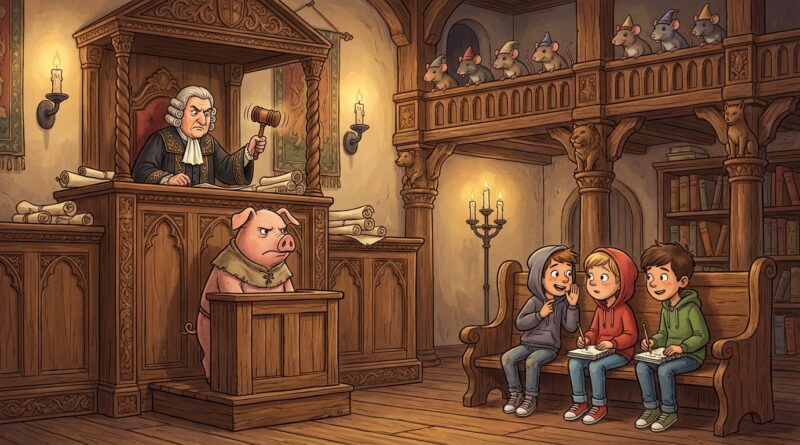
The Great Animal Trials: When Pigs, Rats and Even Insects Were Put on Trial in Real Courts
If your kids are bored by the same old “weird history facts,” I get it. Parents need stories that feel fresh, fast, and just odd enough to beat a screen for ten minutes. This is one of those rare winners. Long ago, real courts in Europe sometimes put animals on trial as if they were people. Not cartoon pretend courts. Actual legal cases, with judges, witnesses, and sometimes even lawyers for the accused. Pigs were charged after harming people. Rats were summoned for ruining crops. Insects were blamed for wrecking vineyards and fields. It sounds made up, but these cases really happened, and they tell us something funny and serious at the same time. People were trying to make sense of harm, blame, and justice in a world that worked very differently from ours. For kids, that means gasps. For grown-ups, it means a great chance to ask, “What does fair really mean?”
⚡ In a Hurry? Key Takeaways
- Yes, weird animal trials in history for kids are real. Pigs, rats, and insects were sometimes tried in court.
- Use these cases as a fun family “mini courtroom” game. Let kids argue whether the animal was guilty or whether people were just blaming nature.
- The stories are silly on the surface, but they also open up safe, useful talks about fairness, rules, and how justice has changed over time.
Why were animals ever put on trial?
The short answer is that people in the Middle Ages and early modern Europe saw law, religion, and daily life as tightly connected. If a pig killed a child, or a swarm of insects destroyed crops, that was not always treated as “just one of those things.” Communities wanted order. They wanted someone, or something, held responsible.
That sounds strange now, because we separate human intention from animal behavior. A dog does not understand the law. A rat is not plotting a crime. But centuries ago, some courts still acted as if animals could be called to account, especially when the damage was public, costly, or tragic.
For kids, this is where the story gets instantly sticky. They hear “the town put rats on trial,” and they are in.
The most famous animal defendants
Pigs in court
Pigs show up again and again in these records, and for a very practical reason. In many places, pigs roamed freely through streets and villages. They were common, strong, and sometimes dangerous, especially around small children.
When a pig injured or killed someone, authorities sometimes held a formal trial. In a few cases, the pig was dressed in human clothes for the punishment. That detail is so bizarre it feels like a folktale, but it appears in historical accounts. The point was not kindness to the pig. It was ceremony. The court was showing the community that justice had been carried out.
To modern ears, it sounds almost absurd. To people then, it could feel like restoring order after a shocking event.
Rats that never showed up
One of the funniest examples involves rats accused of eating barley crops in the French town of Autun. A lawyer named Barthélemy de Chasseneuz is said to have defended them. His defense has become famous because it sounds like something from a clever comedy.
First, he argued that the summons had not reached all the rats in the area. Fair point, if you are being very technical. Then, when the rats still failed to appear, he argued that traveling to court was dangerous because cats might attack them on the way.
That detail is what makes kids laugh every time. But it also shows that people in court were using real legal logic, even in a case that now feels ridiculous.
Insects on the legal docket
Insects were sometimes “tried” in church courts rather than ordinary criminal courts. These cases often involved beetles, weevils, caterpillars, or other pests that damaged crops. Instead of a jail sentence, the court might order them to leave, curse them, or assign them a different patch of land.
Yes, really.
This was partly religious ritual, partly public problem-solving, and partly a way for communities to feel they were doing something in the face of disaster. If your whole harvest was under attack, the idea of formally confronting the problem may have felt more meaningful than simply shrugging.
Were these trials serious, or just for show?
Both, in a way.
Some cases were very serious because they followed real tragedies. A pig attack, for example, could lead to a death. Other cases, especially with insects, feel more symbolic. But even symbolic acts can be deeply serious to the people doing them.
That is the key idea to share with kids. History is full of things that look silly from far away but made sense inside their own time.
It is a good reminder that future people may look back at some of our habits and think, “Wait, they did what?”
What these trials tell us about people, not just animals
The most useful part of this story is not the pig in a courtroom. It is what that image reveals about us.
Animal trials show that people have always wanted fairness, or at least the feeling of fairness. When something bad happened, communities looked for rules, rituals, and blame. They wanted a process.
That gives families a lot to talk about:
- Can something be punished if it does not understand right and wrong?
- Is a dangerous animal “guilty,” or is its owner responsible?
- When nature harms people, do we still look for someone to blame?
- What makes a trial fair?
Those are big questions, but kids are often better at them than adults expect. Start simple, and let them surprise you.
A quick note on what historians agree on
Not every dramatic detail in every animal trial story is equally well documented. Some famous retellings have grown a little over the centuries. That happens with history, especially the weird bits that get passed around because they are memorable.
Still, the broad fact is solid. Animal trials did happen, especially in parts of medieval and early modern Europe. Pigs were prosecuted. Rats and insects were summoned. Lawyers sometimes argued on their behalf. So while the exact wording of a speech may be fuzzy, the basic truth is strange enough all by itself.
How to turn this into a great family activity
Try a five-minute living room courtroom
This is where the article pays off. Instead of just reading the story and moving on, use it.
Pick one case. A pig that caused harm. Rats that ate grain. Beetles that ruined crops. Then assign roles:
- Judge
- Lawyer for the animal
- Lawyer for the villagers
- Witness
- Jury
Ask each person to make one argument. Keep it short and silly if you want.
Example:
- “The rats could not come to court because the cats made travel unsafe.”
- “The villagers worked hard for that grain and need protection.”
- “The pig is an animal, so the owner should be on trial instead.”
This works because it mixes laughter with real thinking. You are not just tossing out a random history fact. You are helping kids test ideas about blame and fairness.
Use the “fair or unfair?” question
Kids already love saying something is unfair. So lean into that.
After each case, ask:
Was this fair, unfair, or impossible to judge by modern rules?
That one question usually gets the conversation moving fast.
Let kids invent a modern version
Ask what today’s animal trial would look like. Should a raccoon be charged with raiding trash cans? Should a seagull be punished for stealing fries? Should a monkey be blamed for grabbing a tourist’s sunglasses?
Now you have history, ethics, and comedy at the dinner table.
Why this story sticks with children
Because it breaks the rules of how they think the world works.
Courtrooms are for people. Animals do not hire lawyers. Insects do not get summoned. So the moment kids hear that this actually happened, their brains light up. It feels impossible, which makes it memorable.
And unlike a lot of “crazy history” lists, this one has substance. It is not just random weirdness. It connects to law, responsibility, religion, farming, and community life.
That is what makes it good family material. It is fun first, but it does not stop there.
At a Glance: Comparison
| Feature/Aspect | Details | Verdict |
|---|---|---|
| Historical truth | Animal trials really did occur, especially in medieval and early modern Europe, though some dramatic details vary by source. | Weird, but real enough to trust as a history conversation starter. |
| Kid appeal | Pigs in court, rats with lawyers, and insects getting legal orders are instantly funny and easy to retell. | Excellent for screen-rivaling family reading. |
| Learning value | The stories lead naturally into talks about fairness, blame, law, and how people in the past understood justice. | Much more than a silly fact. It has real discussion value. |
Conclusion
If you want a piece of history your kids will actually repeat later, this is a strong bet. Weird animal trials in history for kids hit that sweet spot parents are always chasing. They are quick to tell, funny to picture, and strange enough to feel brand new. Best of all, they do more than entertain. A village hiring lawyers to defend pigs, or summoning insects to court, sounds outrageous, but it opens the door to smart family talks about justice, responsibility, and how human our rules really are. Try turning one case into a mini family courtroom tonight. You will get laughter, a little debate, and probably a child announcing tomorrow that medieval rats had better legal representation than most cartoon villains. That is a good return on one history story.