The Strangest Treasures Hiding In Small-Town Museums (And How Your Kids Can Hunt Them Down)
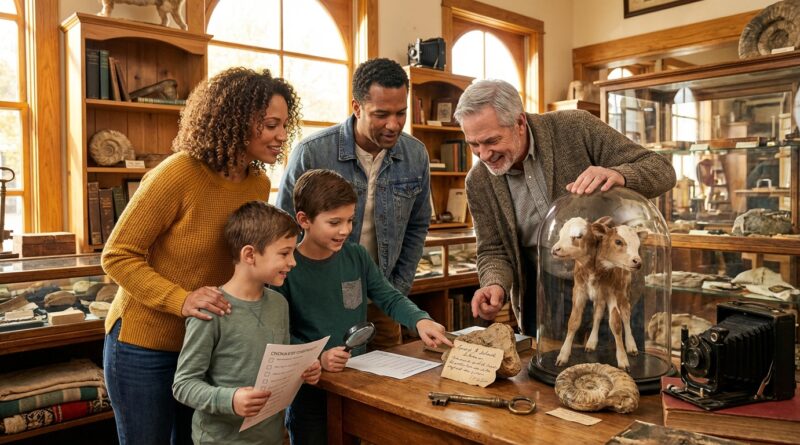
You can only do so many “educational” outings before they all start to blur together. Same gift shop. Same polished signs. Same kid asking, “Can we go now?” If that sounds familiar, the fix may be smaller, weirder, and a lot closer to home. Tiny local museums often hide the best stories in the room. Not the famous paintings or giant dinosaur halls, but the odd fossil with a crooked label, the mystery farm gadget nobody can name, the two-headed calf, the handmade dollhouse, the old dentist drill that makes every child step back and say, “What is that thing?” These are the surprising museum oddities for kids that turn a slow afternoon into a real adventure. Better yet, they give families something school worksheets rarely do. A mystery to solve together. With the right scavenger-hunt plan, even a one-room museum can feel like a detective story waiting to happen.
⚡ In a Hurry? Key Takeaways
- Small-town museums often offer the most memorable finds for families because they keep unusual local artifacts that bigger museums would never headline.
- Give kids a simple scavenger hunt, such as “find the weirdest tool, strangest animal, oldest object, and biggest mystery,” to keep them engaged.
- These outings are usually low-cost, less crowded, and easier on young kids, but call ahead for hours and hands-on rules before you go.
Why tiny museums beat the “same old” museum day
Big museums can be wonderful. They can also be exhausting. Parking costs more. Crowds are louder. And after the third room of carefully lit artifacts, many kids stop looking and start shuffling.
Small-town museums work differently. They are often built around local stories, donated collections, and plain old community pride. That means the displays can feel more personal, more random, and honestly, more fun. One case may hold arrowheads, a butter churn, a Civil War button, and a taxidermy bird with a very questionable expression.
That odd mix is exactly the point. Kids love a story with a twist. They remember “the tiny museum with the mystery bone and the old cash register” far better than another perfectly arranged hall of facts.
If your family likes offbeat outings, you may also enjoy Tiny Museum Mysteries: The Strangest Little Museums Your Family Has Never Heard Of. It taps into the same idea. Small places often hold the biggest surprises.
What kinds of strange treasures should families look for?
The best finds are usually not the “important” object on the brochure. They are the thing that makes everyone stop and ask questions.
Odd fossils and natural wonders
Many local museums have fossils, shells, minerals, antlers, preserved insects, or bones found nearby. They may not be world-famous specimens, but that can make them better for kids. A child can imagine the actual creek, farm, or quarry where the object turned up.
Ask questions like: Was this found here? Who found it? How old is it? Why does it look so strange?
Mystery tools nobody recognizes anymore
This is a gold mine for family fun. Old kitchen gadgets, blacksmith tools, farm equipment, laundry tools, medical devices, and shoe repair kits all look wonderfully baffling to modern eyes.
Tell your kids to guess first. Was it for baking? Pulling boots off? Fixing horseshoes? Cleaning clothes? Half the fun is being wrong.
Animals and curiosities
Many small museums have the kind of object kids talk about all week. A two-headed calf. A stuffed fox. A snake skin. An albino squirrel. A jar full of something that definitely deserves an explanation.
These displays can be creepy, but they are often unforgettable. For squeamish kids, let them skip what they do not like. For curious kids, this can be the highlight.
One-of-a-kind local artifacts
These are the items that never make it into textbooks. A handmade toy from 1900. A letter written during a flood. A piece of the town’s first fire engine. A wedding dress sewn from feed sacks. A school bell from a building that no longer exists.
These objects make history feel less like a lecture and more like eavesdropping on real life.
Turn the visit into a kid-friendly scavenger hunt
You do not need a fancy printable. A simple note on your phone works fine. The trick is to give kids a mission before they walk in.
Try the “Find 6 Weird Things” challenge
Ask your kids to spot:
- The strangest object in the building
- Something nobody in the family can identify right away
- An animal, fossil, or bone
- The oldest-looking item
- Something that would be hard to explain to a friend at school
- One object connected to your town or state
This works because it gives them a job. Kids pay more attention when they are hunting, comparing, and deciding.
Use the “What’s the story?” rule
For each object they choose, have them answer three questions:
- What do you think it is?
- Who used it?
- Why was it kept?
Even if their guesses are wildly wrong, they are practicing observation. That is the real win.
Let them pick one “show-and-tell” object
At the end of the visit, each child picks the one artifact they would tell a friend about. This keeps the outing from becoming a blur. It also makes the drive home much more interesting.
How parents can find surprising museum oddities for kids without a ton of research
You do not need to spend all week planning. A few quick checks can help you find the good stuff.
Look for the small museums with oddly specific themes
The weirder the focus, the better the odds. County museums, mining museums, railroad museums, medical history rooms, local nature centers, old jails, doll museums, and historical houses often have the most memorable collections.
Search the museum photos, not just the homepage. The hidden gem is usually sitting in the fifth photo, not the first one.
Read reviews for words like “quirky,” “unexpected,” or “kids loved the weird exhibits”
Parents tend to mention the moments that surprised them. If three reviews talk about an odd antique device, a strange animal display, or a volunteer with great stories, that is a strong sign.
Call ahead and ask one smart question
Try this: “What is the one object kids remember most after visiting?”
That one question can tell you a lot. If the answer is immediate, you have likely found a place with personality.
How to keep kids engaged once you get there
Small museums can be magic. They can also be quiet, old-fashioned spaces with lots of “please don’t touch” signs. A little prep helps.
Set expectations before you walk in
Tell your kids this is not a race. It is a hunt. They are looking for the weirdest and most confusing things, not trying to “finish” the museum.
Take photos when allowed
If the museum permits it, let kids snap pictures of their top finds. Later they can make a mini slideshow, a scrapbook page, or a “Museum Mystery of the Week” board at home.
Talk to staff or volunteers
This is where small museums shine. The person at the desk may know exactly why that rusty gadget matters, or who donated the fossil, or why the mannequin in the corner looks mildly haunted.
Kids often remember the story told by a real person more than anything on a wall label.
A simple scoring game that makes the day more fun
If your kids like challenges, give points as you go:
- 1 point for spotting something strange
- 2 points for asking a good question
- 3 points for correctly guessing an object’s use
- 5 points for finding the weirdest item in the museum
No prize needed, though a stop for ice cream never hurts. The point system just gives the outing some momentum.
What makes these outings so good for learning?
Because they do not feel like homework.
Kids are naturally curious about bizarre objects. When they ask, “Why would anyone use that?” they are already doing the work of history and science. They are connecting tools to daily life, fossils to place, and artifacts to real people.
Adults benefit too. Most of us have blind spots when it comes to local history. We know the big national stories, but not the odd little details from our own region. Tiny museums fill that gap in a way that feels human and grounded.
That is the sweet spot. A cheap outing that sparks real conversation.
At a Glance: Comparison
| Feature/Aspect | Details | Verdict |
|---|---|---|
| Cost and convenience | Small local museums are often free or low-cost, easier to park near, and less overwhelming for younger kids. | Great for spontaneous weekend outings. |
| Kid engagement | Weird objects, mystery tools, and local oddities give kids something to guess, question, and retell later. | Often more memorable than larger polished exhibits. |
| Learning value | Families can connect local history, science, and storytelling through a simple scavenger hunt format. | High value, especially for curious kids who like asking “what is that?” |
Conclusion
The best family museum trip does not always come with a huge parking lot, a giant banner, or a pricey ticket. Sometimes it is a quiet little building on Main Street with a shelf full of objects nobody can quite explain at first glance. Right now, families are hungry for odd, fun, brain-stretching adventures, but most of the attention goes to big attractions or generic trivia. Small-town museums offer something better. Real surprise. Real local stories. And a chance for kids to feel like detectives instead of passengers. Bring a simple scavenger hunt, ask a few good questions, and let the weirdest object win. You will get a low-cost outing, your kids will have something wild to talk about at dinner, and you may learn more than you expected too.