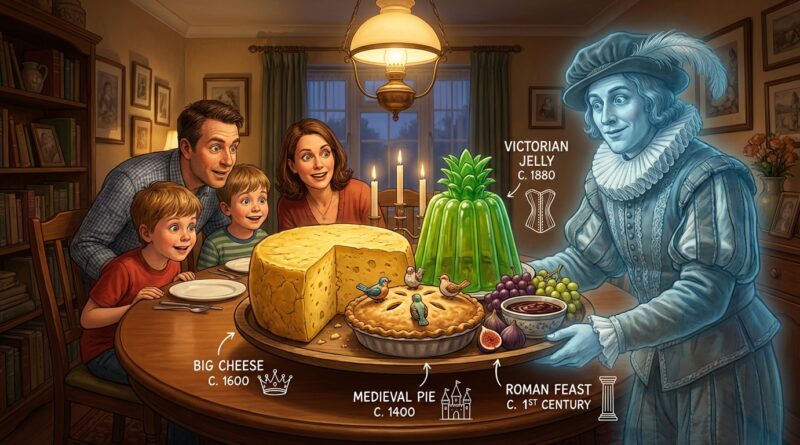
Weird Food From History: The Bizarre Meals Families Actually Ate
You know that moment after dinner when you want one good, screen-free thing to do with your kids, and every “fun facts for kids” list feels like somebody shook a trivia jar and dumped it on the floor? That is where weird food history saves the day. Nothing gets kids listening faster than hearing that real families once ate things like eel pie, toast soaked in beer, or salad made with flowers. These are the kinds of weird historical food facts for kids that get instant reactions. “They ate what?” “Why?” “Did they like it?” That is exactly the point. Food makes history feel real, messy, and funny in a way dates and names rarely do. So here is a ready-made gross-gourmet menu from the past you can read out loud tonight. No craft supplies. No printing. No prep. Just strange meals, quick context, and plenty to talk about around your very normal table.
⚡ In a Hurry? Key Takeaways
- Kids usually remember history better when it is tied to shocking, funny food people really ate.
- Turn this into a 10-minute family game by asking, “Would you try it?” after each dish.
- Stick to storytelling, not recreating old recipes, since some historical foods were unsafe by modern standards.
Why weird food works so well with kids
History can feel far away. Dinner does not.
That is why food is such a handy shortcut. Kids may not care yet about trade routes, medieval farming, or wartime shortages. But they absolutely care that someone once thought it was a fine idea to eat lampreys, boiled calves’ feet, or bread floating in ale.
Weird meals give you an easy opening into bigger stories. Suddenly you are not “teaching history.” You are swapping gross little time-travel stories.
If your family already likes odd-but-true stories, this pairs nicely with The 38‑Minute War, The Battle With Birds, And Other Real History That Sounds Totally Made Up. Same energy. Lots of disbelief. Very few eye rolls.
A historical gross-gourmet menu your kids will remember
Starter: Ancient Roman dormice
Yes, actual dormice. Wealthy Romans were known to fatten them up and serve them as a fancy dish.
To modern kids, this lands somewhere between “ew” and “wait, like a tiny mouse?” Which is why it works.
What to tell kids: In ancient Rome, rich people sometimes liked rare or flashy foods because it showed off their money.
Talk about it: Was this about taste, or bragging rights?
Soup course: Medieval pottage
Pottage was basically a thick stew that could contain grains, vegetables, herbs, and sometimes bits of meat if a family had any. This one is less gross and more surprising because people ate versions of it again and again.
That repetition is useful for kids to hear. Not every weird food fact has to be shocking. Sometimes the surprise is how plain life used to be.
What to tell kids: Many families ate what they could grow, save, or stretch. A pot over the fire did a lot of the work.
Talk about it: Could you eat almost the same stew every day?
Main dish: Victorian eel pie
Eels were cheap, filling, and common in some places, especially in London. So families baked them into pies.
To a child raised on pizza and pasta, “eel pie” sounds like a dare. But this is a good reminder that “normal food” changes depending on where you live and what is easy to catch.
What to tell kids: People often ate what was local, affordable, and available in big amounts.
Talk about it: If your town had one super-common food, what would end up in pies?
Side dish: Dandelion salad
This one sounds less bizarre now, but to many kids it is hilarious. Yes, people really did eat plants from the yard. Dandelion greens have been used in salads and cooked dishes for a long time.
This is a nice bridge between “gross history” and “actually kind of smart.”
What to tell kids: Some foods we call weeds today were once useful ingredients.
Talk about it: What foods do we ignore now that people in the future might think are silly to waste?
Drink: Ale for breakfast
This one gets a big reaction. In parts of history, even children sometimes drank weak ale or small beer because water could be unsafe. It was not the same as a modern strong alcoholic drink, but it still sounds wild to modern ears.
What to tell kids: Clean drinking water was not always easy to get. People used safer options when they had to.
Talk about it: What everyday thing do we take for granted now that would amaze people in the past?
Dessert: Sugar sculptures and edible show-offs
At big feasts, wealthy households sometimes had sugar shaped into animals, castles, or scenes. It was part dessert, part table decoration, part status symbol.
Kids usually love this one because it sounds like candy and art had a weird historical baby.
What to tell kids: Fancy food was often about impressing guests, not just feeding them.
Talk about it: What food today is partly about showing off?
What made these foods seem normal at the time?
This is the part that makes the story stick.
The goal is not just to say, “People in the past were weird.” It is to show kids that food depends on money, weather, trade, local plants, religion, class, and what people knew about safety.
That turns gross-out facts into actual history.
A family might eat eels because they were cheap. Another might eat flower salads because that is what grew nearby. Another might drink weak ale because clean water was a gamble. Once kids hear the reason, the weirdness starts making sense.
How to turn this into a 15-minute dinner table game
You do not need props. Just read one food at a time and ask three simple questions.
1. Would you try it?
This gets everyone talking fast.
2. Why do you think people ate it?
Now kids start guessing about weather, money, farming, and geography without realizing it.
3. What food from today might seem weird in 500 years?
This is usually the funniest part. Cheese in a can. Neon cereal. Chicken nuggets shaped like dinosaurs. You will get answers.
A quick note on accuracy and safety
When sharing weird historical food facts for kids, it helps to keep two things clear.
First, not every strange old dish was eaten by everyone. Some were luxury foods for the rich. Some were everyday meals for working families. Some showed up only in certain places.
Second, this is better as a storytelling activity than a cooking challenge. Historical recipes can involve unsafe ingredients, unclear measurements, or food-handling habits you do not want to copy.
Reading about a lamprey pie is fun. Making one on a Tuesday is optional, and perhaps not wise.
Why this sticks better than random trivia
Random facts vanish. Stories with disgust, surprise, and a little logic tend to stay put.
That is the sweet spot here. Kids laugh first, then ask questions. Once they start asking why people ate a thing, they are suddenly learning about daily life, survival, class, and science.
And because everybody eats, everyone has an opinion. That makes this one of the rare history activities that works across ages without much effort from you.
At a Glance: Comparison
| Feature/Aspect | Details | Verdict |
|---|---|---|
| Best hook for kids | Gross or surprising foods like dormice, eel pie, and breakfast ale get instant reactions. | Excellent for grabbing attention fast |
| Learning value | Each dish opens a door to bigger topics like wealth, farming, water safety, and local ingredients. | High, especially with a few follow-up questions |
| Ease for parents | No prep needed. Just read, react, and chat for 10 to 15 minutes. | Very easy screen-free win |
Conclusion
If you need one simple offline activity that does not feel like homework, weird food history is a surprisingly solid pick. Food is one of the easiest ways to hook kids on history, and a themed set of bizarre meals from different eras gives families a ready-made storytime they can use tonight. In a moment when parents are desperate for offline activities that still feel exciting, a “Historical Gross-Gourmet Menu” lets you entertain, educate and connect with your kids in under fifteen minutes, no prep needed. And if all it takes is one mention of eel pie to get everyone talking, that sounds like a pretty good use of dessert time.