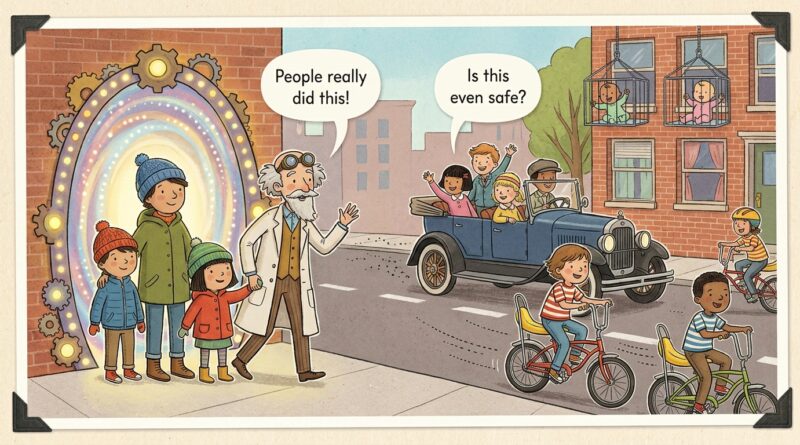
History’s Craziest Childhoods: Vintage Photos That Prove Grown‑Ups Used To Live Wild And Worry‑Free
Parents cannot win lately. One minute you are told kids need more freedom. The next minute you are judged for letting them walk to the mailbox alone. Meanwhile, plenty of kids assume the past was just black-and-white boredom with itchy sweaters and no fun at all. That is why weird vintage childhood photos history for kids can be such a sweet spot. They are funny, surprising, and honestly a little shocking. The best ones show ordinary children doing things that would make modern adults spill their coffee. Think riding in wooden wagons down busy streets, climbing impossibly high playground gear, or hanging around grown-up jobs like it was no big deal. These photos are not here to say the old days were better. They were just different, rougher, freer, and sometimes wildly unsafe. Seen together, they turn history into a family conversation starter instead of a lecture, and they give kids a chance to play detective with real life from another time.
⚡ In a Hurry? Key Takeaways
- Vintage childhood photos prove everyday kid life used to be far more hands-off, risky, and surprising than most families expect.
- Use these images as conversation starters by asking, “What do you notice first?” before jumping into facts or lessons.
- A kid-friendly, curated set of photos is the safest way to enjoy the fun without running into harsh jokes or adult comment sections.
Why these old childhood photos hit so hard
Some history facts bounce right off kids. A date. A war. A law. Fine. But show them a 100-year-old photo of children packed into the back of a truck with zero seat belts, or a towering metal slide over concrete, and suddenly history feels real.
That is the magic here. These are not distant kings and dusty documents. This is everyday life. School days. Summer days. Street games. Family outings. And the photos show how much has changed in ways kids can spot in seconds.
Parents usually notice one thing first. “How were adults okay with this?” Kids notice something else. “Wait, they got to do that?” Both reactions are useful.
The wildest kinds of vintage childhood moments caught on camera
1. Playground equipment that looked like a dare
Old playgrounds were not exactly built by people who worried about lawsuits. You see giant slides, tall jungle gyms over hard ground, homemade seesaws, and spinning rides that look like they were designed by a carnival mechanic having a very strange day.
To a modern child, the pictures can seem fake. To adults, they look like an urgent trip to the emergency room. But they also show something real about the time. Kids were often expected to test themselves physically without much adult hovering.
2. Kids riding anywhere and everywhere
Bikes with no helmets. Scooters in traffic. Wagons in busy streets. Children perched on fences, tractors, boats, and carts. In many old photos, the idea of “safe transport” seems almost optional.
This is one of the easiest ways to start a family talk about how rules change. Not because people suddenly became less brave, but because we learned more about injuries and prevention.
3. Children helping with real work
Not every old image is cute. Some are sobering. Many vintage photos show children around farms, shops, factories, newspapers, fishing docks, or family businesses. Sometimes they are “helping.” Sometimes they are clearly working very hard.
This matters because it helps kids understand that childhood itself has changed. Free time, school expectations, and what adults considered normal were not the same across eras or income levels.
4. Everyday freedom that feels impossible now
One of the biggest surprises in weird vintage childhood photos history for kids is just how far children seemed to roam. You see packs of kids in city streets, swimming holes, fields, train platforms, and neighborhoods with no adult in sight.
That does not mean everything was wonderful. It means freedom often came with more risk, and adults had different ideas about supervision. The photos let families talk honestly about both sides at once.
What these images really teach, beyond the shock factor
The fun part is the gasp. The useful part is what comes next.
These photos help kids see that history is not one long march from bad to good or boring to fun. It is messier than that. Some things improved a lot, especially safety, health, and child labor laws. Some things were lost too, like unstructured outdoor time and independence.
That makes for a better conversation than “Back in my day.” It becomes, “What changed, and why?”
You can even connect this kind of photo tour to other unusual history experiences. If your child likes odd, memorable slices of the past, they may also enjoy History’s Strangest Museum Sleepovers: True Tales From The World’s Weirdest Collections For Kids. It has the same “wait, that really happened?” energy, but in a different setting.
How to scroll through vintage photos with kids without turning it into homework
Start with observation, not explanation
Before giving context, ask simple questions.
What do you notice first?
What looks fun?
What looks dangerous?
What is missing that we would expect today?
That keeps kids curious instead of defensive. It also helps them practice paying attention to details.
Separate “different” from “better”
This is important. Some adults get nostalgic. Some kids get smug. Neither reaction tells the whole story.
Try saying, “People made decisions with the knowledge and tools they had at the time.” That keeps the conversation fair. It also avoids turning old photos into a lecture about how foolish everyone used to be.
Use one photo to open three topics
A single image can lead to a lot:
- Safety. Why helmets, car seats, and playground standards changed.
- Freedom. How much independence children had then versus now.
- Daily life. What school, chores, jobs, and play looked like.
That is why these images work so well on the couch. You do not need a full lesson plan. You just need one good picture and ten minutes.
Why curated, kid-friendly collections matter
The internet is full of vintage photo threads, but many are mixed with mean jokes, grim comment wars, or adult material that sneaks in when you least expect it. That ruins the whole thing for family browsing.
A clean, curated collection solves that problem. It lets the photos do their job. Surprise the kids. Make the adults laugh. Start a real discussion. No side trip into comment section nonsense.
That is especially useful for younger readers who are old enough to enjoy the weirdness but not old enough to filter internet sarcasm or darker historical context on their own.
Good questions to ask after each photo
If you want to keep the conversation going, use these:
- Would this be allowed today?
- Why do you think adults thought this was okay then?
- What looks fun about it?
- What looks risky?
- What has improved since then?
- Do you think kids today have gained something or lost something?
Those questions work because there is no single right answer. Kids get to think, compare, and sometimes change their minds halfway through.
At a Glance: Comparison
| Feature/Aspect | Details | Verdict |
|---|---|---|
| Shock value | Photos of old playgrounds, travel, chores, and street life instantly grab kids because the differences are obvious. | Excellent hook for family history chats. |
| Educational value | Images naturally open discussion about safety rules, child labor, independence, and changing social norms. | Much easier for kids to absorb than textbook facts alone. |
| Family friendliness | Curated sets avoid snark, adult comments, and random off-topic distractions common in social feeds. | Best way to keep the experience fun and safe. |
Conclusion
Vintage childhood photos do something clever. They sneak history in through the side door. Instead of asking kids to care about “the past” in a vague way, they show them children their own age doing jaw-dropping, funny, risky, and very real things. That makes the past feel alive. It also helps parents skip the usual lecture mode and talk about safety, freedom, and how family life changes over time. With a kid-friendly tour, you get all the fun of those viral threads without the snark or the messy comment sections. The result is simple and useful. Parents get a smart, low-pressure way to start big conversations. Kids get to feel like time-travel detectives, not bored students. That is a pretty great trade for one evening on the couch.