History’s Rarest Dinner Escape: The True Story Of The Two‑Colored Lobster That Cheated The Cooking Pot
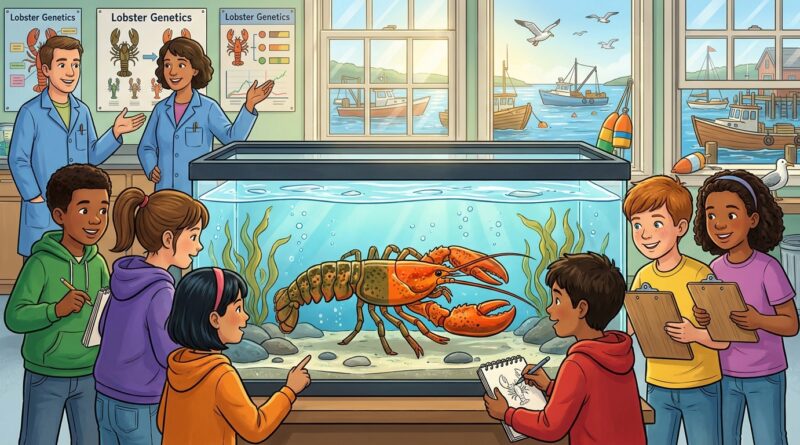
Most “weird animal facts” for kids feel tired after about three bullet points. You have probably seen the same octopus fact, the same blue whale fact, and the same recycled list copied from one site to the next. That is why this lobster story feels so fun. It is real, it is happening now, and it gives families something better than trivia. Off Cape Cod, a fisherman pulled up a lobster that was split into two colors. One side looked like the usual dark brown shell. The other side was bright orange. Instead of ending up in a cooking pot, this rare lobster was sent to an aquarium. That makes it more than a strange headline. It is a perfect chance to talk with kids about marine science, chance, color, genetics, and why scientists get excited when nature does something unexpected. If you want two colored lobster kids facts, this is the fresh one to start with.
⚡ In a Hurry? Key Takeaways
- A real two-colored lobster, half brown and half bright orange, was recently found off Cape Cod and saved from being cooked.
- Use the story to teach kids about probability, animal color, and how rare “mistakes” in nature can help scientists learn.
- The lobster is for looking, not touching or copying at home. Wild animals should be left to trained experts and aquariums.
Why this lobster story grabbed everyone’s attention
Because it sounds made up. That helps.
A lobster that is neatly split into two colors feels like something from a cartoon. But this one is real. Reports say it was caught in waters off Cape Cod, and its unusual coloring made it stand out right away. One half was the common darker brownish color many lobsters have before cooking. The other half was a striking orange, the color people usually expect only after the lobster has been boiled.
That visual surprise is why the story is racing through weird-news feeds. It is rare. It is easy to picture. And it raises a question kids instantly ask.
How can one animal be two different colors at the same time?
The true story of the lobster that cheated the cooking pot
In the simplest version, here is what happened. A fisherman caught an extremely rare lobster with a split-color shell. Instead of treating it like a normal catch and sending it toward dinner, the lobster was recognized as special and moved to safety at an aquarium.
That is the “escape from dinner” part of the story. It is not magic. It is good judgment.
When fishers, marine biologists, or aquarium staff spot a rare animal like this, they often want to preserve it for study and public education. A lobster this unusual can help scientists and families see how development and pigment work in real life, not just in a textbook.
What makes a two-colored lobster so rare?
It is not just orange. It is split.
Orange lobsters by themselves are already very rare. But a lobster that is divided into two colors, almost like someone drew a line down its body, is even more unusual.
This kind of split look can happen when something changes very early in development. In plain English, the cells on one side and the cells on the other side may not end up using pigment in exactly the same way. Scientists sometimes connect this kind of effect to genetic quirks or developmental oddities that happen before the animal fully forms.
Rare does not mean impossible
You may see estimates like 1 in 50 million attached to unusual lobsters. Numbers like that are best treated as rough odds, not a promise written in stone. Nature does not keep perfect scorecards for us.
Still, the big idea is clear. This is not your everyday seafood counter lobster. It is the sort of catch many fishers could work their whole lives and never see.
Two colored lobster kids facts that are actually worth sharing
Here are the parts kids usually love most.
1. Lobsters are not always the color you think
Many kids think lobsters are naturally bright red or orange because that is how they show up on plates and in cartoons. In the wild, most American lobsters are darker, often brownish, greenish, or mottled. Cooking changes shell pigments and makes the familiar bright color pop out.
2. This lobster was orange before any cooking happened
That is what made it so shocking. Half of it already had that cooked-looking color while still very much alive.
3. Scientists love odd animals
Not because they are cute, though that helps. Scientists get excited because unusual animals can reveal how bodies grow, how genes affect appearance, and how color works in the natural world.
4. “Mistakes” in nature can teach us a lot
That word sounds harsh, but in science it often means a variation from the expected pattern. Those variations are gold for learning.
5. The lobster got a second chance
Instead of becoming dinner, it became a living science lesson for aquarium visitors and curious kids.
How do you explain 1 in 50 million to a child?
This is where the story gets even better. It turns into a math chat without feeling like homework.
Start small. Ask your child to imagine flipping a coin. Heads or tails. That is a 1 in 2 chance.
Then go bigger. Ask them to imagine guessing one exact grain of sand on a huge beach. That is not a perfect match for 1 in 50 million, but it gives the right feeling. The event is so rare that most people will never see it in person.
You can also say it like this.
If 50 million lobsters were lined up, only one might have this exact kind of unusual look. Again, that is a rough way to picture it, not a lab-certified count, but kids get it right away.
A simple kitchen-table activity inspired by the lobster
Try a coin-flip rarity experiment
You do not need special supplies. Just a coin and a little patience.
Have your child flip a coin 10 times and write down the order. Then ask how often they think they will get all heads. They quickly learn that rare patterns can happen, but not often.
From there, explain that nature also produces rare outcomes. Most animals follow familiar patterns. Once in a great while, something unusual appears. That does not make it wrong. It makes it interesting.
Try a coloring challenge
Print or draw a simple lobster outline. Then ask your child to invent three rare lobsters.
- One split into two colors
- One with a speckled pattern
- One with colors meant for camouflage
This turns a headline into a science-and-art activity in about ten minutes.
What “half one thing and half another” can teach kids
Kids notice categories fast. Red or blue. Big or small. Same or different.
This lobster is a nice reminder that nature does not always stay inside tidy boxes. Some animals show mixed traits. Some have unusual pigment. Some have body plans or patterns that do not match the usual picture in a field guide.
That is a gentle way to teach a bigger lesson. The natural world is full of variation. Scientists do not panic when they see it. They get curious.
Why aquariums care about rare finds like this
A rare animal can do three jobs at once.
- It helps the public learn.
- It gives scientists a chance to observe something uncommon.
- It may help protect an animal that would otherwise be lost.
For families, that means one lucky lobster can spark hundreds of great questions from kids standing at the glass.
What to say when your child asks, “Was it lucky?”
Honestly, yes.
It was unlucky enough to be caught, but lucky enough to be spotted by someone who knew it was extraordinary. If it had looked ordinary, it probably would not be making headlines today.
That is part of what makes the story memorable. It mixes science, chance, and a happy ending.
At a Glance: Comparison
| Feature/Aspect | Details | Verdict |
|---|---|---|
| Color pattern | One side normal dark brown, one side bright orange | Extraordinary and easy for kids to understand |
| Rarity | Often described as around 1 in 50 million, used as a rough estimate | A great real-world way to explain probability |
| Family learning value | Starts conversations about genetics, color, chance, and animal care | Much better than another stale trivia list |
Conclusion
This is why the two-colored lobster story matters more than it first seems. Yes, it is weird. Yes, it is the kind of thing kids want to tell everyone at dinner. But it is also a perfect live lesson. A real lobster, half normal brown and half bright orange, was pulled from the waters off Cape Cod and sent to an aquarium instead of a boiling pot. That gives families a rare chance to mix breaking news, marine science, and probability into one conversation kids can actually enjoy. You can talk about how unlikely 1 in 50 million feels, what it means to be half one thing and half another, and why scientists get so excited about unusual patterns in nature. Better yet, you can turn that curiosity into action with coloring pages, coin flips, and simple questions at the kitchen table. That is the real win here. Kids do not just hear a wild fact. They start thinking like junior researchers.