History’s Strangest Family Pit Stops: True Stories Behind America’s Weirdest Roadside Attractions
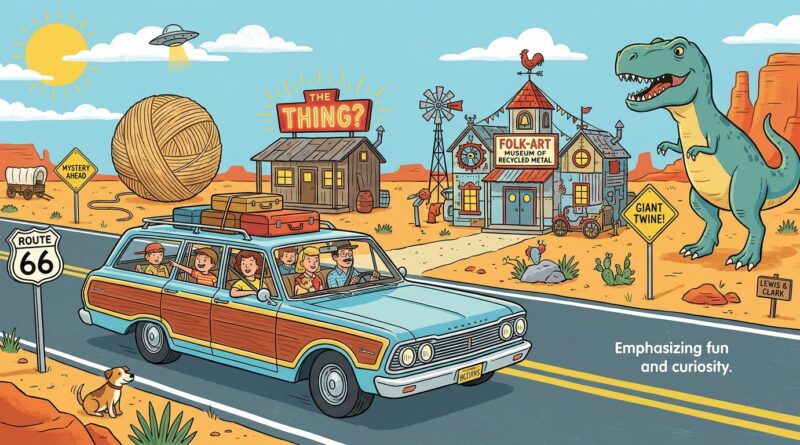
Every parent knows the road trip slump. Twenty minutes in, someone asks for snacks, someone drops a charger, and soon the whole back seat is glowing blue from tablets while the highway rolls by unnoticed. That is why weird roadside attractions for kids can feel like a secret weapon. They turn a plain drive into a scavenger hunt with true stories attached. And the best part is, many of these stops are cheap, fast, and memorable in a way another burger chain just is not. America is full of oddball places built around real history, local pride, and people with wonderfully strange ideas. A giant ball of twine. A desert mystery called The Thing. A preserved two-headed calf that sounds made up, but is not. If you know the story before you get there, the stop becomes more than a bathroom break. It becomes the part of the trip your kids actually talk about later.
⚡ In a Hurry? Key Takeaways
- Weird roadside attractions for kids work best when you pair each stop with a short, true story before you arrive.
- Pick attractions that are quick to visit, low-cost, and easy to spot from the road so they feel fun, not like homework.
- Always check hours, ticket prices, and whether the attraction is still open, because many quirky stops keep unusual schedules.
Why these odd stops work so well for families
Kids do not usually get excited by the phrase “local history.” Fair enough. But tell them there is a mystery object in the Arizona desert called The Thing, or a town proud of its giant twine ball, and suddenly they are paying attention.
That is the magic here. These places are small stories with a giant sign attached. They give everyone in the car something to look for, talk about, and laugh over.
They also fit real family life. Most roadside attractions are cheaper than theme parks, easier than a full museum day, and short enough that nobody melts down. You stop, stretch, look at something deeply strange, take a photo, tell the story, and move on.
True stories behind some of America’s weirdest roadside stops
The Thing, Arizona
If you have ever driven Interstate 10 through southern Arizona, you may have seen the billboards. They start early. Really early. Over and over they ask the same question: “What is The Thing?”
That is not an accident. The attraction became famous because of its long-running billboard campaign, which was built to hook bored drivers miles before they arrived. It turned desert curiosity into a business model.
Inside, The Thing has long been presented as a mystery exhibit, mixed with museum-style displays and old travel-stop flair. For decades, visitors have debated whether it is creepy, silly, disappointing, or genius. The truth is that the mystery is the point. This is classic American roadside showmanship. Half the fun is the build-up.
For kids, make it a guessing game before you get there. Is it an alien? A monster? A machine? Even if the final reveal gets a laugh instead of a gasp, you have turned miles of empty road into an ongoing family joke.
The World’s Largest Ball of Twine, Kansas and Minnesota
Here is where roadside history gets gloriously specific. America actually has more than one famous giant twine ball. The best-known feud is between the twine ball in Cawker City, Kansas, and the one in Darwin, Minnesota.
The Darwin ball was created by Francis A. Johnson, who rolled twine for years and ended up with a monster ball weighing several tons. Cawker City took a different route. Its twine ball became a community project, with residents adding to it over time.
That makes this a fun car conversation starter. Which is cooler, a giant object made by one determined person, or one built by a whole town?
For parents, this is gold. The story sneaks in lessons about persistence, local pride, and world-record bragging rights without sounding like a lesson at all. It is also proof that if a town has enough enthusiasm, almost anything can become a landmark.
Two-headed calves and other real small-town museum treasures
Many families think roadside attractions are all giant statues and goofy signs. Some are. But some of the strangest stops are tucked inside little museums, trading posts, and old tourist cabins where preserved oddities draw people in.
Yes, the two-headed calf stories are real. Across the country, small museums and curiosity collections have displayed rare animal specimens for decades. In earlier eras, these exhibits were part science lesson, part small-town showpiece, part “you have to see this for yourself” marketing.
To modern kids, this can feel equal parts fascinating and eerie. That is okay. Weird sticks in the memory. If your child likes nature, ask how something unusual like that happens. If your child likes spooky stories, lean into the mystery of how people used to travel miles just to see something rare with their own eyes.
These places are also a reminder that before phones and streaming, people found entertainment in the odd, the local, and the hard to explain.
Wall Drug, South Dakota
Wall Drug started as a small drugstore during the Great Depression. Business was slow. Then the owners tried a simple idea: free ice water for travelers crossing hot prairie roads.
It worked. Then came the signs. Lots of signs. Over time, Wall Drug grew into one of the most famous roadside attractions in the country, packed with shops, food, cowboy themes, and tourist fun.
The true story here is not that it is weird, though parts of it definitely are. It is that smart advertising and a simple need helped build a travel legend. It is roadside America in one stop. A basic service became a giant destination because someone understood tired families in hot cars.
How to turn these stops into a better trip, not just another stop
Use the two-minute story rule
Before you arrive, tell a very short version of the attraction’s backstory. Keep it to two minutes or less. If you go longer, it starts to sound like school.
Try this: “A man in Minnesota spent years rolling one giant ball of twine.” Or, “This desert stop became famous by asking drivers one question for miles and miles.” That is enough to spark interest.
Let the kids guess first
Ask, “What do you think we’re about to see?” That works especially well for mystery stops like The Thing.
Children pay more attention when they get to make a prediction. Even teenagers, who may pretend not to care, often join in if there is a chance to be right.
Pick one weird stop per driving block
You do not need six odd attractions in one day. One every few hours is plenty. Too many stops can make the trip feel choppy and exhausting.
Think of them as palate cleansers for the highway. A little weirdness goes a long way.
Check the practical stuff
This is the boring part, but it matters. Some attractions close early. Some are seasonal. Some are cash only. Some are “open” in the sense that a giant object is outside, but the attached gift shop is very much not.
A quick check before you go saves a lot of disappointment.
Why kids remember weird history better than normal history
Because weird history feels like a secret. It feels discovered, not assigned.
That is why roadside attractions can be such a smart family tool. They give children a way into the past through surprise. A giant object, a mystery exhibit, or a bizarre museum specimen gets the door open. Then the real story slips in behind it.
If your family likes this kind of offbeat history, you would probably also enjoy History’s Most Bonkers Buildings: True Stories Of Houses Shaped Like Ducks, Hotdogs And Other Giant Things. It has the same fun mix of odd design and true stories that makes kids look up from their screens.
How to find weird roadside attractions for kids without overplanning
You do not need a color-coded binder and six spreadsheets. Just start with your route and look for places that meet three tests.
First, can you explain the attraction in one funny sentence? Second, can you stop there in under an hour? Third, is it something your kids can actually see and react to right away?
If the answer is yes, it is probably a good road trip stop.
The best attractions are visible, simple, and tied to a real story. Giant statues, strange museums, mystery houses, local record holders, and historic tourist traps all fit the bill.
At a Glance: Comparison
| Feature/Aspect | Details | Verdict |
|---|---|---|
| Cost | Many roadside attractions are free or low-cost, with optional gift shops or small admission fees. | Great for budget-friendly family travel. |
| Kid Engagement | Short stops with a weird visual and a true backstory usually hold attention better than long, formal tours. | Best when paired with a quick story before arrival. |
| Trip Planning | Hours, access, and upkeep vary a lot. Some stops are polished, others are charmingly rough around the edges. | Worth it, but always check details first. |
Conclusion
Road trips do not have to be a blur of rest stops, fries, and “are we there yet?” Right now, families are looking for budget-friendly adventures and quick escapes, and quirky American roadside attractions fit that perfectly. They are affordable, easy to fold into a normal drive, and packed with stories strange enough to cut through screen time. When you give kids a true mini tale about a two-headed calf, a mysterious Thing in the desert, or a record-breaking twine ball, you turn dead highway miles into a shared family story. That is the real win. Not just seeing something odd, but making the trip feel alive again. A little weirdness can do that. Sometimes it is the best part of the drive.