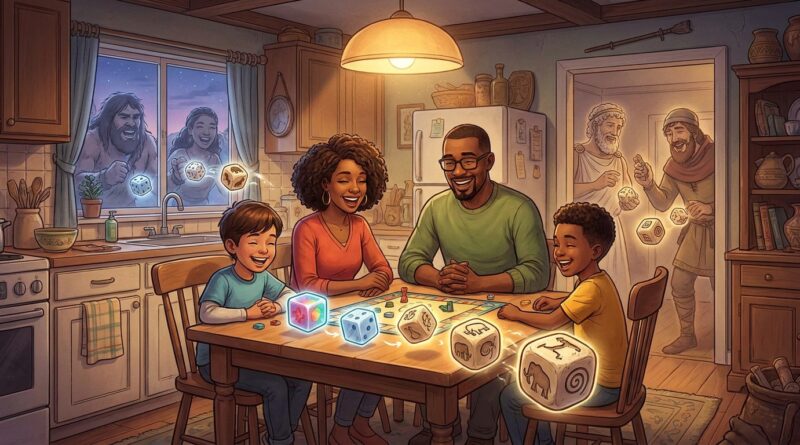
History’s Strangest Family Game Night: The 12,000‑Year‑Old Dice, Bones And Bets That Built Our World
If your kids hear the word “history” and immediately look for the nearest exit, you are not alone. A lot of family history talk gets stuck on kings, dates and long names nobody remembers by dessert. The frustrating part is that real history is often much weirder, funnier and more human than the textbook version. Case in point: people were tossing bones like dice and making bets about 12,000 years ago. Not in a fancy casino. Around campfires. In early villages. In the middle of ordinary life.
That is what makes the ancient bone dice history for kids such a great dinner-table story. Fresh research suggests some of the earliest game pieces were made from animal bones, especially small ankle bones called astragali. They were easy to pick up, easy to toss and perfect for games of chance. One little bone could be a toy, a lucky charm, a betting tool or all three. Suddenly history stops feeling dusty. It feels like family game night, just with more mammoths and fewer snack bowls.
⚡ In a Hurry? Key Takeaways
- Some of the earliest known dice-like game pieces were carved or collected bones used for play, luck and simple betting thousands of years ago.
- You can make this history click for kids by comparing ancient bone games to modern dice games they already know.
- Keep it PG by focusing on play, prediction and luck, not adult gambling problems. The fun part is how normal these people suddenly feel.
Why ancient dice are such a great family story
Here is the hook. Before printed cards, before plastic board pieces, before shiny casino dice, people were already rolling objects and arguing about what the result meant.
That is deeply relatable. Kids get it in two seconds. You throw something. Everybody leans in. Someone cheers. Someone says, “No fair, do it again.”
That simple moment goes way back. Archaeologists have found evidence that animal bones, especially knucklebones from sheep, goats and similar animals, were used in games in many parts of the ancient world. Some were left natural. Others were shaped, marked or polished. Over time, these objects became part of play, fortune-telling and betting.
So when people ask what ancient life was really like, this is one answer: they played games. A lot.
What exactly were these bones?
The tiny game piece with a big career
The most famous ancient “dice” were often astragali, the ankle bones of hoofed animals. They were not cubes like modern dice. They had a few stable sides, and each side could land face up.
That made them perfect for chance games. Toss a handful and see what came up. Think of them as a mix of dice and jacks, with a side job as a lucky token.
In some places, people used them for simple contests. In others, they used them for divination, which is a serious-sounding word that basically means trying to read luck or signs from a throw. And yes, some people also bet on the results. Humans have always been very confident that this next throw will definitely be the lucky one.
Why bones and not something else?
Because bones were handy. If your community hunted animals or raised herds, those little ankle bones were already around. They were durable, small and naturally shaped in a way that made them fun to toss.
You did not need a factory. You did not need a rulebook. You just needed a bone and another person willing to say, “Best two out of three.”
How far back does this go?
The headline-grabbing part is that some bone gaming pieces go back roughly 12,000 years. That pushes organized play and chance games deep into prehistory, long before most people imagine “civilization” beginning.
This matters because it changes the picture in our heads. Early humans were not just surviving every second of every day in grim silence. They also had downtime, curiosity, competition and probably a streak of silliness.
Fresh research on ancient bone dice and gaming pieces suggests these objects were not random trash. In many sites, they show wear patterns, markings or groupings that hint at repeated use. In plain English, people were not just dropping bones on the ground by accident. They were using them on purpose.
Did kids really play with them?
We cannot always prove which exact hand belonged to a child and which to an adult, but common sense helps here. If a small, tossable object is fun to handle now, it was probably fun to handle then too.
In ancient households, there was not always a clean dividing line between adult tools, ritual items and toys. One object could move through several roles. A bone piece might be used in a serious ritual one day and a playful contest the next.
That is one reason these stories land so well with families. Children in the ancient world were not living in a separate “kid universe” filled with brightly colored learning products. They were watching adults, copying games and joining in.
So yes, it is very easy to imagine kids around a fire tossing carved bones, teasing each other over lucky throws and wanting one more round before bed.
From campfires to whole cultures
Games spread because people spread
Once people started trading more, traveling more and building bigger communities, games traveled too. A simple chance game is incredibly portable. You can carry it in a pouch. You can teach it in a minute. You do not need to speak the same language perfectly to understand what a winning throw looks like.
That is a big reason games matter in history. They are social glue. They help strangers interact. They turn waiting time into entertainment. They give people little rituals and shared jokes.
Luck became part of the story
Over time, dice and dice-like objects picked up bigger meanings. They were not just for passing time. They became linked with fate, fortune and the feeling that life itself can turn on a random result.
That sounds dramatic, but kids already understand it. Roll the right number and you win. Roll the wrong one and your sibling does a victory dance in your face.
Ancient people felt that same thrill. Some treated dice as a game. Others treated them as a clue from the universe. Many probably did both, depending on the day.
Why this is more than a quirky museum fact
This story works because it sneaks big ideas into a small object.
A little bone game piece can teach kids about early villages, animal domestication, trade, belief systems and family life. That is a lot of history packed into something that fits in your palm.
It also helps adults explain an important truth. The past was not made only by rulers and wars. It was also shaped by ordinary people making dinner, telling stories, joking with friends and playing games.
That is the part textbooks often miss. Daily life is history too.
How to tell this story so kids actually care
Start with the image, not the date
Skip the lecture opening. Try this instead: “Imagine a kid 12,000 years ago tossing a sheep bone and bragging that they never lose.”
Now you have them.
Compare it to something familiar
Say that ancient astragali were like the ancestors of modern dice. Not exactly the same shape, but the same basic thrill. Throw. Watch. React.
If your family plays Yahtzee, Ludo, Monopoly or any game where luck matters, you already have the bridge.
Use the weird details
This is one of those times when weird is your friend. Mention that people used actual animal ankle bones. Mention that adults argued over lucky throws. Mention that one tiny object could be a game piece, toy and charm all at once.
That is the stuff kids repeat later in the car.
A simple living-room reenactment
You do not need replica artifacts to bring this to life.
Try this tonight
Grab a few regular dice or small objects that can be tossed safely. Then tell your family, “We are doing ancient game night.”
- Pick a target number or pattern.
- Let each person predict the outcome.
- Keep score with beans, coins or scraps of paper.
- Add a “lucky object” rule just for fun.
Then ask, “Why do you think humans have loved this for so long?”
You will probably get better answers than you expect.
Keep the betting part kid-friendly
When talking about ancient gambling, keep it light. You can explain that people sometimes wagered food, favors or bragging rights. For family use, stick with points, snacks, choosing the next song in the car or picking dessert.
The point is not to teach kids to gamble. It is to show that risk, luck and friendly competition have been part of human life for ages.
What fresh research adds
The newer studies matter because they push against the old idea that gaming objects were trivial leftovers. Researchers now look more closely at wear marks, burial context, material choice and how pieces are grouped together at sites.
That helps archaeologists ask better questions. Was this object a toy? A ritual item? Part of a betting game? Something passed between generations?
The exciting answer is often “maybe several of those.” Real life is messy like that. Ancient life was too.
At a Glance: Comparison
| Feature/Aspect | Details | Verdict |
|---|---|---|
| Ancient game pieces | Often animal ankle bones, sometimes marked or shaped, used for play, luck or bets | Surprisingly kid-friendly way to explain prehistory |
| Modern comparison | Similar excitement to rolling dice in board games today | Makes the past feel immediate and familiar |
| Best family takeaway | History is not just dates. It is people playing, guessing, cheering and arguing over luck | Excellent dinner-table story with real educational value |
Conclusion
The lovely thing about this story is how quickly it wakes history up. Fresh research about ancient bone dice and the long history of gambling may sound too serious for family conversation at first, but hidden inside it are exactly the kinds of true, PG-ready details families love: kids around ancient campfires making bets with carved bones, adults insisting they had a lucky throw, and whole cultures shaped in small ways by simple games of chance. Once you tell it that way, the distant past stops being a dusty list and starts feeling like real life. Better yet, it becomes something your family can talk about on the school run, retell at dinner and even act out on the living-room floor with a couple of dice and a bit of imagination.