History’s Backyard Treasure Hunts: True Stories Of Families Who Dug Up The Weirdest Stuff
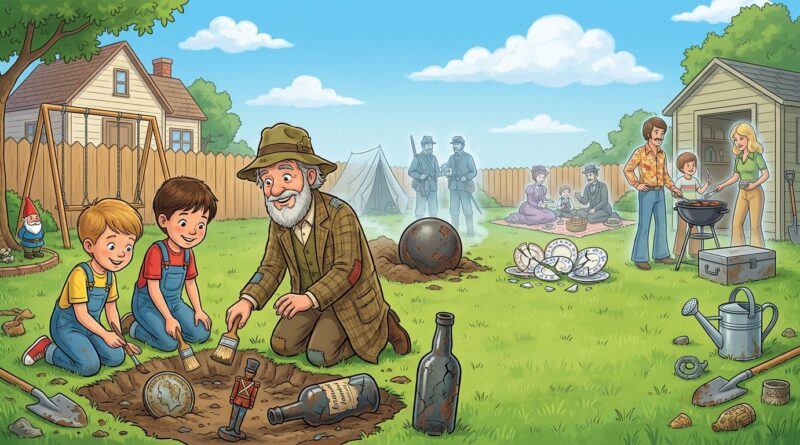
Finding kid-safe history stories can feel oddly hard. You want something true, surprising and fun, not the same tired trivia or a grim tale you have to awkwardly edit halfway through dinner. That is why stories about weird historical things found in backyards work so well. They feel like treasure hunts, but they are also real history. A family digs a garden pond and uncovers ancient bones. Someone pulls up a strange metal object and learns it is a wartime relic. A child pokes around in the dirt and finds coins older than the country they live in. Suddenly history is not trapped in a textbook. It is under the swing set. Better yet, these stories give parents and teachers an easy way to spark questions. Who buried it. How old is it. What was life like back then. That turns one strange find into a whole afternoon of curiosity, storytelling and hands-on learning without needing a screen at all.
⚡ In a Hurry? Key Takeaways
- Some of the best weird historical things found in backyards are completely true, including Viking objects, Roman remains, dinosaur bones and hidden treasure.
- Use each story as a springboard. Ask kids who used the object, why it ended up there and what daily life looked like at the time.
- Real finds can be exciting without being scary, but if your family ever uncovers something unusual, do not clean it aggressively or carry it off before checking local rules and safety advice.
Why backyard finds grab kids so fast
Kids already understand the basic idea. You dig. You spot something odd. You wonder what happened. That is the whole plot, and it works every time.
It also makes history feel close. Not kings-on-a-timeline close. Real-life close. The sort of close where a muddy shoe and a trowel can lead to a story from hundreds or even millions of years ago.
That is the magic of weird historical things found in backyards. They are surprising, but they also feel possible. A child can imagine it happening to them.
True stories of the weirdest things families dug up
1. A family in England found a Roman burial site in their garden
This is the kind of sentence that sounds made up, but it happens more often than you would think in places with very old settlement layers. In parts of Britain, routine yard work has uncovered Roman graves, pottery and coins. One especially striking case involved homeowners discovering human remains and Roman-era items during garden work.
For adults, the history angle is fascinating. For kids, the hook is simpler. Somebody walked that same patch of land nearly 2,000 years ago.
Kid question to ask: If your backyard were still around in 2,000 years, what objects would confuse future archaeologists?
2. A boy in his backyard found a dinosaur bone
This is one of those stories children never forget because it starts exactly the way they imagine adventure starts. A kid notices something unusual in the dirt. Grown-ups take a closer look. It turns out to be part of a fossil.
Several genuine backyard and near-home fossil discoveries have happened around the world, including children and families finding ancient bones on private property. In some cases, experts later confirmed them as dinosaur fossils or prehistoric animal remains.
The nice thing here is that the story is weird without being dark. It also opens the door to talking about deep time, fossils and how rock can preserve clues.
Mini project: Press shells, leaves or toy bones into clay and make your own “fossil dig” for younger kids.
3. A family digging in their yard uncovered a hoard of old coins
Coins are perfect for family history conversations because they are small, shiny and easy to imagine in someone’s pocket centuries ago. Across Europe, there have been many cases of people digging in gardens and finding coin hoards hidden during war, political chaos or plain old forgetfulness.
One famous pattern is this. Long ago, someone hid money in a pot or small container, planning to come back for it. They never did. Centuries later, someone planting flowers gets the surprise of their life.
Kid question to ask: If you had to hide your allowance in an emergency, where would you put it, and how would future people figure out what it was for?
4. A backyard dig turned up Viking-age objects
Not every weird discovery is gold. Sometimes the exciting part is that an ordinary-looking metal object turns out to be very old. In Scandinavia and the British Isles, people using metal detectors or doing small-scale yard work have found brooches, tools, weights and bits of jewelry linked to the Viking era.
That can sound a little abstract to younger kids, so keep it grounded. This was not “the Viking age” as a chapter title. These were real people fastening clothes, trading goods and dropping things in the mud like the rest of us.
Role-play idea: Pretend one child is an archaeologist and another is the last person who owned the object. Interview each other.
5. Someone gardening found an unexploded wartime bomb
This one is a very good reminder that weird historical things found in backyards are not always “treasure” in the fun sense. In parts of Europe and elsewhere, families still occasionally uncover unexploded bombs or ammunition from past wars while doing home repairs or digging flower beds.
That is history too. It is just history with a very clear safety lesson attached.
If you include this story for kids, keep the tone calm and practical, not scary. The lesson is simple. Old objects can be important and dangerous. That is why adults call experts.
Good script for kids: “If we ever find something strange made of metal, we stop, step back and tell an adult.”
6. A family pond project exposed Ice Age remains
Some of the weirdest finds are not human-made at all. Digging ponds, drainage trenches or building foundations has revealed mammoth bones, prehistoric deer remains and other Ice Age material. These stories are wonderful because they widen the idea of history. Not all history starts with people.
Kids often love this shift. One minute they are thinking about pirates and old coins. The next they are picturing giant animals roaming land that is now a neat suburban lawn.
Mini project: Draw your street as it might have looked during the Ice Age.
Why these stories work better than random trivia lists
They have a plot. That matters.
A lot of “fun history facts” are really just disconnected statements. Kids hear them, shrug and move on. Backyard discovery stories are different because they begin with a person doing something ordinary. Digging a hole. Planting a tree. Fixing a fence. Then history interrupts.
That structure makes the facts easier to remember. It also gives children a place to step in. They can imagine being the finder, the archaeologist, the neighbor, even the person who lost the object long ago.
How to turn one backyard find into a full family learning session
Start with three simple questions
After telling any of these stories, ask:
- What do you think it was used for?
- How do you think it got there?
- What would experts need to study next?
Those three questions move kids from “cool object” to actual historical thinking.
Use a “before and after” game
Pick the patch of land in the story and imagine it in different eras. What was there 100 years ago. What about 1,000 years ago. What about before humans lived there.
This helps children understand that land has layers, and history is often hidden in them.
Make a tiny home museum
You do not need real artifacts. Use safe stand-ins. Buttons, pebbles, old keys, photocopied coin pictures, toy bones, labels made from index cards. Let kids arrange them like an exhibit and explain each one.
That explanation part is gold. It helps them turn excitement into memory.
If your own family finds something odd in the yard
This part matters. If you uncover something unusual, especially metal, bone, pottery or anything that looks old, resist the urge to scrub it clean right away.
- Take a photo where it was found.
- Note the spot.
- Handle it gently, if it is safe to touch.
- If it could be dangerous, do not touch it at all.
- Check local museum, archaeology or heritage guidance.
Context is half the story. An object without a location is just a thing. An object found in place can tell experts much more.
Kid-safe ways to keep the wonder going
You do not need to hand a child a shovel and hope for a Roman villa. There are easier ways to build the same sense of discovery.
Try a history treasure basket
Fill a box with replica-style items or ordinary objects that look mysterious out of context. A fountain pen nib. An old-style button. A rusted key. A foreign coin. Let kids guess what each item is and who might have owned it.
Map your own yard’s “past lives”
Was your home once farmland. Woodland. A vacant lot. A factory site nearby. A railway area. Even recent local history can make children see familiar ground differently.
Act out the moment of discovery
One person digs. One gasps. One plays the expert. One plays the original owner from long ago. It sounds silly, but it works wonderfully with younger children because it turns history into a story they can enter.
At a Glance: Comparison
| Feature/Aspect | Details | Verdict |
|---|---|---|
| Best type of story for kids | Backyard finds with a clear discovery moment, like coins, fossils or old tools | Excellent for attention and memory |
| Learning value | Builds curiosity, historical thinking and storytelling through real examples | Much stronger than random trivia lists |
| Safety factor | Most stories are fun and harmless to discuss, but real-life finds should be treated carefully and checked by experts when needed | High value, with common-sense caution |
Conclusion
The best part about weird historical things found in backyards is that they make history feel alive without making it feel heavy. A coin hoard, a fossil, a Roman object or a wartime relic can turn an ordinary patch of grass into a doorway to another time. That helps families right now because many of us want screen-light ways to learn together that still feel exciting. These stories do that beautifully. They sneak in real history, they work like mini adventure tales and they invite kids to imagine what might be hidden right where they live. Better still, they give parents and teachers a simple script. Ask a few good questions. Act it out. Draw it. Build a tiny museum. Suddenly you are not just passing along facts. You are helping children feel clever, included and just a little bit brave, which is often how a lifelong love of learning starts.