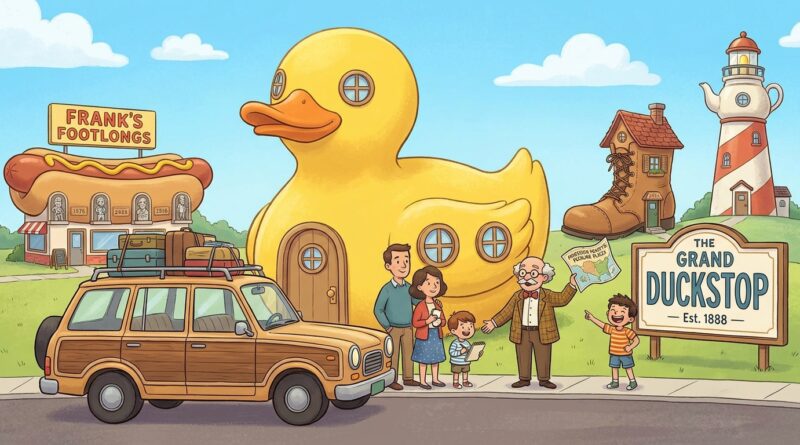
History’s Most Bonkers Buildings: True Stories Of Houses Shaped Like Ducks, Hotdogs And Other Giant Things
History can go flat fast. You start with good intentions, maybe a museum book or a lesson on “important events,” and five minutes later the kids are slumped over asking if anything weird ever happened in the past. Fair question. The good news is yes, absolutely. Some of history’s best stories are not about battles or kings at all. They are about people who looked at a perfectly normal building and thought, “What if this were a giant duck?” That is how we got some of the strangest landmarks ever built. These oddball structures are real, and they are a brilliant way to make history stick. Kids remember a house shaped like a bird far more easily than a list of dates. Better still, these stories sneak in lessons about design, business, geography, and how communities try to stand out. Weird works, especially when it is true.
⚡ In a Hurry? Key Takeaways
- Some of the best weird buildings in history for kids are real roadside shops and attractions shaped like ducks, hot dogs, baskets, and teapots.
- Use one strange building as a starting point, then ask who built it, where it is, and why it was made that way.
- These places are family-friendly history hooks because they are funny, visual, and packed with lessons about local culture and simple engineering.
Why weird buildings work so well for kids
Children are natural collectors of odd facts. Tell them a building was made in 1931. They may shrug. Tell them it was made to look exactly like a giant duck with windows in its belly, and now you have their full attention.
That is why weird buildings in history for kids work so well. They turn history into a picture in the mind. A duck building is not abstract. A hot dog stand the size of a bus is not forgettable. These structures give kids something they can describe later at dinner, to friends, or in class.
They also help parents and teachers avoid that common trap where “educational” starts sounding like “boring.” Strange buildings are fun first. The learning slips in right after.
The giant duck that became a legend
The Big Duck, New York
One of the most famous examples is the Big Duck in Flanders, New York. Built in 1931, it was used to sell ducks and duck eggs. The owner, Martin Maurer, did not just hang a sign outside. He built the whole shop in the shape of the thing he sold.
It is exactly the kind of idea a child would come up with, which is part of its charm. But it also tells a very grown-up story about business. Roadside America was changing. Cars meant more passing customers. If you wanted people to stop, you needed something impossible to ignore.
The Big Duck did that job beautifully. It became so famous that architects later used the word “duck” to describe buildings whose shape tells you what happens inside. That is a real design idea, born from a giant bird-shaped store.
So in one goofy building, kids can learn about New York, early car travel, farming, advertising, and architecture. Not bad for a duck.
The hot dog stand that looked like lunch
Tail o’ the Pup, California
If a duck can sell ducks, a hot dog can sell hot dogs. Tail o’ the Pup in Los Angeles became one of the best-known novelty food stands in America. Originally opened in 1946, it looked like a giant hot dog in a bun.
This was not subtle branding. It was the kind of place that made people laugh before they even ordered. And that was the point. In busy cities and along car-heavy streets, unusual shapes acted like giant billboards.
For kids, this is an easy way to understand a simple idea. Before social media and phone ads, businesses still had to grab attention. Sometimes they did it with a newspaper ad. Sometimes they did it by becoming a giant snack.
That makes this history feel less like homework and more like a treasure hunt through human imagination.
The basket building that people actually worked in
Longaberger Headquarters, Ohio
Then there is the Longaberger Basket Building in Newark, Ohio. This one was not a tiny snack stand. It was a full office building designed to look like a massive picnic basket, complete with handles.
Yes, people really went to work there.
The building opened in 1997, so it is newer than some classic roadside attractions, but it belongs in the same wonderful category of “someone really approved this.” It was built by the basket company Longaberger, which wanted its headquarters to look like its best-known product.
This is a great example for older kids because it opens up bigger questions. Should buildings always look plain and practical? Can architecture also be playful? Is a giant basket smart marketing, or is it too much? There is no single right answer, which makes it a fun discussion.
The teapot, the shoe, and the rest of the wonderfully odd bunch
The Teapot Dome Service Station
In Zillah, Washington, there is a small building shaped like a teapot. It is known as the Teapot Dome Service Station, and it was built in the 1920s. Its name poked fun at the famous Teapot Dome political scandal, which gives parents and teachers a neat chance to connect silly architecture with real national history.
The Haines Shoe House
In Pennsylvania, the Haines Shoe House was built in 1948 in the shape of a work boot. It has rooms inside. It was created by a shoe salesman, which feels very on-brand. Again, the lesson is simple and memorable. People have long used giant, unusual buildings to advertise what they make or sell.
Mammoth Orange and other fruit-shaped stands
California and other states also saw plenty of oversized fruit stands and produce shops. These helped local growers catch the eye of travelers. It sounds goofy now, but it made sense. If you are selling oranges, a giant orange is hard to beat.
What kids are really learning from these buildings
Here is the sneaky part. These stories sound silly, but they carry a lot of useful learning.
Geography
Each building sits in a real place with its own local story. Kids start connecting objects to maps. The duck is in New York. The basket is in Ohio. The hot dog is in California. Suddenly geography has flavor.
Engineering basics
How do you make a building look like a duck and still keep it standing? How do you fit offices inside a basket shape? These are great openings for simple talks about support beams, materials, windows, weight, and design problems.
Local history
Many oversized novelty buildings were created during the rise of car travel in America. Families were on the move. Roads mattered more. Towns and businesses competed for attention. Kids can see how travel changed the way places looked.
Advertising and design
This is one of the easiest history lessons to understand. If you want to be remembered, looking unusual helps. These buildings are basically giant logos people could walk into.
How to turn one weird building into a great family history chat
You do not need a full lesson plan. Start with one photo and a few simple questions.
Ask these three things
What is it shaped like?
Why would someone build it that way?
What does it tell us about that place and time?
That is enough to get a real conversation going. Younger kids can focus on the funny shape. Older kids can think about economics, travel, and design.
If your family likes this sort of thing, History’s Strangest Road Trips: Real Places Where the World Got Wonderfully Weird is a natural next stop. It takes the same idea, that odd places can make history feel alive, and stretches it into a bigger adventure.
Why adults love these stories too
Let’s be honest. This is not just for kids.
Adults are tired of stale history formats too. A strange building gives everyone an easy way in. You can laugh at the giant duck, then talk about roadside commerce. You can stare at the basket office, then talk about brand identity. It feels light, but there is real substance underneath.
That is the sweet spot for family learning. Nobody feels trapped in a lecture, but everyone leaves knowing more than they did before.
A few fun picks to search with kids
If you want to keep going, these are strong examples to look up together:
- The Big Duck, Flanders, New York
- Tail o’ the Pup, Los Angeles, California
- Longaberger Basket Building, Newark, Ohio
- Haines Shoe House, York, Pennsylvania
- Teapot Dome Service Station, Zillah, Washington
Each one is weird in a different way. That variety helps. Some are tiny roadside stands. Some are full buildings. Some were jokes. Some were serious business ideas. All of them are memorable.
At a Glance: Comparison
| Feature/Aspect | Details | Verdict |
|---|---|---|
| Kid appeal | Giant ducks, hot dogs, baskets, and shoes are instantly funny and easy to picture. | Excellent hook for reluctant history learners |
| Educational value | Teaches geography, architecture, marketing, and local history without feeling heavy. | Surprisingly strong learning payoff |
| Family use | Works for dinner-table chats, homeschool topics, classroom warm-ups, and future road trip ideas. | Easy, safe, low-prep history fun |
Conclusion
When history feels dusty, weird buildings can wake it right up. A duck shop, a hot dog stand, or an office shaped like a basket may sound ridiculous, but that is exactly why they work. They give kids something vivid to hold onto. They make adults smile too. Best of all, they quietly teach real things about place, design, business, and how people in different eras tried to stand out. Right now parents and educators are looking for history that is fun first and factual second, and these absurd real-life buildings are a perfect on-ramp. They are safe, funny, highly visual, and just strange enough to pull the whole family into learning together, preferably far away from a screen.