History’s Strangest Road Trips: Real Places Where the World Got Wonderfully Weird
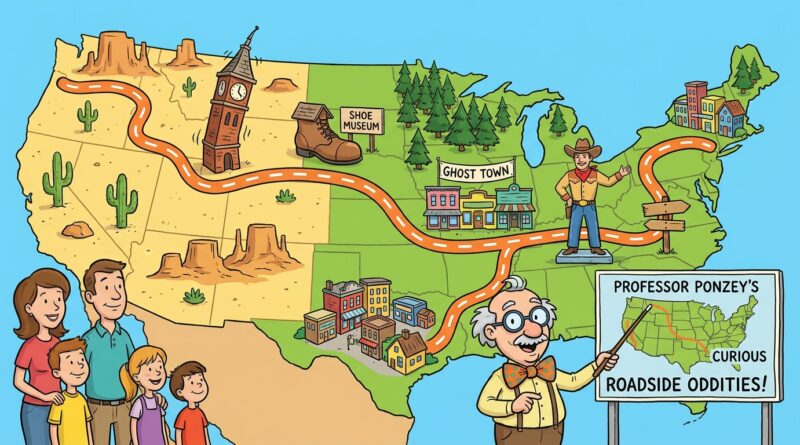
Parents know the drill. You plan a “nice educational day,” the kids groan by stop number two, and somehow everyone ends up staring at phones in the parking lot. It is frustrating. You want something real. Something that gets people out of the house, sparks questions, and does not feel like homework with snack breaks. That is why weird history road trips for families work so well. They turn oddball places, giant statues, mystery houses, ghost towns, and strange local legends into the kind of outing kids actually remember. Better yet, these places often come with built-in stories. A buried secret. A failed invention. A town that boomed, busted, and left behind something delightfully strange. The trick is not chasing the biggest attraction. It is picking the stops that feel safe, manageable, and just weird enough to make everybody laugh, ask questions, and want to see what is around the next bend in the road.
⚡ In a Hurry? Key Takeaways
- Weird history road trips for families work best when you mix one truly odd stop with one easy, hands-on history stop and one food break.
- Start with places that have a strong story, not just a photo op, like ghost towns, mystery spots, historic oddities, and roadside attractions with local legends.
- Safe, low-stress planning matters. Check hours, bathrooms, walking distance, and weather so the day feels fun instead of chaotic.
Why “weird history” works better than another standard museum day
Most kids do not hate history. They hate boring delivery.
Put them in front of a faded sign with three paragraphs of tiny text and you have lost them. Put them in a town where a silver rush exploded and vanished, or in front of a giant concrete fish tied to a local legend, and suddenly they are listening.
That is the magic of weird history road trips for families. They give history a plot.
Instead of “this happened here,” the day becomes, “Why did people build this?” “Who thought this was a good idea?” “Wait, people really lived like this?” That shift matters. Kids remember stories. Parents enjoy the ride more too, because the outing feels like discovery instead of enforcement.
What counts as a weird history stop?
You do not need to find a haunted castle or a town run by goats. Though, if you do, fair play.
Good weird-history stops usually fall into a few family-friendly categories.
Roadside attractions with a backstory
A giant ball of twine is funny for thirty seconds. A giant ball of twine tied to local pride, Depression-era hobby culture, or small-town competition is a story.
Ghost towns and boom-and-bust places
These are great for kids because they can see what happened, not just hear about it. Empty buildings, old storefronts, train remnants, mining gear. It feels like stepping into a half-finished movie set.
Strange museums that should not be as interesting as they are
Barbed wire museums. Ventriloquist museums. Medical oddity collections. Tiny local places often do a better job grabbing attention than giant institutions because they are specific and a little eccentric. If that sounds like your kind of outing, Family Oddity Quest: The Real Museums Of Weird History Hiding In Plain Sight is worth a look.
Historic sites with one wonderfully odd detail
Maybe it is a house built by a recluse inventor. Maybe it is a gravity hill, a hidden bunker, or a town built around a failed utopian dream. Those details pull kids in fast.
How to build a road trip your family will actually enjoy
The biggest mistake is trying to do too much. Weird places are fun, but too many in one day turns novelty into crankiness.
Use the 3-stop rule
For a day trip, aim for three main stops.
Stop one should be the weirdest thing on the list. Start strong.
Stop two should be hands-on or outdoors if possible.
Stop three should be easy and relaxed, like a quirky diner, a short scenic stop, or a small museum with air conditioning and bathrooms.
Keep drive times honest
If a place is “only two hours away,” that means more like three once you count bathroom breaks, snacks, and a child who suddenly needs to discuss every cow in the county.
Shorter is better. Especially for younger kids.
Pick one story to follow
Trips feel more memorable when there is a theme. Mining weirdness. Lost towns. Giant roadside art. Cold War leftovers. Strange inventions. Pick one and your day feels connected instead of random.
Real kinds of places where the world got wonderfully weird
You do not need exact copies of these. Think of them as templates for finding local versions near you.
A town that disappeared after a gold or silver rush
These places are history with dust on them. You can talk about risk, luck, work, and why communities grow fast and collapse faster. Kids usually like spotting the remains and imagining who lived there.
A mystery house or oddball mansion
Some were built by people chasing spiritual ideas. Some were built by inventors, eccentrics, or rich families with more money than restraint. These are ideal because the architecture itself becomes part of the story.
A giant folk-art object
Big statues, homemade monuments, strange towers built from scrap. These places show that history is not always kings and battles. Sometimes it is one determined local with too much concrete and a dream.
An abandoned transportation relic
Old rail depots, retired bridges, canal remains, military roads, and airfields can be gold for family trips if they are open and safe to visit. They help kids see how people moved, traded, and built communities before modern life got slick and invisible.
How to make kids care without turning into a substitute teacher
You do not need a lecture. You need prompts.
Ask better questions
Try questions like:
“Who do you think built this, and why?”
“If you lived here 100 years ago, what would be hardest?”
“What part of this feels most strange to you?”
“Do you think people back then thought this was normal?”
That gets conversation going without making anyone feel tested.
Give them a mission
Ask kids to find the weirdest fact of the day, the funniest object, or the best photo spot. A small mission turns passive sightseeing into a game.
Let them retell the story later
At dinner or on the drive home, have everyone pick one stop and explain it in one minute. If they can retell it, the trip worked.
Safety and sanity matter more than “one more stop”
Some weird places are charming. Some are just remote.
Before you go, check the basics.
Look for the practical stuff first
Are there bathrooms? Is the parking easy? Is the path stroller-friendly? Are there open hours, or is this one of those “technically accessible if the moon is right” places?
Watch the difference between abandoned and unsafe
Families should skip places that require trespassing, climbing unstable structures, or wandering into areas with no clear access. There is a big difference between spooky-fun and foolish.
Pack for boredom, not disaster
Yes, bring water and wipes. Also bring a card game, a notebook, and one emergency snack nobody has to share unless things get dire.
How to find weird history road trips for families near you
You do not have to be a travel writer with a spreadsheet habit.
Start simple.
Search by region plus odd keywords
Try searches like “odd historic sites near me,” “roadside attractions with history,” “ghost towns in [your state],” or “strange museums for kids.”
Check local history groups
Historical societies, county tourism boards, and small museums often know the best odd stops, including the ones that never make national lists.
Read reviews with one filter
Ignore people complaining that a place was “too weird” or “only took 30 minutes.” For families, that can be perfect.
Make the day feel like an adventure, not a schedule
The best weird history road trips for families leave room for surprise.
Pull over for the giant chicken statue. Try the pie shop with the hand-painted sign. Take the photo with the strange mural. The point is not to create the most efficient day. It is to create the most retellable one.
That is why these trips stick. They have shape, but they are not stiff. They teach something, but they do not announce themselves as educational. They let kids feel like explorers and let parents feel like they actually found something new.
At a Glance: Comparison
| Feature/Aspect | Details | Verdict |
|---|---|---|
| Best trip length | Half-day or full-day trips with 2 to 3 main stops tend to work best for most families. | Short and focused beats overpacked. |
| Best types of stops | Ghost towns, mystery houses, quirky museums, giant roadside art, and local legend sites with a clear story. | Story-rich places keep kids engaged. |
| What makes it family-friendly | Easy parking, bathrooms, safe walking paths, snack options, and enough weirdness to feel special without becoming stressful. | Comfort matters as much as novelty. |
Conclusion
Families do not need another weekend that feels like a compromise. Weird history road trips for families hit a rare sweet spot. They feel fresh without being hard to plan, educational without feeling preachy, and silly enough to pull kids away from screens. Best of all, they turn random roadside oddities and half-forgotten places into stories your family will actually tell again later. And that is the real win. Not just getting out of the house, but coming back with something fun to remember.