History’s Disappearing Inventions: True Stories Of Everyday Things That Vanished From The World
If your kids already know every tablet icon but have never heard of a butter churn, a penny-farthing, or a household icebox, you are not alone. A lot of parents want history stories that feel surprising and fun, not the same castle, knight, and pyramid facts that show up in every book. The good news is that history is packed with disappearing inventions in history for kids, everyday tools and gadgets that once felt normal, then quietly slipped out of daily life. Some were replaced by better ideas. Some were awkward, unsafe, or just plain annoying. And some were brilliant, but tied to a world that changed.
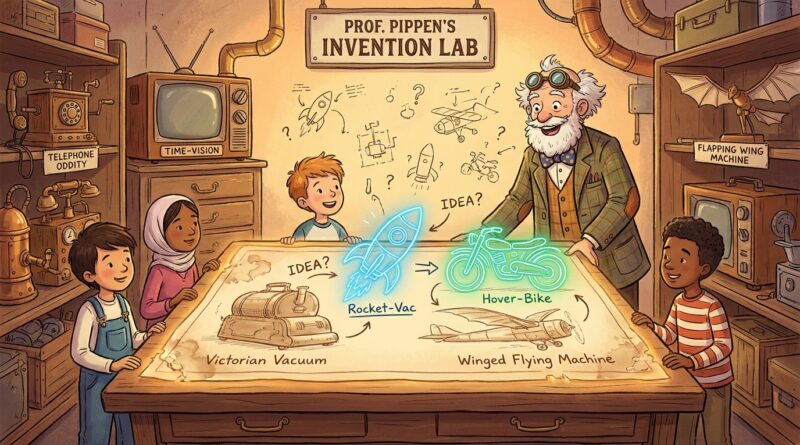
That is what makes them such great family conversation starters. When kids hear about a phone operator connecting calls by hand, or a milk door built into the side of a house, they start asking the best kind of questions. Who made this? Why did people stop using it? What would we invent instead? Suddenly history stops being memorizing dates and starts feeling like a giant workshop full of prototypes, mistakes, and clever fixes.
⚡ In a Hurry? Key Takeaways
- Many everyday inventions vanished because newer systems were faster, cheaper, safer, or easier to use.
- Turn each old invention into a dinner-table question: What problem did it solve, and what replaced it?
- These stories are great for kids because they show that failed or forgotten ideas still matter and can inspire new ones.
Why disappearing inventions are so fun for kids
Kids are used to thinking that new things simply appear and old things are “bad.” History tells a messier story. People used what they had. They solved one problem, then created another. Then somebody came along with a better fix.
That is a powerful lesson. It tells children that human progress is not magic. It is trial and error.
It also makes history feel close to home. A vanished invention is not just some museum object behind glass. It might be an old kitchen tool, a way of getting ice, or a gadget for listening to music that grandparents once touched every day.
True stories of everyday things that vanished
1. The icebox
Before electric refrigerators became common, families used iceboxes. These looked a bit like cabinets. A delivery worker brought a large block of ice to the house, and the cold air kept food from spoiling too quickly.
That sounds simple enough, but it came with hassles. Ice melted. It had to be replaced. Water collected. Delivery schedules mattered. Once reliable electric refrigerators became cheaper and easier to own, the icebox faded out fast.
Kids usually love this one because it sounds so strange. Imagine your snacks depending on a giant chunk of ice delivered to your door.
2. The milk door
Some older houses had a tiny door built into an outside wall. A milkman could leave bottles there without coming inside. It was a clever little system for daily delivery.
Why did it vanish? Grocery stores changed shopping habits. Refrigerators became normal. Fewer families relied on daily milk delivery. The invention did not fail because it was silly. It failed because the whole routine around it changed.
That is a useful point for kids. Sometimes inventions disappear not because they are bad, but because the world around them moves on.
3. Phone operators connecting calls by hand
Early telephone systems often needed a real person, usually an operator, to connect your call. You would ask for a number, and someone at a switchboard would physically patch the line through.
It worked, but it was slow and labor-heavy. As automatic dialing systems improved, the switchboard operator stopped being part of daily calling for most homes.
This one helps kids see the hidden human work behind older technology. A lot of “machines” in history were actually part machine, part person.
4. The typewriter as a household must-have
Typewriters still exist, and some writers even love them. But as an everyday office and home essential, they mostly vanished once computers and word processors took over.
The reason is easy for kids to understand. If you make a mistake on a typewriter, fixing it is annoying. On a computer, you tap backspace. You can move text, save drafts, print copies, and share files in seconds.
The typewriter did not disappear because it was useless. It disappeared because the replacement was wildly more flexible.
5. The penny-farthing bicycle
This is the old bicycle with the giant front wheel and tiny back wheel. It looks funny now, but it was a real step in bicycle design.
It also had a problem. Riders sat high up, which made falls more dangerous. Safer bicycle designs with two more even-sized wheels slowly replaced it.
This is a great example of an invention that taught designers what not to do. Kids get to see that even a strange-looking machine can be an important step toward something better.
6. Floppy disks
For a while, floppy disks were the normal way to save computer files. Then storage got smaller, faster, and much bigger. CDs, USB drives, cloud storage, and other systems pushed floppy disks out of daily life.
Many kids know the floppy disk only as the “save” icon. They are shocked to learn it was a real object.
That makes it a perfect disappearing invention for family talks. It shows how symbols from old technology can stick around long after the original thing is gone.
7. Video rental stores
Not exactly one invention, but definitely an everyday system that vanished from many places. Families once drove to a store, picked a tape or DVD, rented it, and returned it later.
Streaming made the whole process easier for many people. No late fees. No empty shelves. No trip across town.
Of course, something got lost too. Browsing in person had its own magic. That gives kids another useful lesson. Newer is often easier, but not always more memorable.
Why inventions disappear
Most vanished everyday inventions fall into a few simple categories.
A better version came along
Iceboxes gave way to refrigerators. Typewriters gave way to computers. Hand-cranked gadgets often lost to electric ones.
The world around them changed
Milk doors depended on regular home delivery. When shopping habits changed, the invention no longer fit everyday life.
They were unsafe or awkward
The penny-farthing looked exciting, but safer bike designs made more sense. Some old toys and gadgets also disappeared because people finally admitted they were a terrible idea. If your family likes the stranger side of history, History’s Toy Box of Nightmares: The Weird True Stories Behind Beloved Kids’ Toys is a fun next stop.
They were too expensive or hard to maintain
If a device needed constant repair, special fuel, deliveries, or a lot of human labor, cheaper systems often replaced it.
How to turn this into a screen-free family game
This part is simple, and it works surprisingly well at dinner.
Play “What problem did it solve?”
Name an old invention. Then ask your kids what problem it was trying to fix. An icebox kept food cool. A typewriter made clean, readable documents. A switchboard connected calls.
Then ask, “Why did it disappear?”
This is where the real thinking starts. Was it slow? Expensive? Dangerous? Replaced by something easier?
Finish with, “What would you invent now?”
That question turns history into a design challenge. Kids stop being passive listeners and start acting like inventors.
You can even make it silly. What would replace shoelaces? How would you redesign the lunchbox? If the milk door came back today, what would it deliver?
What kids really learn from forgotten technology
These stories are not just random trivia. They teach resilience.
When children hear that history is full of weird attempts, half-successes, and dead ends, they get a healthier view of mistakes. A failed idea is not always a bad idea. Sometimes it is just an early version.
That matters in school, sports, art, and everyday problem-solving. It helps kids think, “This did not work yet,” instead of, “I am bad at this.”
At a Glance: Comparison
| Feature/Aspect | Details | Verdict |
|---|---|---|
| Why inventions vanished | Usually because something became faster, safer, cheaper, or easier to use. | Best starting point for explaining change to kids. |
| Best examples for families | Iceboxes, milk doors, switchboards, typewriters, floppy disks, old bicycles. | Easy to picture and great for conversation. |
| Learning value | Shows that mistakes, redesigns, and replacements are normal parts of invention. | Excellent for building curiosity and confidence. |
Conclusion
Disappearing inventions in history for kids are such a gift because they make the past feel alive, weird, and useful all at once. Instead of treating history like a shelf of dusty facts, you can use it as a family design lab. Kids learn that people have always been experimenting, fixing problems, and sometimes creating things that later vanished completely. That helps them see their own mistakes as prototypes instead of problems. And for parents, it is a ready-made dinner-table game that sparks curiosity, stories, and laughs without adding more screen time.