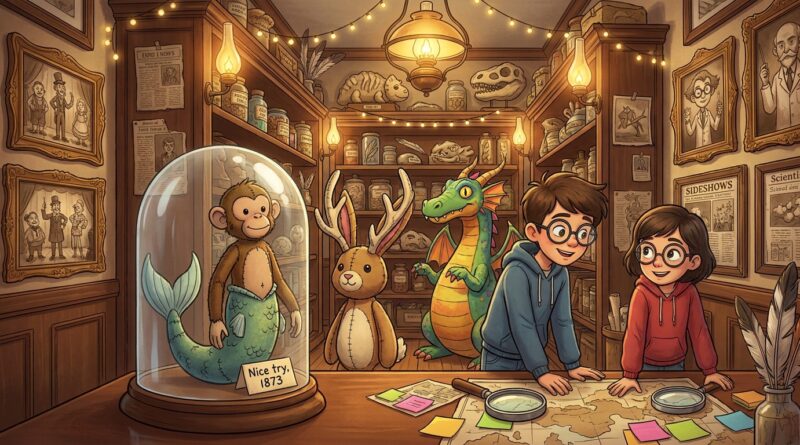
History’s Strangest Fake Animals: True Stories Of Creatures Grown, Stitched And Sold To Fool The World
You know the bedtime problem. Your child wants a story about a mermaid, a dragon, or some impossible beast, and the internet serves up either the same recycled trivia or something weirdly grim. That leaves parents doing live fact-checking in their pajamas. The good news is that history is packed with fake animals so ridiculous, so crafty, and so very real in the historical record that you do not need to invent a thing. These are true stories about hoaxers who stitched fish to monkeys, painted horns onto ordinary animals, and sold “rare discoveries” to crowds who badly wanted to believe. Better yet, these tales are perfect for families. They are funny, a little gross in a manageable way, and full of useful lessons about proof, mistakes, and why smart people can still get fooled. If you are looking for historical animal hoaxes for kids, this is the sweet spot between magical and true.
⚡ In a Hurry? Key Takeaways
- Many famous “mystery creatures” from history were handmade hoaxes, sideshow tricks, or wild misunderstandings, not real species.
- Use these stories to ask simple questions with kids: Who found it, what is the evidence, and did anyone independent check it?
- These tales are family friendly ways to teach skepticism without making kids feel silly for believing a fun story first.
Why fake animals were such a big hit
People have always loved wonders. Long before social media, there were fairs, traveling shows, curiosity shops, newspapers hungry for sensation, and museums still figuring out how to sort fact from fiction.
If someone claimed to have found a dragon-like skeleton or a tiny mermaid body, crowds showed up. That does not mean people in the past were foolish. It means they were human. They were curious, excited, and sometimes not given enough evidence before the ticket booth opened.
That is part of what makes these stories so useful now. Kids see a strange animal clip online and think, “Maybe?” That is exactly how many adults once reacted to strange “discoveries” on display under glass.
The Fiji Mermaid. Tiny, ugly, and wildly famous
What people were told
In the 1800s, showman P.T. Barnum helped make the so-called Fiji Mermaid famous in the United States. Advertisements hinted at a beautiful half-human, half-fish creature from distant seas.
What it really was
Not beautiful. Not even close. The object on display was a small stitched fake, made from the upper body of a monkey and the tail of a fish, then dried to look ancient and uncanny.
Why people believed it
The sales pitch did a lot of the work. Posters and newspaper notices suggested elegance and mystery. By the time families saw the shriveled little “mermaid,” many were already halfway convinced they were looking at something rare.
This is a great one for kids because the lesson is so clear. Advertising can shape what we think we are about to see. Evidence comes first. Hype comes second.
The Jenny Haniver. A sea monster made from a ray
What it looked like
The Jenny Haniver was a classic fake creature made from dried rays or skates. People trimmed and altered the animal so it resembled a dragon, demon, or baby sea monster.
How it fooled people
Seen out of context, it really does look like something from a fantasy book. In ports and markets, these odd little bodies were sold as rare beasts from the ocean.
What kids can learn from it
Real body parts can still tell a false story when someone changes them. That is a helpful lesson in image editing, too. A real photo or real specimen is not the same thing as an honest claim.
The “horned” rabbits and other patched-together beasts
Some hoaxes came from taxidermy shops, where animal bodies were combined, rearranged, or decorated to make new creatures. The jackalope is the best-known example in American folklore. It is usually shown as a rabbit with antlers.
Now, the jackalope became more of a joke and a regional legend than a serious scientific claim. But it sits in the same family of fake-animal fun. Put a familiar animal together with one impossible feature, and people remember it forever.
This is one reason home projects can work so well after reading these stories. If your child loves odd exhibits, Build Your Own Mini Museum Of Weird History: How Cabinets Of Curiosities Turn Kids Into Curious Grown‑Ups is a fun next step. It turns that “Wait, is this real?” energy into curiosity instead of confusion.
The Barnum effect. If the story is good, people lean in
Not every fake animal needed careful stitching. Sometimes a strong story did enough. A “missing link.” A serpent seen by sailors. A mysterious beast from a cave no one else had visited yet.
That pattern keeps showing up through history. People trust a claim more when it comes wrapped in drama, distance, and a confident voice. “Found on a remote island” has always been powerful marketing.
It helps to tell kids that believing a cool story at first is normal. The smart move is what comes next. Ask for the proof. Who checked it? Was it studied by more than one person? Did experts agree after looking closely?
When museums and scientists finally said, “Show me”
Hoaxes often lasted until careful checking began
A lot of historical fake creatures survived because no one had taken the time, or had the tools, to inspect them properly. Once curators, zoologists, and anatomists started studying these “specimens,” the cracks showed.
Stitches appeared. Parts did not match. Bones were wrong for the animal being claimed. The story collapsed.
That is the best part of these tales
The ending is not just “Ha, people were fooled.” The ending is that evidence works. Slow, boring, careful checking works. The truth is not always flashy, but it is sturdy.
How to talk about historical animal hoaxes for kids
Keep it playful
You do not need to turn story time into a courtroom drama. Start with the fun question. “If you saw this in a tent 150 years ago, would you believe it?”
Use three simple questions
These work for old hoaxes and modern viral clips alike.
Who is making the claim?
What is the actual evidence?
Has anyone else checked it?
Avoid the shame trap
If a child believes a fake animal clip, resist the urge to pounce. Better to say, “That is a cool one. Let’s see if we can verify it.” Skepticism sticks better when it feels like detective work, not correction.
Three famous examples worth telling at bedtime
1. The Fiji Mermaid
Best lesson: Advertising can make us expect magic before we see facts.
2. The Jenny Haniver
Best lesson: A real object can be altered to tell a false story.
3. Horned rabbit displays and taxidermy mashups
Best lesson: Once a fake is funny enough, it can outlive the hoax and become folklore.
How these old hoaxes connect to today’s internet
The medium changed. The trick did not. A traveling sideshow once used painted posters and dramatic speeches. Now a viral account uses jump cuts, music, and a caption that says, “Scientists can’t explain this.”
Same bait. Same human reaction.
That is why these stories feel timely. They give families a safer, sillier practice round before tackling modern misinformation. It is easier to learn critical thinking from a monkey-fish mermaid than from something frightening or divisive.
At a Glance: Comparison
| Feature/Aspect | Details | Verdict |
|---|---|---|
| Fiji Mermaid | A stitched and dried combo of monkey and fish parts, sold as a rare mermaid specimen. | Great example of hype beating evidence. |
| Jenny Haniver | A dried ray or skate altered to resemble a dragon-like sea creature. | Best for teaching how real materials can be used to fake something unreal. |
| Jackalope and taxidermy mashups | Ordinary animals modified with extra features, like antlers on rabbits, then shown as oddities. | Fun, low-stakes way to talk about folklore versus science. |
Conclusion
If you are tired of shrugging at every strange animal clip and saying, “Hmm, I’m not sure that’s true,” these old hoaxes are surprisingly helpful. They give kids the thrill of mythical beasts with the comfort of real history behind them. Better still, they make skepticism feel fun instead of scolding. A sewn-up mermaid corpse, a dragon made from a fish, or a painted sideshow “discovery” lets families laugh at the past while learning a very current skill. Ask for evidence. Check the source. Stay curious. That is a much better bedtime lesson than simply saying, “Don’t believe everything online.”