History’s Strangest Family Feasts: True Stories Of Bizarre Meals People Actually Sat Down To Eat
Dinner talk can get painfully predictable. You ask, “How was your day?” and get “Fine.” Maybe “Good.” Then everybody goes back to chewing. If you are tired, busy, and not in the mood to perform like a cruise director at the table, that can feel defeating. The good news is that kids do not usually need a perfect question. They need a weird one. That is where strange food history shines. Real stories about roasted peacocks served with their feathers put back on, Victorian jelly dishes that seemed to glow, and explorers chewing boots or calling odd foods “treats” can wake a table right up. These weird historical food facts for kids work because they are true, surprising, and easy to compare with modern life. Suddenly dinner is not an interview. It is a game, a history lesson, and a chance to hear what your kids actually think.
⚡ In a Hurry? Key Takeaways
- Strange food stories from history are an easy way to turn quiet dinners into fun family conversations.
- Pick one wild fact, then ask simple compare-and-choose questions like, “Would you try it?” or “What would today’s version be?”
- Keep it family friendly by focusing on curiosity, culture, and science, not gross-out shock for its own sake.
Why weird food stories work so well with kids
Food is familiar. History can feel far away.
Put those together, and history suddenly lands. Every kid understands meals, snacks, favorite foods, and foods they would rather avoid forever. So when they hear that medieval nobles sometimes served giant birds dressed to look extra dramatic, or that people once treated wobbly molded dishes as the height of fancy eating, they have an instant way in.
This is why weird historical food facts for kids are so useful. They do not feel like school. They feel like a dare, a mystery, or a joke that happens to be true.
True stories of bizarre meals people really ate
1. Roasted peacocks at royal feasts
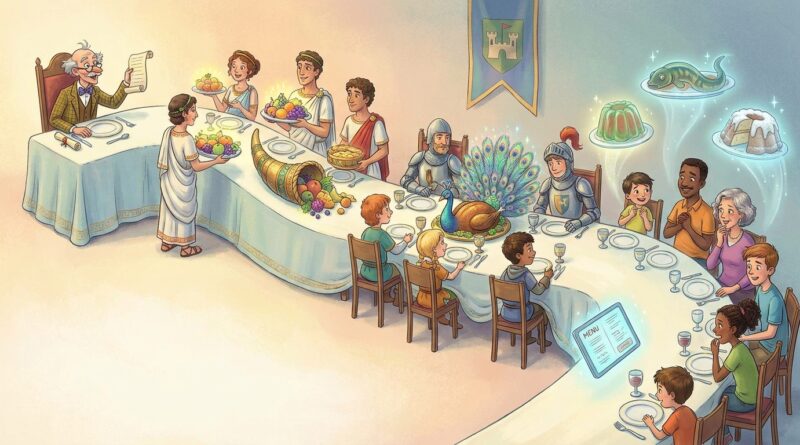
In parts of medieval Europe, rich hosts loved spectacle. A peacock might be roasted, then decorated with its bright feathers again before serving. The point was not just flavor. It was theater.
That detail alone can carry ten minutes of dinner talk. Ask your kids: Was this food, art, or showing off? Which matters more at a party, taste or looks?
Kids usually have strong opinions on that one.
2. Victorian jellies that looked almost magical
Victorian cooks were big on presentation. They made towering jellies, molded desserts, and shimmering dishes that looked almost too pretty to eat. Some seemed to glow under certain lighting because of the ingredients and the way translucent jelly catches light.
To a child hearing about it now, it sounds half science experiment, half dessert.
This is a nice moment to talk about kitchens before modern gadgets. Fancy effects often came from patience, molds, temperature control, and kitchen skill, not buttons and apps.
3. Explorer “delicacies” that were really survival food
Explorers and sailors did not always eat glamorous meals. Sometimes they claimed to enjoy foods that were clearly more about survival than pleasure. On brutal journeys, people ate whatever they could find, preserve, or soften enough to swallow.
That opens a gentle talk about how environment shapes food. What seems normal or delicious often depends on where you live, what grows there, and what choices you have.
4. Banquets built to impress, not just feed
Across history, wealthy families and rulers often used meals to send a message. “We are rich.” “We are powerful.” “We can get ingredients from far away.” That is why some feasts included rare spices, oversized pies, sugar sculptures, or animals served in dramatic ways.
For kids, this can be a great bridge to modern life. Ask: What foods today signal “fancy”? Is it sushi, gold-covered desserts, giant birthday cakes, or something else?
How to turn these facts into real dinner-table conversation
You do not need a lecture. You need a spark.
Use the “Would you try it?” question
This is the easiest opener in the world. If a king served roasted peacock, would you try one bite? Why or why not?
No wrong answers. That matters.
Try compare-and-contrast
Kids often talk more when they can compare the strange thing to something they know.
Examples:
- What modern food is mostly about looks?
- What dessert today feels as dramatic as a Victorian jelly?
- What snack would you pack if you were an explorer?
Let kids rank the weirdness
Give each story a score from 1 to 10. Not scary. Not disgusting. Just weird.
This works especially well with siblings because it turns the table into a playful debate instead of a quiz.
What kids actually learn without realizing it
This is the sneaky part parents love.
These stories are fun, but they also teach a lot:
- History: what rich and ordinary people ate in different eras
- Science: preservation, cooking methods, texture, light, and ingredients
- Geography: how climate and trade changed meals
- Culture: why one society’s treat may seem strange to another
And because kids are hearing it through food, it feels much less intimidating.
Keep it family friendly, not gross for the sake of it
There is a sweet spot here. Weird is good. Nightmare fuel is not necessary.
Focus on the surprise, the setting, and the “people really did this?” factor. You do not need to chase the most revolting fact on the internet. The best weird historical food facts for kids are odd enough to hook them, but safe enough that nobody loses interest in dessert.
A smart extra trick for parents
Keep a mental list of “history but make it strange” topics. Once kids realize the past was full of unusual pets, meals, clothes, and habits, they often want more. If this kind of topic lands well at your table, you might also like History’s Strangest Pet Pals: True Stories Of Bizarre Animals Families Actually Kept At Home. It has the same nice effect. Kids think they are just hearing wild stories, but they are quietly building curiosity about the past.
Easy prompts you can use tonight
- If you could bring back one strange historical dish for a day, what would it be?
- Which sounds more fun, a royal feast or an explorer’s camp meal?
- What food from today would seem bizarre to people 500 years ago?
- Do fancy-looking foods usually taste better, or just cost more?
- If you invented a dramatic family dessert, what would it look like?
At a Glance: Comparison
| Feature/Aspect | Details | Verdict |
|---|---|---|
| Conversation starter power | True, surprising food facts get more reaction than routine questions about school or schedules. | Excellent for quiet tables |
| Learning value | Kids pick up history, culture, geography, and basic kitchen science without feeling tested. | High value, low effort |
| Family friendliness | Best when you choose odd and vivid stories, not extreme gross-out material. | Very kid-friendly with light filtering |
Conclusion
When you are tired, short on time, and just want dinner to feel a little more alive, strange food history is a surprisingly helpful tool. Food is one of the easiest bridges between kids and history because everyone eats, so stories about roasted peacocks on royal tables, glow-in-the-dark Victorian jellies, and the strange things explorers pretended were “delicacies” instantly hook kids’ attention and invite them to compare past and present in a playful way. That makes this more than trivia. It becomes dinner entertainment, gentle science and culture lessons, and a screen-free family game night all at once. And honestly, if one odd story gets your kid to say more than “fine,” that is already a win.