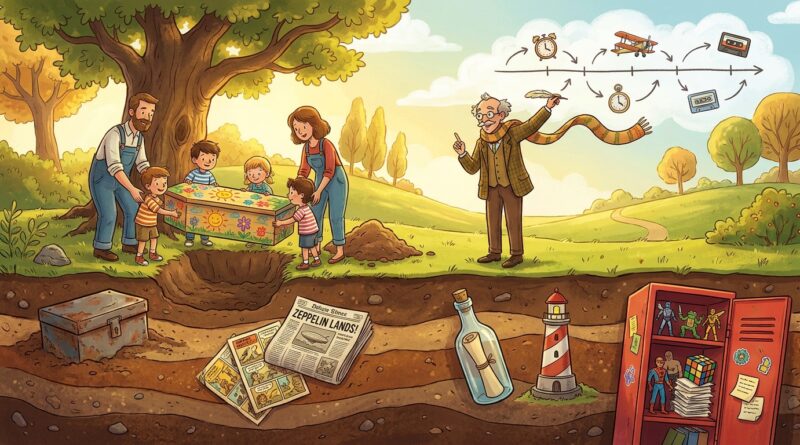
History’s Strangest Time Capsules: True Stories Of Hidden Messages Meant For Kids In The Future
Parents and teachers know the problem. You want a history story that feels big and strange and real, but not so grim that it turns bedtime into a cleanup operation. Kids want more than kings, wars, and dates on a worksheet. They want to picture themselves in the story. That is why weird historical time capsules for kids work so well. A time capsule is history with a secret lid. Someone long ago picked a few objects, wrote a note, shut the box, and hoped a child in the future would care enough to open it. That simple idea has led to some wonderfully odd true stories, from schoolchildren burying tiny treasures to whole cities hiding messages for people not yet born. Better yet, these stories do not just entertain. They make kids ask the best kind of history question. “If I were sending a message to the future, what would I put inside?”
⚡ In a Hurry? Key Takeaways
- Real time capsules are one of the easiest ways to make history feel personal and exciting for kids.
- Use these stories as a weekend activity by having children make their own mini capsule with a letter and a few everyday objects.
- Most of these true stories are odd and memorable without being too scary, which makes them family-safe conversation starters.
Why time capsules grab kids faster than most history lessons
A time capsule is basically a handshake across time. That is a lot easier for a child to understand than “study this century and memorize these names.”
There is a mystery built in. Who made it? Why those objects? Did they guess the future right, or get everything hilariously wrong?
That last part matters. Kids love seeing that people in the past were not dusty statues. They were regular humans making guesses, jokes, and hopeful little plans.
If your family likes this kind of history, you might also enjoy The Day-You-Were-Born Time Capsule: Weird History Waiting Under Your Birthday, which takes the same big idea and makes it personal right away.
True stories of the strangest time capsules
The Century Safe that turned opening day into an event
One of the best-known American examples was the Century Safe, sealed in 1876 and opened in 1976. That is a full hundred years of waiting. Inside were items meant to speak to the future, including photos and documents that captured daily life and national pride.
For kids, the fun here is not just what was inside. It is the patience. Imagine sealing up your favorite things and knowing your great-grandchildren might be the ones to peek inside.
It also shows a simple truth about time capsules. People do not usually fill them with treasure. They fill them with normal life. And years later, normal life becomes fascinating.
The Crypt of Civilization, the giant message to the far future
This one sounds like a movie prop, but it is real. At Oglethorpe University in Georgia, a huge chamber called the Crypt of Civilization was sealed in 1940 and is not meant to be opened until the year 8113.
Yes, 8113.
That date alone is enough to hook a room full of kids.
The crypt was packed with objects and records meant to explain life in the 20th century. Think of it as a full-scale attempt to say, “Hello, future people. This is who we were.” It included everyday items, texts, recordings, and machines to help explain them.
For children, this story opens up a great discussion. What would future people find weird about us? Toothbrushes? TV remotes? Homework folders?
School time capsules that accidentally became the best kind of local history
Some of the most charming capsules were made by schools, and these can be more fun for kids than the giant famous ones. Why? Because children made them for other children.
Across the last century, schools have buried boxes with class photos, lunch menus, coins, letters, newspapers, report cards, and little toys. When these are opened decades later, they give a child-sized view of history.
That is gold for parents and teachers. Big history can feel far away. A note from a ten-year-old in 1958 complaining about math feels instantly familiar.
And there is a quiet lesson tucked inside. Every generation thinks its everyday life is ordinary. It never is.
The Westinghouse time capsules that tried to speak for an entire era
At the 1939 New York World’s Fair, Westinghouse created a famous time capsule meant to last 5,000 years. Another followed in 1965. These were carefully planned and packed with small items that represented modern life.
There were practical objects, cultural samples, and records explaining the world of the moment. It was not just “let’s bury some stuff.” It was a serious attempt to create a guidebook for the future.
Kids usually love the mix of scale and silliness here. Adults were trying to sum up all of civilization, and one way they did it was by choosing ordinary objects. That contrast makes a good family conversation. If you had only ten items to explain your life today, what would you choose?
The Buzludzha-style surprise, when forgotten messages turn into accidental capsules
Not every time capsule begins with a polished ceremony. Sometimes old buildings, cornerstone boxes, and hidden wall spaces become accidental capsules simply because everyone forgets they are there.
Workers renovating schools, churches, and town halls have found sealed letters, newspapers, and class rosters tucked behind stones or inside walls. These finds can be smaller than the famous examples, but they often feel more intimate.
Children tend to love these stories because they feel possible. You do not need a giant museum vault. You need a note, a tin, and a hiding place that lasts longer than expected.
What kids actually learn from these stories
This is the sneaky good part.
On the surface, weird historical time capsules for kids are just fun. Underneath, they teach a lot without sounding like a lesson.
They learn that history was once someone’s present
This is a huge shift. A child stops seeing the past as a costume drama and starts seeing it as real people choosing what mattered to them.
They learn how objects tell stories
A bus ticket. A school photo. A candy wrapper. On their own, those seem boring. Put them in a capsule and wait fifty years, and they become clues.
They learn that predictions are hard
Many capsules include guesses about the future, and some are wonderfully wrong. That helps kids understand that people in the past were not all-knowing. They were curious, hopeful, and sometimes hilariously off target.
They learn they can be part of history too
This may be the best lesson of all. A child does not have to just consume history. They can make a record for someone else to find later.
How to turn these stories into a low-cost weekend project
You do not need special gear. You do not even need to bury anything. In fact, for a home project, storing a capsule indoors is usually smarter and less messy.
Try a simple family capsule
Ask each person to add:
- A short letter to the future
- One photo
- A small object from everyday life
- A list of favorite songs, snacks, or shows
- One prediction about the future
Seal it in a sturdy container and pick an opening date. Five years works well for younger kids. Long enough to feel magical. Short enough that they do not have to wait until retirement.
Make a classroom version
Teachers can do a “message to next year’s class” capsule. It is easy, cheap, and much more meaningful than another generic worksheet. Students can include drawings, class jokes, and notes about what school life feels like right now.
Skip the backyard if you want the contents to survive
This is the practical grown-up note. Moisture ruins paper fast. If you want the capsule to last, use an airtight container and store it somewhere cool and dry indoors.
What makes a time capsule story kid-safe and still exciting?
Parents often need that sweet spot. You want unusual and dramatic, but not nightmare fuel.
Time capsule stories usually fit beautifully because the tension is based on waiting, mystery, and surprise. Not gore. Not disaster. Not heavy tragedy.
Even when the backstory is serious, the object itself gives kids something solid to focus on. A note. A toy. A photo. A canister with a date stamped on it.
That makes these stories perfect for family reading, classroom discussions, and rainy afternoon projects.
At a Glance: Comparison
| Feature/Aspect | Details | Verdict |
|---|---|---|
| Best hook for kids | Hidden messages, mystery objects, and future predictions make history feel personal. | Excellent for ages who are bored by standard textbook history. |
| Ease of turning into an activity | Families and classrooms can make a simple capsule with paper, photos, and small everyday items. | Very easy and low-cost. |
| Educational value | Teaches empathy, historical thinking, and how ordinary objects become important over time. | High value without feeling like homework. |
Conclusion
All the oddities chatter this week may be about spooky expos and curious museums, but most families do not need a giant outing or a pricey event. They need one good story and one easy idea they can use at home. Real time capsules give you both. From schoolyard boxes to citywide secrets, they let kids step into history as participants, not just spectators. That is the real magic here. A child hears about an old hidden message, then starts thinking about what they would say to the future. Suddenly history is not stuck in the past at all. It is a conversation. And for a low-cost weekend project that builds connection across generations, that is hard to beat.