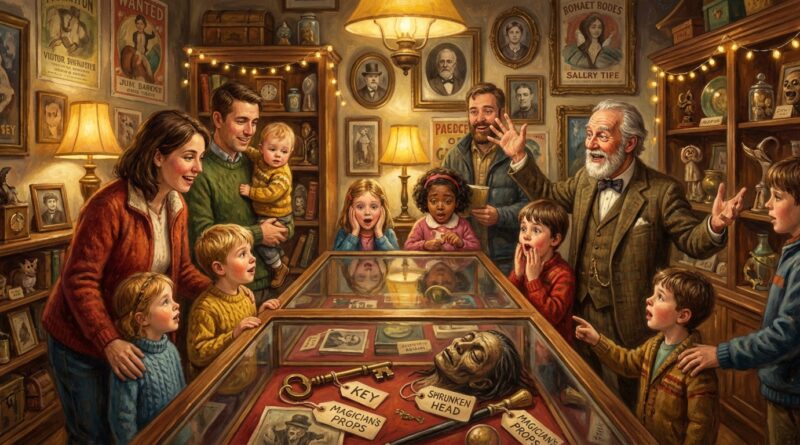
Family Oddity Quest: The Real Museums Of Weird History Hiding In Plain Sight
If you are tired of planning “fun” family outings that somehow end with your kids dragging their feet past another case of old spoons, you are not alone. A lot of parents want less screen time and more real-world wonder, but the usual museum trip can feel like school in weekend clothes. The good news is that the best family friendly history oddities museum for kids is often not the giant famous place. It is the odd little museum nearby. The local room with a two-headed calf. The maritime hall with a pirate tool. The tiny town collection with one baffling object everyone remembers. These places work because they give kids what they actually want. A little mystery. A little gross-out factor. A story they can repeat in the car ride home. That mix turns history from “look, don’t touch” into something alive, weird, and genuinely fun for the whole family.
⚡ In a Hurry? Key Takeaways
- Oddity museums and small local collections are often more memorable for kids than big formal museums because one strange object can hook their attention fast.
- Use a simple three-question game. What is it, who used it, and why did it matter. That turns any weird artifact into a mini history lesson.
- Check age fit before you go. Some oddities are silly and harmless, while others can be too creepy for younger kids.
Why weird history works better than “educational” history
Kids do not usually fall in love with history because of a perfect timeline on a wall. They fall in love with it because of one unforgettable thing.
A shrunken shoe from the 1800s. A Civil War doctor kit. A taxidermy animal that looks just a little wrong. A Victorian hair wreath that makes everyone say, “Wait, that is made of what?”
That is the sweet spot. Curiosity first, facts second.
When a museum has unusual artifacts, children stop feeling like they are being marched through a lesson. They start asking questions on their own. That is when the outing actually works.
What counts as a family-friendly oddities museum?
It does not have to be a full-blown “museum of the bizarre.” In fact, many of the best spots are hiding in plain sight.
Look for places like these
Small-town history museums with one truly strange local artifact.
Maritime museums with shipwreck finds, medical tools, or smuggling items.
Natural history rooms with unusual specimens.
University collections open to the public.
Historic houses with old beauty tools, mourning customs, or odd kitchen gadgets.
Roadside museums with niche collections that sound too weird to be real.
If you want ideas, The Strangest Treasures Hiding In Small-Town Museums (And How Your Kids Can Hunt Them Down) is a great place to start. It is packed with the kind of finds that make kids perk up instead of tune out.
The real trick: one weird object beats fifty ordinary ones
Parents often think they need a huge museum day to make it count. You really do not.
One-room museums can be magic if they have one item with a story. Maybe it is a strange surgical tool, a giant fossil, a hand-built coffin, or an antique doll that is equal parts fascinating and alarming. If that object sparks conversation, the trip is already a win.
That is because families remember stories, not square footage.
How to turn any odd artifact into a mini history lesson
This is the simple part you can use this weekend. No prep. No worksheets. No bribery required.
Use the 3-question method
1. What do you think this is?
Let kids guess first. Wild guesses are fine. In fact, they are half the fun.
2. Who would have used it?
Now you move from object to person. A sailor. A doctor. A farmer. A child. A grieving family. Suddenly history has a human face.
3. Why did it matter back then?
This is where the lesson slips in without feeling like homework. Maybe this tool saved time. Maybe it solved a problem. Maybe it shows how different daily life used to be.
That is it. Three questions. Kids get the fun of the strange object, and you get a real conversation instead of blank stares.
Example
Say your local museum has an old mourning photo display.
Ask, “What do you think is happening here?”
Then, “Who would have kept this?”
Then, “Why were photos so important to families then?”
Now you are talking about photography, grief, family life, and how people remembered loved ones before phones stored ten thousand pictures. That is history, but it does not feel like a lecture.
How to find a family friendly history oddities museum for kids near you
You do not need a plane ticket. You need better search terms.
Try searching for:
local history museum unusual artifacts
medical museum kids nearby
small town museum weird object
cabinet of curiosities museum family
historic house strange collection
county museum oddities
Also check city museum websites, local historical societies, university archives, and tourism offices. The weirdest places often have the worst marketing. That is part of the charm.
Call before you go
Ask these quick questions:
Is it good for elementary-age kids?
Are there any exhibits that may be too intense?
How long does a typical visit take?
Do they offer scavenger hunts or family guides?
This saves you from showing up to a museum that is either closed for lunch or unexpectedly full of nightmare fuel.
Best types of oddities for different ages
For younger kids
Animal oddities, old toys, strange inventions, giant objects, tiny objects, costumes, shipwreck items, unusual food tools.
For tweens
Crime history, medical tools, disaster artifacts, superstition items, Victorian customs, mysterious local legends.
For teens
More intense history can land well here, especially if there is a strong story behind it. Think forensic exhibits, war relics, old technology, or social history with a weird angle.
The key is not “weirdest possible.” It is weird enough to spark interest without giving your six-year-old material for 2 a.m. panic visits.
How to make the outing feel like an adventure, not a chore
Give each child a mission
Ask them to find:
The strangest object.
The grossest object.
The object they would take home if they could.
The object that tells the best story.
Keep the visit short
Forty-five minutes to ninety minutes is often perfect. Leave while everyone is still interested.
Skip trying to see everything
Pick three or four objects to focus on. Kids do better with highlights than marathons.
End with one big question
On the drive home, ask, “What is one weird thing from today you will remember next week?”
If they answer immediately, you nailed it.
What if your local museum is tiny or kind of dusty?
Honestly, that can be a plus.
Some of the most memorable family trips happen in museums that feel homemade, slightly offbeat, and proudly local. A polished big-city institution is nice, but a volunteer-run museum with one legendary artifact can feel more personal and surprising.
That is especially true if a staff member or docent loves telling the backstory. Kids will often remember the person who explained the creepy butter mold or antique embalming tool just as much as the object itself.
When to skip a museum labeled “oddities”
Not every oddities museum is built for families.
Some lean hard into horror, gore, or adult themes. That does not make them bad. It just means they may not be the right Saturday plan with a second grader.
Green flags
Family hours.
Educational framing.
Natural history and local history mixed in.
Photos on the website that show what the exhibits are actually like.
Red flags
No age guidance.
Marketing that pushes shock value only.
Reviews that mention nightmare material for kids.
If you are unsure, call. Five minutes on the phone can save the day.
Why these outings stick
Weird history gives families a way in.
It lowers the pressure. Nobody has to “appreciate culture” on command. Nobody has to read every plaque. You just react, laugh, squirm a little, and then start asking why this strange thing exists at all.
That is a far better starting point for learning than forcing interest.
And if your kids end up wanting more after one odd little museum, great. That is often how a real museum habit starts. Not with the masterpiece everybody says they should see, but with the bizarre object they cannot stop talking about.
At a Glance: Comparison
| Feature/Aspect | Details | Verdict |
|---|---|---|
| Big traditional museum | Lots to see, but can feel long, formal, and label-heavy for younger kids | Best for full-day trips, not always best for instant engagement |
| Small local museum with one unusual artifact | Short visit, lower cost, easier pace, often more memorable because of one standout object | Excellent weekend option for families |
| Full oddities museum | High curiosity factor, but quality and age-appropriateness vary a lot | Great if you check reviews and age fit first |
Conclusion
You do not need a massive travel budget or months of planning to give your family a day that feels special. Sometimes the best outing is a quick trip to a nearby museum with one gloriously weird object and a story behind it. That is the charm of a family friendly history oddities museum for kids. It turns history into something children can feel curious about right now, not something they are told to care about later. Use the three-question method, keep the visit light, and let the strange stuff do the heavy lifting. Whether you live near a quirky cabinet-of-curiosities in Wilmington, a tiny local history room, or a one-room museum with just one baffling artifact, you have the makings of a weekend adventure that gets everyone off screens and into a real conversation.