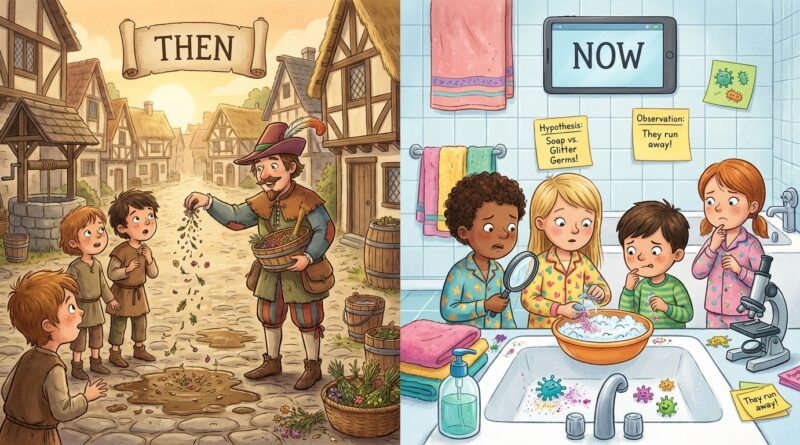
History’s Grossest Clean-Up Crew: Weird Hygiene Habits That Actually Kept People Alive
Kids hear one gross history fact, usually something like “people used pee to wash clothes,” and suddenly they want ten more. The problem is that most “eww history” lists stop right there. Parents get stuck with random nasty facts, no context, and a kid who thinks everyone in the past was simply dirty and clueless. That is frustrating, because the real story is much more interesting. Many strange hygiene habits were rough, smelly, and sometimes dangerous, but some of them actually helped people stay alive when they had no modern plumbing, no germ theory, and very little soap. If you frame these stories the right way, they stop being cheap gross-out jokes and turn into little science lessons. Why did people do this? Did it work? Was it safer than the alternative? Those questions make history click for kids, and they also teach a useful modern lesson. People have always been trying to solve health problems with the tools they had.
⚡ In a Hurry? Key Takeaways
- Many weird historical hygiene facts for kids make more sense when you ask what problem people were trying to solve, like lice, bad water, or rotting waste.
- Use each gross fact as a mini investigation. Ask, “Did this help, harm, or sort of work?”
- Keep it kid-safe and accurate. The goal is not to copy old habits, but to understand survival before modern health tools existed.
Why gross history can actually be smart history
There is a reason children love this stuff. Bodily fluids, bugs, smells, rotten food. It is unforgettable. But it only becomes useful if we connect the gross detail to a real-life problem.
Before indoor plumbing, sealed trash bins, antibiotics, and easy access to soap, people had to fight dirt, parasites, spoiled water, and human waste in ways that seem bizarre now. Some ideas were clever. Some were terrible. A few were both.
That is what makes these weird historical hygiene facts for kids so good for family reading. You can turn each one into a simple test question. What danger were they facing? What tool did they have? Was their solution better than doing nothing?
If your kids like the tiny-creature side of this topic, History’s Hidden Micro Monsters: The Tiny Creatures That Quietly Shaped Our World pairs nicely with this conversation. It helps explain the invisible enemies people were battling without even knowing what germs were.
1. Urine in laundry. Yes, really.
What people did
In parts of the ancient world, stale urine was collected and used in cleaning cloth, especially wool garments.
Why anyone thought this was a good idea
Because stale urine breaks down into ammonia. Ammonia can cut through grease and grime. So while this sounds like pure madness, there was real cleaning chemistry at work.
Did it help?
In a limited sense, yes. It could help clean fabrics when better products were unavailable. That does not mean it was pleasant, or that everyone loved the process. But it was not random.
Kid-safe takeaway
This is a great one for teaching that “gross” and “useless” are not the same thing. People noticed patterns long before they understood the science behind them.
2. Heavy perfume and herbs as a defense against bad air
What people did
People carried flowers, herbs, pomanders, and strong scents. They also burned fragrant materials to cover foul smells.
Why it mattered
For a long time, many believed disease spread through bad air, often called miasma. They were wrong about the full cause, but they were not wrong that terrible smells often showed up in unhealthy places full of waste and rot.
Did it help?
Sometimes indirectly. Nice smells did not kill most germs. But avoiding filthy, crowded, foul-smelling places could reduce contact with real dangers. In other words, the explanation was off, but the behavior occasionally pushed people in a safer direction.
Kid-safe takeaway
People can make a partly wrong guess and still land on a somewhat useful habit. That is a big lesson in how science grows over time.
3. Wearing wigs, shaving heads, and fighting lice
What people did
In some times and places, people shaved their heads or kept hair very short, then used wigs for appearance.
Why this was not just fashion
Lice were a constant problem. Thick hair gave parasites a nice place to hide. A shaved head was easier to inspect and clean. A wig could be removed, treated, or replaced more easily than a whole head of natural hair.
Did it help?
Yes, to a point. This was one of the more practical ways to manage infestations in a world without modern lice shampoos.
Kid-safe takeaway
Sometimes a strange beauty trend started as pest control.
4. Chamber pots, cesspits, and the race to get waste away from people
What people did
Human waste was often collected in pots, dumped into pits, or moved out of homes and streets as best people could manage.
Why this ugly system still mattered
It sounds awful, and often it was. But even imperfect waste removal can be better than leaving waste where people sleep, cook, and eat. The basic survival idea was simple. Get the dangerous stuff farther away.
Did it help?
Sometimes. When waste systems were poorly managed, they spread disease. When they were organized better, they lowered immediate exposure inside the home.
Kid-safe takeaway
This is a good place to explain why plumbing is one of the greatest health inventions ever. Not glamorous. Very important.
5. Public baths. Cleaner than you think, until they weren’t
What people did
In places like ancient Rome, public bathing was a regular social activity. People washed, soaked, scraped off dirt and oil, and spent time together.
Why baths mattered
Regular washing does help remove dirt, sweat, and some parasites. That part is easy to understand. The complication is that crowded shared spaces can also spread disease if water and surfaces are not kept clean enough.
Did it help?
Yes and no. Bathing itself was useful. Shared facilities could become risky. This makes baths a perfect example of how one health habit can solve one problem while creating another.
Kid-safe takeaway
History is messy. One habit can be both smart and flawed at the same time.
6. Tooth cleaning with rough powders and twigs
What people did
People cleaned teeth with cloths, chew sticks, ash, salt, crushed shells, or abrasive powders.
Why they bothered
Tooth pain is ancient. People may not have known about bacteria in the modern sense, but they knew dirty mouths, trapped food, and rotten teeth were bad news.
Did it help?
Some methods did. Chew sticks in particular have a long, respected history in many cultures. But harsh abrasives could also damage enamel if overused.
Kid-safe takeaway
Even when old methods were crude, they show that dental care is not a modern obsession. People have always wanted to keep their teeth.
7. Vinegar as a cleaner
What people did
Vinegar was used for rinsing, wiping, preserving, and general cleaning.
Why it made sense
Vinegar is acidic, and acidity can make life harder for some microbes. It is not a magic shield, but it is more useful than plain wishful thinking.
Did it help?
In some situations, yes. It was one of the more sensible options available for cleaning surfaces and certain foods.
Kid-safe takeaway
Not every old hygiene trick was nonsense. Some were early versions of practical chemistry.
How to talk about weird hygiene history with kids
Ask three simple questions
Try this every time a gross fact pops up.
1. What problem were people trying to fix?
2. What did they believe was causing it?
3. Did their solution actually help?
Separate “gross” from “stupid”
That matters. Kids quickly learn that people in the past were not foolish cartoon characters. They were problem-solvers with fewer tools and less information.
Connect it to modern life
The best comparison is often simple. Soap, toothpaste, clean water, toilets, laundry detergent, and lice treatment all solve old problems better than old methods did.
Use the half-true fact as the start, not the finish
“People used pee to wash clothes” is a hook. “Because ammonia cuts grease” is the real learning.
What not to do
Do not turn every old habit into a miracle cure. Some practices were ineffective or harmful. Bloodletting, unsafe shared water, and filthy overcrowding killed many people.
Also, do not present all of history as one giant stink cloud. Hygiene varied wildly by place, class, climate, culture, and time period. Some societies built advanced baths, drainage systems, and cleaning routines that were impressive even by later standards.
The point is balance. Gross details grab attention. Context gives them value.
At a Glance: Comparison
| Feature/Aspect | Details | Verdict |
|---|---|---|
| Urine for laundry | Stale urine produced ammonia, which could help remove grease from cloth | Gross, but based on real cleaning chemistry |
| Shaved heads and wigs | Made lice easier to manage in a world without modern treatments | Strange-looking, but often practical |
| Perfumes and herbs against disease | Based on bad-air ideas, but sometimes encouraged avoidance of filthy places | Wrong theory, occasional real-world benefit |
Conclusion
The best weird historical hygiene facts for kids do more than make everyone yell “eww.” They show how people coped with lice, waste, bad water, and dirty living conditions long before modern health tools existed. Right now there is a huge wave of content about disgusting old-timey habits and bizarre hygiene history, but very little of it is built for families or ties the gross detail to real science and everyday life. That is the part worth keeping. When you turn these stories into small investigations, kids learn to question half-true fun facts, spot the difference between myth and evidence, and appreciate just how much clean water, soap, and sanitation matter. That is a pretty great payoff for one very disgusting history lesson.