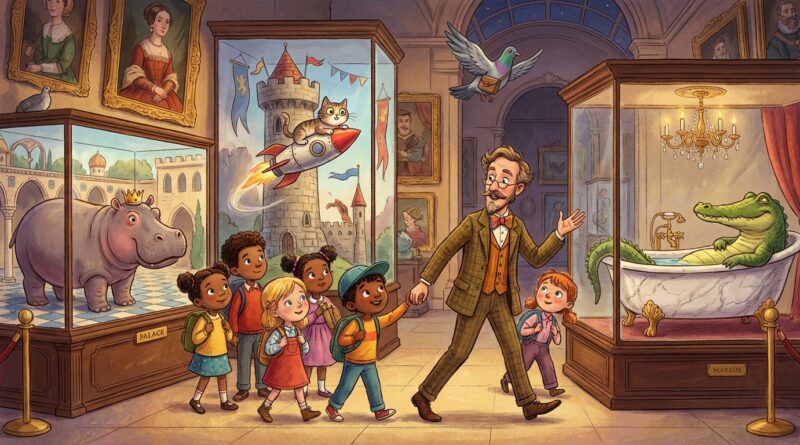
History’s Stranger-Than-Fiction Pets: The Royal Hippos, Rocket Cats and Presidential Alligators That Really Existed
If your kids are bored with the same old “octopuses are smart” and “dogs can smell feelings” facts, you are not imagining it. A lot of animal lists recycle the same stories over and over, which takes the fun out of family reading fast. The good news is history is packed with truly odd, very real animal stories that sound made up. We are talking about royal hippos, cats tied to military plans, and presidential alligators wandering around famous homes. These are the kinds of weird historical animal facts for kids that can turn a sleepy dinner table into a full-on question storm. Better still, they open the door to bigger chats about kindness, safety, and how people used to treat animals very differently. Think of this as part story time, part history lesson, and part “wait, that actually happened?”
⚡ In a Hurry? Key Takeaways
- Yes, history really includes pet hippos, White House alligators, and wartime cats used in strange human schemes.
- Use these stories as quick conversation starters by asking, “Would this be allowed today, and should it be?”
- The fun part is the surprise, but the real value is helping kids think about empathy, animal care, and how rules have changed.
Why these stories stick with kids
Kids love facts that feel a little impossible. A queen with a hippo. A president with alligators. Cats involved in war plans. That mix of silly and true is hard to beat.
But the best part is not just the shock value. Strange animal stories from history help kids see that the past was a real place filled with real people making choices, some charming, some careless, and some downright baffling.
That makes these stories useful. They are not just trivia. They are easy entry points into bigger topics like responsibility, animal welfare, and why modern zoos, pet laws, and wildlife rules exist.
The royal hippo who lived like a celebrity
Princess Louise and her unusual pet
One of the strangest true stories comes from 19th-century Britain. Princess Louise, daughter of Queen Victoria, was given a hippopotamus by an exotic animal dealer. The hippo was named Billy.
Now, if you are picturing a tiny, tidy pet with a ribbon around its neck, no. Hippos are huge, strong, and wildly unsuitable as house pets. Even so, in that era, wealthy people sometimes kept exotic animals in private collections because it showed status and wealth.
Billy reportedly lived in a special enclosure and caused plenty of fascination. To people at the time, this seemed impressive. To us, it sounds stressful for everyone involved, especially the hippo.
Why this story matters now
This is a great moment to ask kids a simple question. Just because someone can keep a wild animal, does that mean they should?
That one question can lead to a smart family talk about habitats, animal needs, and why wild animals are not toys or trophies.
The presidential alligators that startled White House visitors
John Quincy Adams and his reptile guests
If your family likes American history with a side of chaos, this one delivers. John Quincy Adams is said to have kept an alligator in the White House for a time. The alligator was reportedly a gift from the Marquis de Lafayette.
Accounts differ on the exact details, which is common with older stories, but the tale has stuck around for a reason. It is wonderfully weird. Imagine visiting the White House and hearing, “Watch out, there may be an alligator in the bathroom.”
True or partly embellished, the story reflects a real habit of the era. Powerful people were often given rare animals as symbols of prestige, diplomacy, or novelty.
Then came the “more pets than expected” presidents
American presidents have kept all sorts of animals over the years. Not all were strange, but some definitely pushed the limits. From goats to bears to unusual birds, presidential pets were once less carefully managed than they would be now.
That is useful context for kids. Famous people in history often lived by rules that would seem odd today.
Rocket cats and war plans that sound like cartoons
Cats in military ideas
Now for the part that sounds most like fiction. Across history, military inventors and planners have come up with some deeply odd animal-related schemes. Cats have shown up in stories and proposals because humans assumed they could use animal behavior for strategic purposes.
One famous example from the broad world of strange wartime ideas is the use of animals in delivery systems, signaling plans, or attempts to guide equipment. Some ideas were tested. Some never got beyond paper. Some were plainly terrible.
The phrase “rocket cats” captures the absurd spirit of these plans. In several cases, cats and other animals were imagined as tools in military experiments because people thought instinct could be turned into guidance. It was less genius than desperation mixed with bad ethics.
The lesson under the weirdness
This is a place to tread lightly with kids, but you do not need to get dark. The family-friendly version is simple. Humans in wartime have tried many unusual things, and not all of them were kind or wise.
That helps children see a grown-up truth in a safe way. History includes clever ideas, but also bad ones. We can be curious about the past without cheering every part of it.
Crocodiles in castles and other animals kept for bragging rights
When castles doubled as animal showrooms
Long before modern zoos became regulated public spaces, nobles and rulers often kept private collections of unusual animals. These collections, sometimes called menageries, could include lions, monkeys, bears, and yes, crocodiles.
In parts of Europe, royal courts displayed rare animals almost like living treasure. If a ruler had a crocodile, it was not because the crocodile enjoyed castle life. It was because the ruler wanted to impress visitors.
For kids, this can be a fun comparison point. Today, if someone said they had a crocodile in a stone courtyard to impress dinner guests, everyone would immediately see the problem.
Why old menageries fascinate families
They feel like fantasy worlds. But they were real. If your kids enjoy this kind of strange history, you might also like Family Oddity Quest: The Real Museums Of Weird History Hiding In Plain Sight, which taps into that same “how is this real?” energy in a way families can actually visit and talk about together.
Other weird historical animal facts for kids worth sharing
A Roman emperor and an extravagant horse
The emperor Caligula is famously said to have treated his horse, Incitatus, with ridiculous luxury. Ancient sources claim the horse had a fancy stable and may even have been promised a political title. Historians debate parts of the story, but even the toned-down version is strange enough.
Kids usually love this one because it sounds like a joke. It also introduces an important history skill. Some old stories are true in full, some are exaggerated, and some are a mix.
Wojtek the soldier bear
Not every unusual animal story is about rich people showing off. Wojtek, a Syrian brown bear adopted by Polish soldiers during World War II, became famous for traveling with troops and reportedly helping carry ammunition crates.
This story is often told with warmth, and kids tend to remember it. It is still worth discussing carefully. Even beloved animals in human conflicts are caught up in situations they did not choose.
Cher Ami the messenger pigeon
Cher Ami was a carrier pigeon in World War I who helped deliver a message that saved soldiers. The pigeon was badly injured but completed the flight.
This one can lead to a gentler conversation about animal bravery, and also about how humans once depended on animals in daily life far more than many of us do now.
How to talk about these stories without ruining the fun
Use the “three-question trick”
When you share one of these tales, ask three simple questions.
First, what makes this story surprising?
Second, would this be allowed today?
Third, how do you think the animal felt?
That keeps the tone playful while gently building empathy.
Let kids spot what changed
Children are often very good at noticing fairness. If they hear about a hippo in a backyard or a crocodile in a castle, they quickly see that something feels off.
That opens the door to talk about wildlife protection, veterinary care, and why many modern rules exist to protect both animals and people.
Keep it age-appropriate
You do not need to share every grim detail from history. Stick to the broad facts. Focus on the odd setup, then move to the lesson. That keeps the conversation curious instead of upsetting.
Why families keep coming back to strange animal history
Because it works. These stories feel fresh. They are easy to remember. And unlike random internet fact dumps, they give you something bigger to talk about.
One minute your child is laughing about an alligator in the White House. The next, you are talking about how people used to think about wild animals compared with now. That is a pretty solid return on a five-minute bedtime chat.
At a Glance: Comparison
| Feature/Aspect | Details | Verdict |
|---|---|---|
| Most surprising fact type | Royal and presidential pets like hippos and alligators feel the most instantly unbelievable to kids. | Best for grabbing attention fast |
| Best conversation starter | Stories about private menageries and exotic pets naturally lead to talks about animal care and modern rules. | Best for empathy and critical thinking |
| Most age-sensitive topic | Wartime animal stories, including “rocket cat” type ideas, need a lighter touch and simple framing. | Best shared with context and care |
Conclusion
Weird animal stories from history are more than fun little shocks. They are a handy way to turn random curiosity into real family conversation. In a world full of viral animal clips and odd headlines, these older stories give parents something better than a quick laugh. They give you a chance to talk about empathy, responsibility, and how much human attitudes toward animals have changed. So if your crew needs fresh, screen-free conversation starters, start with the royal hippos, the battle-plan cats, and the castle crocodiles. They feel as wild as a cartoon, but they are rooted in real history, which makes them stick.