History’s Tiny Fingerprints: The 15,000‑Year‑Old Beads That Prove Kids Have Always Made Things Cool
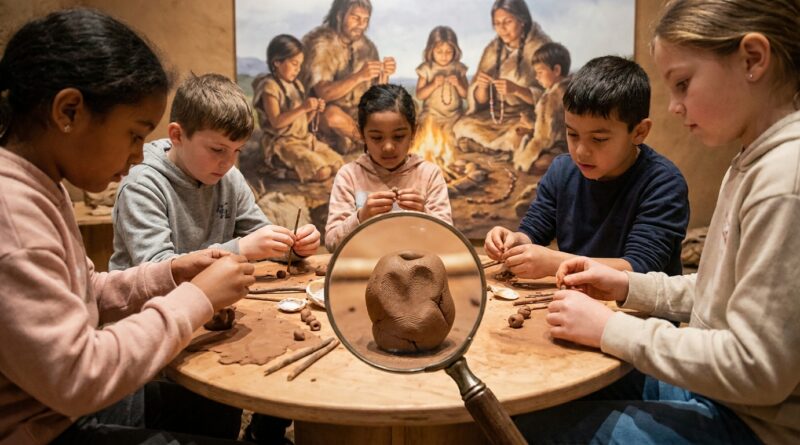
Finding history stories that feel exciting for kids can be weirdly hard. So much of what reaches classrooms and dinner tables is kings, battles and dates. Useful, sure, but not always the stuff that makes a child sit up and say, “Wait, really?” That is why this archaeology story lands so well. Researchers studying 15,000-year-old clay beads from what is now northern Israel found preserved fingerprints on them, and those prints appear to come from both adults and children. In other words, kids were not just standing nearby while the grown-ups did the “important” work. They were making things too. That is one of those surprising historical facts for kids about ancient fingerprints that instantly makes the past feel less distant. A child today can look at that discovery and think, someone my age rolled clay in their hands, left a smudge behind, and accidentally sent a tiny message across fifteen millennia. That is history you can feel.
⚡ In a Hurry? Key Takeaways
- Ancient clay beads found in Israel still hold fingerprints from both children and adults, showing kids helped make things 15,000 years ago.
- Use this news as a simple family or classroom activity by making air-dry clay beads and talking about what fingerprints can tell us.
- It is a safe, screen-light way to help kids connect with real archaeology and see themselves in history.
Why this discovery matters to families and teachers
Most children meet history as a parade of big names. This find does the opposite. It shines a light on ordinary people, and better yet, on children.
That matters because kids often assume the past was made entirely by adults. The fingerprint evidence tells a warmer story. Prehistoric communities were full of shared work, shared learning and shared creativity. Children likely watched, copied, helped and experimented, just like they do now in kitchens, craft rooms and classrooms.
For parents and teachers, that makes this story gold. It is surprising. It is easy to picture. And it opens the door to bigger conversations about how we know what we know about the past.
What archaeologists actually found
The beads date to roughly 15,000 years ago. They were made of clay and preserved well enough that tiny ridges from fingerprints remained on the surface. By studying the size and patterns of those prints, researchers concluded that some likely came from children and some from adults.
That may sound like a small thing. It is not.
Fingerprints are personal. A pot shard or a stone tool can tell us that humans were there. A fingerprint tells us a human hand pressed right here, in this exact spot. It is one of the most direct links you can get to a real person from deep prehistory.
Why fingerprints grab kids so fast
Children already know fingerprints are unique. They have seen them in detective books, school activities and police shows their parents probably wish they had not overheard. So when you say ancient fingerprints survived for 15,000 years, they get the hook right away.
It turns archaeology from “old objects in a case” into “someone touched this.” That is a huge shift.
The big lesson hiding inside a tiny bead
The coolest part of this story is not just the age of the beads. It is what the fingerprints suggest about community life.
Kids in prehistoric groups were likely learning by doing. They were not waiting to become adults before joining in. They practiced skills, made mistakes, copied older makers and helped create objects that may have had social, decorative or symbolic meaning.
That sounds familiar because it is. Children still learn this way now.
History feels better when kids can see themselves in it
There is something powerful about telling a child, “A kid your age may have made this.” It changes the emotional temperature of history. The past stops being a museum of strangers and starts feeling like a long line of human beings who laughed, fidgeted, learned and left messes behind.
That is why this ranks so high among surprising historical facts for kids about ancient fingerprints. It is not gross or scary. It is vivid. And it gives children a place in the human story.
How to turn this into a family or classroom activity
You do not need a lab or a lesson plan binder the size of a suitcase. You need clay, curiosity and about half an hour.
Simple “ancient bead makers” activity
You will need:
- Air-dry clay or homemade salt dough
- String or yarn
- A straw, pencil tip or skewer for poking holes
- A tray or baking paper
What to do:
- Tell kids about the 15,000-year-old beads and the fingerprints found on them.
- Ask them to roll small beads from clay.
- Have them gently press a finger onto one bead on purpose.
- Poke holes so the beads can be strung later.
- Let them dry.
- When finished, compare prints and talk about how archaeologists study clues.
You can keep it simple, or go one step further and ask each child to imagine why people long ago wore or made beads. Decoration? Group identity? Gifts? Play? Memory?
Questions to ask while you do it
- Why do you think children helped make these beads?
- What jobs do kids learn by helping with today?
- If someone found your bead 15,000 years from now, what would they guess about you?
- Why do fingerprints survive on clay better than on other things?
Why this story feels so fresh right now
This summer has brought a steady stream of archaeology stories that connect ancient life to ordinary human habits. That is part of why this bead discovery is worth sharing now. It fits a bigger trend in science news. People are hungry for finds that make the past feel personal, not just monumental.
And this one really works for younger audiences because it is concrete. No pun intended. Kids can picture a hand pressing into soft clay. Adults can too.
What this does better than another “fun facts” list
Lists of odd history facts can be entertaining, but they often fly by and disappear. This story sticks because it carries a real emotional charge. It is not random trivia. It is evidence.
Better still, it invites action. You can hear the news, make something with your own hands, compare fingerprints and talk about learning across generations. That is a much richer experience than memorizing a few weird dates.
At a Glance: Comparison
| Feature/Aspect | Details | Verdict |
|---|---|---|
| Kid appeal | Ancient fingerprints are easy to picture and instantly personal. | Excellent hook for ages elementary and up. |
| Educational value | Teaches archaeology, evidence, creativity and the role of children in prehistory. | Much deeper than a standard history fact sheet. |
| Ease of follow-up activity | Clay bead making is low-cost, hands-on and easy to adapt for home or school. | A strong screen-light option. |
Conclusion
Some of the best history stories are not about rulers or battles at all. They are about hands. Small hands, too. The 15,000-year-old clay beads found in Israel, still marked with the fingerprints of children and adults, give us a rare and lovely reminder that kids were makers in the ancient world, not just spectators. That makes this one of the most memorable surprising historical facts for kids about ancient fingerprints, and one of the easiest to turn into something meaningful at home or in class. With just a little clay and a good question, families can connect real archaeology news to creativity, teamwork and the long, shared history of human arts and crafts. For children, that is more than a fun fact. It is proof that someone like them has always been part of the story.