History’s Strangest Calm Moments: True Stories Of Times The World Got Weirdly Peaceful
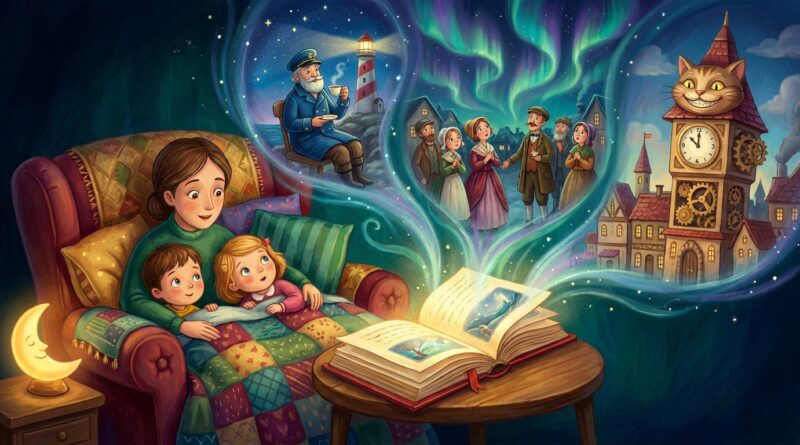
If you have ever tried to tell your child a “real history story” before bed and watched the mood sink fast, you are not alone. So much of history gets taught through wars, disasters, and dates to memorize that it can feel like there is no gentle way in. That is frustrating, especially when you want something screen-free, true, and calming. The good news is that the past was not only loud and scary. It also had plenty of soft, odd little pauses. There were times when enemies sang together, whole cities stopped to stare at the sky, and people shared tea, postcards, and tiny acts of kindness in the middle of big events. These are the kinds of calming weird history facts for kids that work beautifully at bedtime. They are real, they are memorable, and they remind children that even in messy times, people have always made room for wonder, quiet, and connection.
⚡ In a Hurry? Key Takeaways
- History is full of true, peaceful little moments that feel more like bedtime stories than heavy lessons.
- Pick short, wonder-filled stories, then ask one simple question like “What do you think that felt like?” to make them stick.
- These calmer history stories can lower bedtime stress while still building curiosity, memory, and a healthy interest in the past.
Why gentle history matters at bedtime
Kids do not need the whole weight of the world when they are brushing teeth and climbing under blankets. But they also do not need a fake, sugar-coated version of the past. There is a middle path.
That middle path is simple. Tell the true story, but choose moments where the most interesting thing is not the danger. It is the pause. The kindness. The surprise. The part that makes a child say, “Wait, that really happened?”
That is why calming weird history facts for kids work so well. They teach without turning story time into a lecture.
True stories from history’s strangely peaceful moments
1. The Christmas Truce of 1914
During World War I, some soldiers on opposite sides quietly stopped fighting on Christmas. In places along the Western Front, men sang carols, called holiday greetings across the trenches, and even stepped into no-man’s-land to shake hands and exchange small gifts.
Now, this story belongs in a careful age range because it happened during a war. But the calm part is what children remember. For one brief moment, ordinary people chose songs over shouting. That is a powerful idea for a child to carry.
If you tell this one, keep it simple. Focus on the singing, the snow, the candles, and the surprise that people who were meant to be enemies still recognized each other as human.
2. When New Yorkers stopped to watch a giant elephant cross a bridge
In 1884, people worried the Brooklyn Bridge might not be safe. So showman P.T. Barnum arranged for 21 elephants, along with camels and other animals, to walk across it. The idea was to prove the bridge was strong.
Picture it like a movie scene. A busy city. A huge bridge. Then, suddenly, elephants taking a peaceful group stroll high above the river.
There is no battle here. No big scary twist. Just one very weird public confidence test featuring elephants. Kids love the image, and adults usually do too.
3. The day the world got quiet for a solar eclipse
For thousands of years, people have stopped what they were doing to watch the sky go strange. During a solar eclipse, daylight fades, birds act confused, and whole crowds often go silent for a few seconds.
That pause is part of the story. It is one of history’s oldest shared calm moments. No matter where people lived or what language they spoke, many had the same feeling. The sky looked wrong, and everybody stared.
This is a lovely bedtime history angle because it connects science, wonder, and human experience. You can even ask your child, “What sounds would stop if the afternoon suddenly turned dark?”
4. The Tulip Mania lesson that is strange, not scary
In the 1600s, tulips became so popular in the Netherlands that some bulbs sold for wildly high prices. Adults hear that story and think about markets. Kids hear it and think, “Wait, people got that excited about flowers?”
That is the fun entry point. You do not need to turn it into economics class. You can tell it as a peaceful reminder that people in the past were sometimes just as silly and trend-driven as people now.
It works because the image is soft. Fancy flowers. Big excitement. A lot of grown-ups making very dramatic choices about garden bulbs.
5. The Great Tea Race, where speed met calm
In the 1800s, fast clipper ships raced to bring the first tea from China to Britain. It sounds thrilling, but it is also wonderfully cozy. These were high-stakes tea deliveries.
For children, the best part is the simple question underneath it all. Why were people so eager for tea? That opens the door to talking about trade, daily life, and how ordinary habits today can have long stories behind them.
And yes, any tale centered on tea already has built-in bedtime energy.
6. Postcards from the past that felt like tiny text messages
In the late 19th and early 20th centuries, people mailed postcards for quick everyday notes. In some cities, mail could arrive several times a day. Friends and family used postcards almost the way we use texts.
That idea lands instantly with kids. People long ago were still saying things like, “Meet me later,” “The weather is odd,” or “We arrived safely.” History becomes less stiff when children realize the past was filled with ordinary people doing ordinary things.
There is something deeply calming about that. Across time, people still checked in on each other.
7. Napoleon was once attacked by rabbits
This one is more silly than serene, but it is perfect for kids. After a hunt was arranged for Napoleon, the rabbits were released. Instead of scattering, they reportedly charged toward him in a furry wave.
No one expects one of history’s most famous leaders to be overwhelmed by rabbits. That is exactly why this story works. It breaks the “history is always stiff and serious” problem in seconds.
And at bedtime, laughter is often more calming than one more serious lesson.
What makes these stories feel safe instead of heavy
The trick is not pretending hard things never happened. The trick is choosing the right slice of the story.
Focus on moments with these features:
- Strong images, like elephants on a bridge or people watching the sky.
- Low detail about danger or conflict.
- A clear human feeling, such as surprise, relief, kindness, or wonder.
- A short arc with a clean ending.
When a story has those ingredients, it usually feels more like a fireside tale and less like homework.
How to tell calming weird history facts for kids without sounding like a teacher
Start with the oddest detail first
Do not open with dates. Open with the hook.
Try: “Did you know a bunch of elephants once marched across the Brooklyn Bridge to prove it was safe?”
That gets attention fast. Once your child is curious, the rest is easy.
Keep the facts short and the picture clear
You only need a few lines. Who was there. What happened. Why it was strange. Why people remembered it.
Think of it like reading the best part of a chapter out loud, not delivering a full textbook.
End with one cozy question
Ask something simple:
- “Would you have been brave enough to walk that bridge after the elephants?”
- “What gift would you trade during a truce?”
- “How quiet do you think the crowd got during the eclipse?”
That turns listening into conversation, which helps kids remember more without feeling tested.
Best age approach for these stories
For younger children, stick with animal stories, sky stories, travel stories, and everyday-life stories. Save anything connected to war for older kids, and keep the focus narrow and gentle.
For middle-grade kids, you can add a bit more context. They often enjoy hearing that history is not just kings, queens, and battles. It is also trends, mistakes, weather, inventions, snacks, mail, pets, and very strange public events.
The goal is not to cover everything. It is to leave them wanting one more story tomorrow night.
Easy bedtime format parents can repeat
Here is a simple routine that works:
- Pick one true story that can be told in two to three minutes.
- Lead with the weirdest image.
- Add just enough background to make it make sense.
- End with one question or one “Can you imagine?” prompt.
- Stop there.
That last part matters. Do not over-explain. A short, calm story is often better than a perfect one.
Why kids remember the strange quiet parts
Children are naturally tuned to pattern breaks. They notice the moment when something ordinary becomes surprising. A bridge becomes an elephant parade. A battlefield becomes a carol service. A normal afternoon becomes a darkened sky.
Those moments stick because they are emotional without being overwhelming. They create curiosity, not fear.
And honestly, adults need that too.
At a Glance: Comparison
| Feature/Aspect | Details | Verdict |
|---|---|---|
| Best story type for bedtime | Short true stories built around wonder, animals, weather, travel, or everyday life | Most calming and easiest to retell |
| Topics to use carefully | Stories tied to war or disaster, even when the focus is on a peaceful pause | Better for older kids with gentle framing |
| Parent effort required | Very low if you use a simple hook, 3 facts, and 1 question format | A practical screen-free nightly habit |
Conclusion
Not every history story has to leave a child worried, confused, or half asleep in the worst way. Sometimes the best stories from the past are the quietest ones. A truce marked by singing. A city watching elephants cross a bridge. A crowd going still as the sky changes color. Right now a lot of parents are looking for screen-free ways to calm kids at night without dodging upsetting headlines or doom-heavy documentaries. A collection of genuinely true but soft, strange historical moments gives families a safe way to feed curiosity, lower stress and sneak in learning together, all in one sitting, which is exactly the kind of practical, repeatable win they need today.