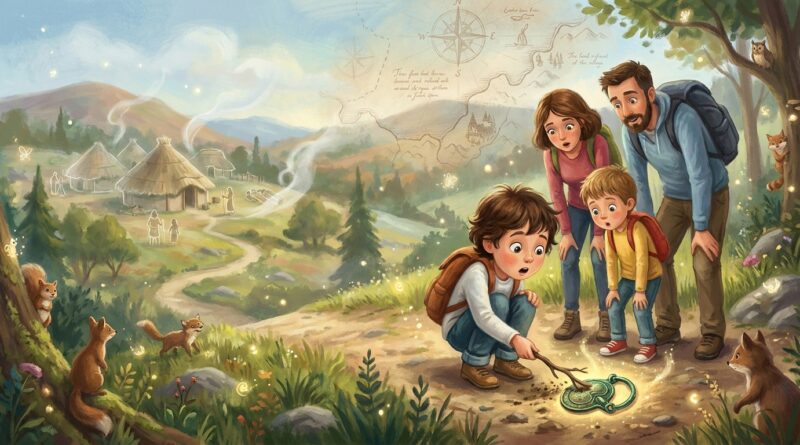
History’s Strangest Lost‑And‑Found: True Stories Of Kids Who Accidentally Discovered Ancient Treasures
If you have ever tried to make history fun for kids, you know the problem. Five minutes into a kings-and-battles recap, eyes glaze over. Then someone asks for a snack, someone else grabs a phone, and the moment is gone. What does stick are the weird, true stories. The ones kids can retell later with full dramatic effect. That is why stories about kids who discovered ancient treasures work so well. They make the past feel less like homework and more like a backyard mystery. And in some cases, that is not far off. Real children have found Viking artifacts, Bronze Age objects, and Roman-era items by accident while hiking, playing, or visiting ordinary places with their families. These are not made-up legends or recycled trivia cards. They are the kind of finds that remind kids that history is not sealed behind museum glass. Sometimes it is hiding in plain sight.
⚡ In a Hurry? Key Takeaways
- Several real kids have accidentally found ancient treasure, including Viking, Bronze Age, and Roman artifacts, during normal outings.
- You can turn a simple walk, beach trip, or museum visit into a history scavenger hunt by asking kids to spot clues, shapes, and unusual objects.
- If your child finds something that looks old, do not clean it hard or pocket it quietly. Take a photo, mark the location, and report it to local museum or heritage experts.
Why these stories grab kids faster than a timeline ever will
Most children do not need more dates to memorize. They need a hook. A real moment. A person their own age. That is what makes stories about kids who discovered ancient treasures so effective.
There is instant drama in them. A child bends down to pick up what looks like a shiny rock. It turns out to be thousands of years old. Another kid notices a strange object on a trail, and archaeologists end up paying attention. Suddenly history is not abstract anymore. It is a thing someone touched.
Parents like these stories too, because they open the door to better questions. Not just “When did this happen?” but “How did nobody notice before?” and “What would you do if you found it?”
True stories of kids who accidentally found ancient treasures
1. The Swedish girl who found a Viking-era sword in a lake
One of the most famous recent examples came from Sweden. An eight-year-old girl named Saga Vanecek was playing in a lake during a family trip when she picked up what she thought was a stick or a strange piece of metal. It turned out to be an ancient sword, later dated to around 1,500 years old, from the pre-Viking Iron Age.
That alone is a great story. A kid in the water. A family day out. Then suddenly, a museum-level discovery. Even better, the find led experts to search the area more closely, and they found additional ancient objects nearby.
For kids, this story lands because it begins with something ordinary. She was not on an expedition. She was just messing around in shallow water.
2. The Israeli boy who found a 3,400-year-old scarab amulet
On a family hike in Israel, an 11-year-old boy spotted a small object on the ground that looked unusual. It turned out to be a Canaanite scarab amulet, roughly 3,400 years old. Scarabs were often used as seals or symbolic items in the ancient world, especially in places influenced by Egypt.
To a child, a scarab sounds like something from an adventure movie. But this one was real, old, and tied to actual ancient civilizations. That makes the story sticky. Kids remember “beetle-shaped amulet found on a hike” a lot better than they remember a chart of Late Bronze Age trade routes.
3. The Danish schoolgirl who found a gold arm ring
In Denmark, a schoolgirl using a metal detector with her family found a gold arm ring linked to the Viking Age. Family metal detecting is much more common in some parts of Europe, and this case became a reminder that serious finds can come from people who are not professional archaeologists.
There is an important note here, though. Good finds happen when people follow local laws, get permission, and report discoveries properly. That part matters as much as the exciting moment itself.
4. The boy who found a Roman coin hoard while helping in a field
Stories like this pop up across the UK. A child helping outdoors notices coins, pottery, or metal where nobody expected it. In several reported cases, young people have been part of the first moment a Roman or medieval hoard came to light. Sometimes they were with family. Sometimes they were on school outings. Sometimes they were just curious enough to say, “This does not look normal.”
That curiosity is the real superpower in nearly every story here.
5. The museum visit that turned into a discovery
Not every ancient treasure story starts outdoors. In a few cases, children visiting historic sites or museums have pointed out details adults missed. A child asks why one stone looks different, or why an object is in the wrong place, and that question sends staff back to look closer. Kids notice odd patterns because they are not always locked into adult assumptions.
That is a good reminder for parents. You do not need a mountain trail or a remote beach to spark this kind of attention. A local museum can do it too.
What these finds usually have in common
When you line up the best stories about kids who discovered ancient treasures, a pattern shows up.
- They were outside, moving around, not trapped in a lecture.
- They were looking closely at their surroundings.
- The object seemed odd before it seemed valuable.
- An adult took the find seriously.
- Experts got involved before the item was damaged or lost.
That last point is easy to overlook. The “treasure” part is fun. The careful reporting is what turns a lucky moment into real history.
How to turn an ordinary outing into a mini history hunt
You do not need your child to find a Bronze Age amulet to make this fun. The point is the habit of noticing.
Start with a simple challenge
On your next walk, beach day, or park visit, give each child a mission:
- Find three objects that look older than the rest
- Spot one thing that seems out of place
- Look for carved stone, old brick, strange metal, or worn markings
- Take photos instead of grabbing everything
This keeps the energy light. It also avoids the problem of kids trying to dig up the entire playground.
Use better questions
Skip “What year is this from?” That is too big and too cold.
Try these instead:
- What do you think this was used for?
- Why might this be here?
- Does it look handmade or machine-made?
- What details make it look old?
These questions get kids thinking like detectives, not test-takers.
Make the area feel layered
A field is not just a field. A beach is not just a beach. A town path may have been used for centuries. Once kids understand that places have layers, the whole world gets more interesting.
You can even frame it like this: “We are walking through a place where people have dropped, built, buried, and lost things for hundreds or thousands of years.” That is often enough to get them looking down with purpose.
What to do if your child really does find something old-looking
This is where excitement needs a little calm.
Do this first
- Take a clear photo
- Note the exact location
- Leave the object where it is if local rules require that
- Contact a local museum, archaeological office, park authority, or heritage group
Avoid this
- Do not scrub it clean
- Do not post the exact location online right away
- Do not assume it is worthless because it looks rusty or broken
- Do not keep it without checking local laws
A muddy old object can hold a lot of information in the dirt around it, or in the exact place it was found. Once that context is lost, part of the story disappears.
Why these stories matter more now
Kids are drowning in bite-sized facts that vanish the second the next video starts. Parents feel that too. You want something memorable, but not something that feels like assigning homework on a Saturday.
That is the sweet spot here. True treasure stories feel epic, but they also lead naturally to offline time. A walk becomes a hunt. A museum becomes a puzzle. A family trip gets a story attached to it.
And because the stories are real, kids trust them more. They are not hearing “Here is a random ancient fact.” They are hearing, “A kid not much older than you found this by accident.”
How to tell these stories so kids actually repeat them later
If you want this to stick past one car ride, tell each story in three beats:
- The ordinary setup. “A girl was playing in a lake.”
- The weird object. “She picked up what looked like a stick.”
- The twist. “It was a 1,500-year-old sword.”
That structure works because it sounds like a campfire story, not a textbook caption.
You can even ask your child to retell it in their own words at dinner. If they can make a sibling say “No way,” you picked the right story.
At a Glance: Comparison
| Feature/Aspect | Details | Verdict |
|---|---|---|
| Best part of these stories | Kids were doing normal things like hiking, swimming, or exploring when they found ancient objects | Makes history feel personal and exciting |
| Practical family use | Turn walks and outings into low-pressure scavenger hunts with observation prompts | Easy win for screen-free learning |
| Safety and legal note | Real discoveries should be photographed, location-marked, and reported, not cleaned or quietly kept | Important if you want to protect the object and the story behind it |
Conclusion
The best thing about these stories is not just that they are strange. It is that they make history feel reachable. Today’s feeds are packed with passive, scroll-and-forget trivia, but families want something better. They want real moments. Real surprises. Real reasons to look up from a screen and notice the world. When you share true stories about kids who discovered ancient treasures, you give children a version of history that feels alive and close by. Better yet, you can use that spark right away. A neighborhood walk, a beach trip, a museum stop, even a hike with snacks in a backpack can become a low-stress history scavenger hunt. Maybe your child will not find a 3,000-year-old artifact. That is fine. The bigger win is teaching them to look closely, ask questions, and feel that little jolt of wonder together. That kind of curiosity sticks longer than any trivia list ever will.