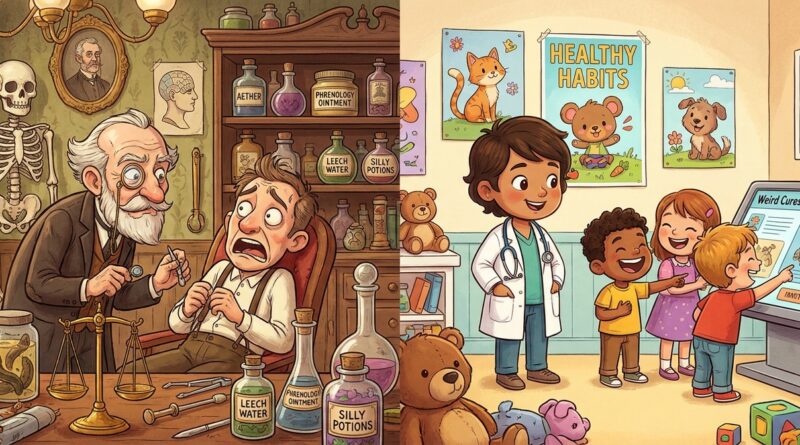
History’s Weirdest Doctor Visits: True Stories Of Bizarre Cures Families Are Glad We Don’t Use Anymore
If your kid thinks medical history is just old-timey doctors with black bags, I get it. Most history for children goes flat fast. Dates blur together. Names bounce right off. But tell them that people once wore leeches around their necks, brushed their teeth with powders made from charred animal parts, or believed horrible smells could chase sickness away, and suddenly history wakes up. That is the sweet spot families want. Weird enough to make everyone say, “They did what?” but true enough to show how medicine slowly changed for the better. These strange stories work because they are gross, funny, and a little shocking. They also open the door to a bigger lesson. Doctors were not always right, and science got better by testing ideas, keeping what worked, and dropping what did not. For parents and teachers, that turns “history time” into a real conversation instead of a groan.
⚡ In a Hurry? Key Takeaways
- Many weird historical medical facts for kids are real, from leeches to smoke cures, and they show how different medicine used to be.
- Use one bizarre story at a time, then ask, “Why did people believe this?” and “What would doctors do now?”
- These tales are fun, but they also teach an important safety lesson. Modern medicine improved because of evidence, testing, and more care for patients.
Why old doctor visits were so strange
For most of history, people did not know about germs, viruses, or how many diseases spread. They still had to do something when a child had a fever or an adult had a terrible toothache. So doctors, healers, and families tried whatever seemed to make sense at the time.
Sometimes that meant using plants that really did help. Sometimes it meant trying ideas that sound completely wild today. If an illness looked “stuck,” people tried to pull it out. If it seemed caused by “bad air,” they tried to overpower it with stronger smells. If blood seemed tied to health, they removed some and hoped the patient improved.
That is why weird historical medical facts for kids are more than just gross trivia. They show people doing their best with the knowledge they had.
True stories of bizarre cures families will be glad are gone
Leeches for all kinds of problems
Leeches were one of the biggest stars of old medicine. Doctors used them to suck blood from patients because many believed illness came from having too much blood, or “bad” blood. In some places, people even wore live leeches in little containers around the neck so they would be ready when needed.
To a child, this sounds like something from a monster movie. To people back then, it was serious care. The odd part is that leeches are not completely gone. Modern medicine sometimes uses specially raised medical leeches in very specific situations, like helping blood flow after certain surgeries.
That makes this a great history lesson. An old treatment can sound ridiculous, yet one tiny part of it may still have a real medical use when doctors test it carefully.
Toothpaste made from burnt bones and strange powders
Kids already complain about mint toothpaste. Imagine handing them a tooth powder made from crushed charcoal, brick dust, oyster shell, or even the burnt remains of small animals. In different times and places, people used all kinds of rough mixtures to clean teeth.
Some old tooth powders probably scrubbed teeth a little. They could also damage enamel, taste awful, and do more harm than good. That is the part children remember. The idea that “dental care” once felt like brushing with fireplace crumbs.
It also helps kids appreciate the dentist they have now, even if they are still not thrilled about the visit.
Bad smells to fight bad air
Before people understood germs, many believed disease spread through foul air, often called miasma. If bad smells brought sickness, then strong smells might push it away. People carried nosegays, herbs, vinegar sponges, and other pungent items near the face.
Some doctors and families truly thought nasty odors could beat disease back. It sounds silly now, but it fit the best guess they had at the time. If one person got sick near a swamp, sewer, or rotting garbage, “bad air” seemed like a fair explanation.
This is a good moment to tell kids that wrong ideas often sound reasonable before better evidence shows up.
Bloodletting for almost everything
For a very long time, bloodletting was treated almost like a cure-all. Headache? Let blood. Fever? Let blood. Feeling weak? Somehow, also let blood. Doctors used blades or leeches to remove blood because they thought balancing the body’s fluids would restore health.
In many cases, this likely made sick people weaker. But bloodletting stuck around for centuries because medicine changes slowly when no one has strong tools to test what actually works.
That is one of the biggest lessons in medical history. A treatment can stay popular for ages, even if it is not helping much.
Smoke as medicine
Here is one that really gets a roomful of kids staring. In parts of history, tobacco smoke was used as a “treatment” for all sorts of problems. There were even cases where smoke was blown into a patient’s body in a rescue attempt. People believed it could warm the body, restart life, or drive illness out.
Today, that sounds awful. Back then, it was offered as real help. It is strange, memorable, and perfect for showing how far emergency care has come.
Trepanation, a hole in the skull
One of the oldest and most unsettling treatments in history was trepanation. This meant drilling or scraping a hole into the skull. People did it for headaches, injuries, seizures, or because they believed something harmful had to be released.
It sounds terrifying, and sometimes it surely was. But archaeologists have found skulls showing that some patients survived the procedure. That is what makes history so fascinating. People were trying surgery thousands of years ago, even with very little understanding compared with today.
If your child enjoys the truly jaw-dropping side of history, they may also like History’s Most Impossible Body: The True Story Of The Man Who Was Both A Dwarf And A Giant, which shows another way the human body has amazed and confused people in the past.
Why people believed these cures
This is the question that turns gross stories into real learning. People in the past were not foolish in some cartoon way. They were working without microscopes, lab tests, modern pain relief, antibiotics, or a clear idea of infection.
They watched patterns and guessed. If someone got better after a treatment, they gave the treatment credit. If someone died, they might assume the illness was simply too strong. That made it hard to know which cures helped and which only looked helpful.
Kids can understand this quickly. If you try five things during a cold and then feel better a week later, which thing worked? Maybe none of them. Maybe time did.
How to make this fun without making it scary
Stick with the weird, not the gruesome
You do not need the bloodiest stories to make an impression. Leeches, bizarre toothpaste, and smell-based medicine are often more than enough.
Ask compare-and-contrast questions
Try simple prompts like:
- What did people think was causing the sickness?
- Why might that have seemed logical then?
- What would a doctor do now?
This keeps the conversation light but smart.
Use it to teach trust and questions at the same time
Children should know modern doctors help people using tested treatments. They should also learn that medicine improved because people kept asking questions and checking results. That balance matters.
What these stories quietly teach kids
The best weird historical medical facts for kids do more than get a laugh. They teach that science is a process. It changes. It corrects itself. It gets stronger when ideas are tested instead of just repeated.
They also teach empathy. Sick people in the past were scared, just like people now. Parents wanted their children safe, just like parents now. Doctors often meant well, even when their tools and ideas were badly limited.
That human part matters. It keeps the story from turning into “people back then were silly.” It becomes, “people back then were trying, and we learned a lot since then.”
Easy ways parents and teachers can use this at home
Here are a few screen-free ways to make these stories stick:
- Pick one weird cure at dinner and let everyone vote on whether they think it was real.
- Have kids sort cures into “helpful,” “harmful,” or “people did not know yet.”
- Pair a bizarre old treatment with a modern version, like leeches versus safe surgery tools, or bone powder versus fluoride toothpaste.
- Ask kids to invent a “future historian” report about today’s medicine. What might seem weird 300 years from now?
That last one is especially fun because it helps children see history as a long, ongoing story, not a pile of dead facts.
At a Glance: Comparison
| Feature/Aspect | Details | Verdict |
|---|---|---|
| Old idea of illness | Often blamed on bad blood, bad air, imbalance, or trapped sickness | Interesting for history, but mostly poor science by modern standards |
| Typical strange treatments | Leeches, bloodletting, harsh tooth powders, smoke cures, trepanation | Memorable and often shocking, great for sparking curiosity |
| Modern takeaway | Medicine improved through evidence, testing, and more humane care | Best lesson of all for kids and adults |
Conclusion
Parents and teachers are always looking for screen-free ways to make history feel alive, and this is one of the easiest wins you will find. Weird old doctor visits grab attention fast. Kids laugh at the leeches, make disgusted faces at toothpaste made from burnt mouse bones, and cannot believe anyone thought a bad smell could knock sickness out of you. Then, almost without noticing, they learn something bigger. Medicine changed because people gathered evidence, dropped bad ideas, and treated patients with more care and understanding. That makes these odd little stories more than just gross fun. They become a smart, memorable way to show children how science grows, and why they can feel grateful for today’s pediatrician, shots, stickers, and all.