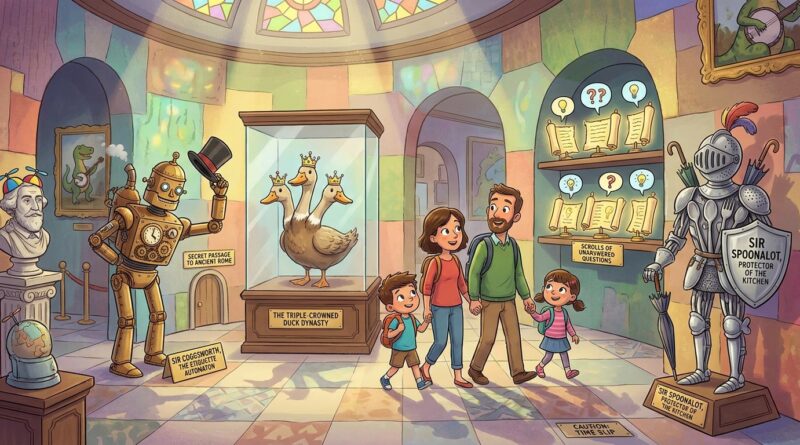
The History of World’s Weirdest Museums: Real Places Where The Past Got Really Strange
If your kids glaze over the minute history comes up, you are not alone. A lot of parents and teachers feel stuck with the same tiny playlist of facts. Egypt. Romans. Castles. Repeat. The trouble is, history is full of wonderfully odd real stories, but many of them never make it into dinner chat or classroom warm-ups. That is where weird history museums for kids can help. These places take the past out of the textbook and put it into something memorable, funny, and just strange enough to make everyone lean in. Think hair art, bad paintings, secret parasites, funeral customs, and foods that lasted far longer than they should have. The best part is that these museums do not need to be scary or gross to be fascinating. They simply prove that real life has always been a little weird. And once kids notice that, history starts to feel less like homework and more like treasure hunting.
⚡ In a Hurry? Key Takeaways
- Weird history museums for kids turn overlooked parts of the past into safe, surprising stories families actually remember.
- Use one museum object or odd fact as a car ride prompt, bedtime question, or quick class opener.
- Choose museums with playful or cultural collections, not shock exhibits, to keep things child-friendly and fun.
Why strange museums work so well for kids
Kids rarely hate history. They hate feeling like history is a list they are supposed to memorize.
Weird museums fix that fast. They ask questions a child would actually ask. Why would anyone save that? Who thought this was a good idea? How did this survive for 200 years? Suddenly the past feels made of real people, with real habits, real mistakes, and very odd hobbies.
That is the secret. Surprise opens the door. Once kids are curious, the learning part gets much easier.
The history of the world’s weirdest museums
Strange museums are not new. In a way, they are one of the oldest forms of collecting. Centuries ago, wealthy people built what were called “cabinets of curiosities.” These were rooms packed with unusual natural objects, inventions, artworks, and treasures from around the world. Shells sat beside fossils. Clocks sat beside taxidermy. Nobody worried much about neat categories.
Over time, big public museums became more organized. Art went in one building. Science in another. Ancient objects in another. But the urge to collect odd slices of human life never went away.
That is how we ended up with museums focused on things many people would never expect to see in a glass case. Some celebrate local traditions. Some save objects most museums would throw out. Some started as one person’s passion project and slowly grew into a real institution.
They may sound silly at first, but they often preserve pieces of culture that would otherwise disappear.
Real weird history museums for kids and curious families
1. The Museum of Bad Art, United States
This museum became famous for collecting art that is sincere, ambitious, and very, very off. Not mean-spirited. Not random doodles. These are works that tried hard and somehow missed the landing in unforgettable ways.
For kids, this is a great history lesson in disguise. It shows that art history is not just famous masterpieces. It is also ordinary people making things, taking chances, and getting it wrong.
Dinner question: Should museums save “bad” art if it tells us something about real people?
2. The Avanos Hair Museum, Turkey
Yes, it is a museum connected to hair. And yes, that sounds a little bizarre. Located in a pottery town, it became known for a huge collection of hair samples left by visitors over many years.
What makes it useful for family conversations is not the hair itself. It is the bigger idea. Why do humans keep personal souvenirs? Why do people leave marks behind when they travel? Kids instantly understand that urge.
Dinner question: If you could leave one harmless object in a museum to show future people you existed, what would it be?
3. The Salt and Pepper Shaker Museum, United States
This one sounds light and funny, and it is. But it is also a sneaky history lesson about design, kitchens, and everyday life. A giant collection of salt and pepper shakers shows how even tiny household objects reflect trends, jokes, technology, and changing tastes.
History is not just crowns and battles. It is breakfast tables too.
Dinner question: What everyday object from our house would confuse people 100 years from now?
4. The British Lawnmower Museum, England
A museum about lawnmowers is exactly the kind of thing that makes kids laugh, which is why it works. Once the giggles settle down, it opens a much bigger story about gardens, machines, class, and how people shaped their homes and neighborhoods.
Objects that seem boring now were often exciting technology in their day.
Dinner question: Which machine in your house feels normal now but might look ancient one day?
5. The International Banana Museum, United States
This is a bright, playful example of how a single ordinary item can grow into a whole cultural story. Bananas connect to trade, food marketing, farming, packaging, and pop culture. A silly museum can still lead to serious history in a very kid-friendly way.
Dinner question: How can one fruit tell us about travel, business, and advertising?
6. The Dog Collar Museum, England
This museum uses one small object to show changing ideas about pets, status, safety, and craftsmanship. Old dog collars can be surprisingly fancy, even armor-like in some periods.
If your child loves animal stories, this is a great bridge into the past. It pairs nicely with History’s Stranger-Than-Fiction Pets: The Royal Hippos, Rocket Cats and Presidential Alligators That Really Existed, which proves humans have always had a very unusual relationship with animals.
Dinner question: What do pet objects tell us about the people who owned them?
7. The Parasite Museum, Japan
This one needs a little age judgment from parents, but older kids often find it irresistible. It sounds creepy, yet it can be handled in a science-first, non-nightmare way. It teaches how people once understood disease, health, and the hidden world inside living things.
For some families, this is best for preteens rather than younger kids. The point is not shock. The point is that history includes medical discoveries, and those discoveries were often strange.
Dinner question: What things did people once not understand because they could not see them?
8. Funeral museums and mourning collections
Several museums around the world hold collections tied to mourning customs, hearses, black clothing, memorial jewelry, and funeral traditions. Handled gently, these can be thoughtful rather than upsetting. They show how different cultures remember loved ones and how customs change over time.
For younger children, keep this broad and respectful. Focus on memory, ritual, and family traditions.
Dinner question: What are kind ways people remember someone after they are gone?
What these museums really teach
The most useful thing about weird history museums for kids is that they make room for the ordinary. A giant empire is interesting, sure. But so is a pepper shaker. So is a lawnmower. So is a dog collar.
These collections remind children that history is built from regular life. Meals. Pets. Fashion. Tools. Souvenirs. Habits. Little objects can carry huge stories.
That helps kids see themselves inside history too. Not just kings and explorers. Them.
How to use weird museums at home without going anywhere
Pick one object, not ten
You do not need a full lecture. One strange object is enough. Show a photo, share a fact, and ask a simple question.
Use the “why keep this?” trick
This works every time. Ask your child why a museum would save that item. Their guesses are often smarter than you expect.
Link weird to familiar
If a museum collects dog collars, ask about your own pet. If it collects kitchen tools, ask what is in your kitchen drawer. Kids learn faster when the object connects to their world.
Make a mini family museum
Pick three household items that future people might find confusing. Put them on a shelf. Write tiny labels. This turns a rainy afternoon into a history game.
How to spot child-friendly weird museums
Not every odd museum is right for every age. Here is a quick filter.
Look for museums that focus on design, daily life, local traditions, animals, food, inventions, or cultural customs. Be more cautious with medical, crime, or body-related collections unless you know your child is ready for that topic.
A good rule is simple. Aim for surprising, not upsetting.
Why families remember weird facts better than famous dates
Because weird facts stick. They have shape. They have personality. They feel shareable.
No child is rushing into the kitchen to announce a tax policy from 1732. But they might absolutely tell everyone that there is a museum for dog collars or bad art. Then, once the story lands, you can add the history around it.
That is not cheating. That is good teaching.
At a Glance: Comparison
| Feature/Aspect | Details | Verdict |
|---|---|---|
| Best type for younger kids | Museums about food, pets, household objects, design, and playful collections like bad art or shakers | Excellent starting point |
| Best use at home or school | Share one object, one fact, and one question to spark a conversation without overwhelming kids | Simple and very effective |
| Main value | Turns history into memorable stories about real life instead of dry lists of names and dates | Best reason to use weird museums |
Conclusion
History does not need more polishing. It needs more personality. Weird history museums for kids give families exactly that. They offer conversation-starting, screen-free stories that feel as wild as any TikTok fact video, but are actually true, well-researched, and child-friendly. For parents and teachers, they are also wonderfully practical. One odd museum can fuel a car ride chat, a bedtime question, or a classroom warm-up in under five minutes. And once kids learn that the past includes banana collections, dog collars, lawnmowers, and wonderfully bad paintings, they start to see history differently. Not as a dusty subject other people own, but as a playful, surprising world they can explore on their own.